
Key Takeaways
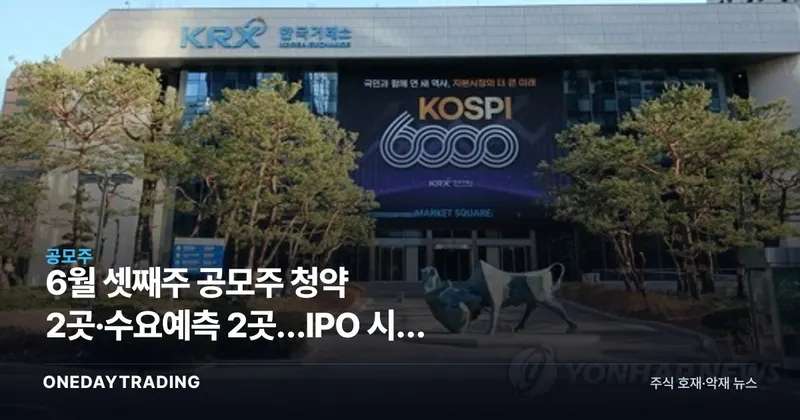
Korea's IPO market has two public-offering subscriptions and two book-building rounds scheduled for the third week of June. Even with the summer off-season approaching, the pipeline of new listings continues, and fund flow from retail investors interested in IPOs appears to be picking up again.
What Happened
This week, the IPO market features two public-offering subscriptions open to general investors and two book-building rounds for institutional investors. Book-building is the stage where the final offering price is set, while subscription is the stage where general investors put up their actual subscription deposits based on the confirmed offering price and receive their allotted shares.
Having two subscriptions and two book-building rounds clustered in a single week can be read as a sign that the market still retains a reasonable base of demand to absorb newly listed companies. That said, the size of each offering and whether it draws strong interest can only be gauged once the book-building subscription rates are out.
Background and Context
In Korea's IPO market, the allowed price swing on a stock's first trading day relative to its offering price has widened considerably, intensifying the concentration of capital seeking short-term gains. As a result, book-building subscription rates, mandatory lock-up ratios, and the volume of freely tradable shares on listing day have become the key variables that determine IPO returns.
At the same time, sentiment toward IPOs can cool quickly depending on interest rates and the market's overall direction. Investors should also keep in mind that when several stocks (tickers) run their subscriptions around the same time, investor capital is spread thin and subscription rates can fall.
Impact on the Market and Stocks
- Brokerages' IPO underwriting divisions: more subscriptions and book-building rounds generate underwriting fee income, which is favorable for the earnings of major brokerages.
- KOSDAQ market: since many new listings make their debut on KOSDAQ, they directly affect KOSDAQ trading value and supply-demand (order flow).
- IPO funds and IPO high-yield funds: competition to secure subscription allotments intensifies, which can highlight the appeal of their priority allocations.
- Retail investor capital: subscription deposits are temporarily tied up, affecting short-term flows of money in the market.
Investor Checkpoints
- Check the book-building subscription rates and institutional investors' mandatory lock-up ratios to gauge the overhang of sell-side supply right after listing.
- Whether the offering price lands at the top or bottom of the indicative range should prompt you to adjust your expectations for post-listing returns.
- When subscriptions overlap in the same week, deposits get spread out, so compare the subscription schedules in advance and plan your capital allocation.
- Examine the volume of freely tradable shares on listing day and the likelihood of existing shareholders cashing out, using the business report and the securities registration statement.
Outlook
On the optimistic side, a steady stream of subscriptions and book-building rounds signals that the channel for fresh capital flowing into the capital market is alive. When quality companies list successfully, it can invigorate KOSDAQ and broaden investors' range of choices. On the other hand, when offerings bunch up around the same time, capital gets dispersed and some stocks (tickers) may fail to draw interest; and if market volatility rises, there can be cases where the share price falls below the offering price right after listing. Ultimately, a selective approach that carefully weighs each stock's valuation and supply-demand (order flow) structure is what matters.
This article is content automatically summarized and analyzed based on the original news report. View original (Yonhap News, Securities)