
At a Glance
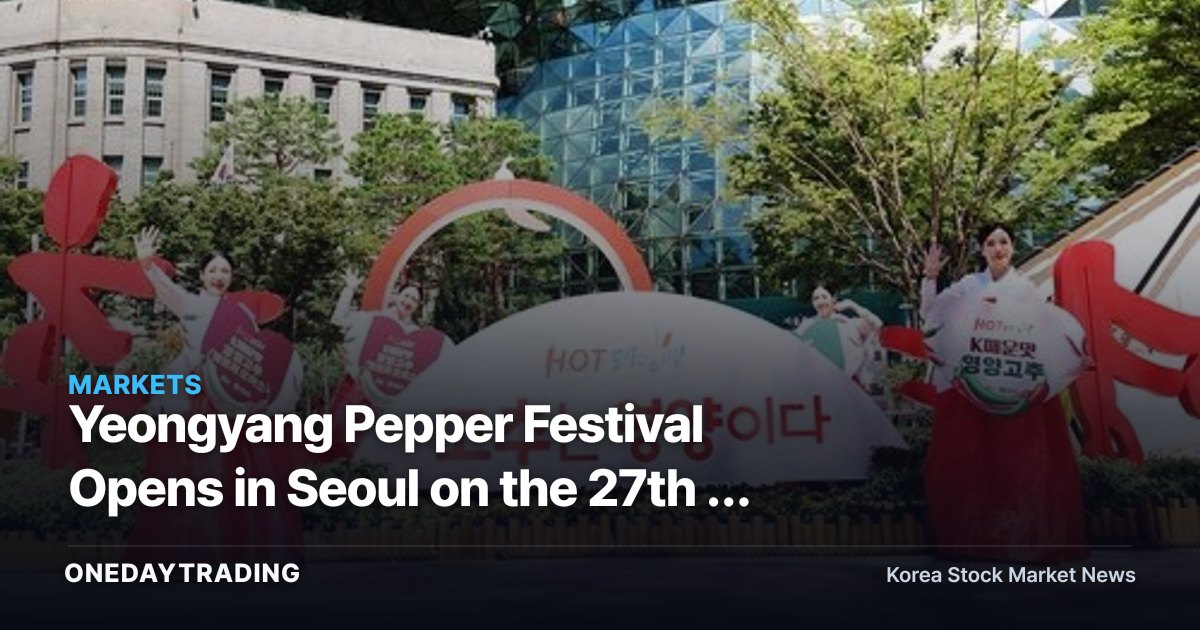
A pepper festival may look like a flashy regional event, but for investors in food stocks it offers a small window of on-the-ground data on raw-material prices and consumption channels. The 2026 Yeongyang Pepper H.O.T. Festival, held by Yeongyang County in North Gyeongsang Province over three days from August 27 to 29 at Seoul Plaza, is less an event that will instantly shift pepper demand and more a gauge of price sensitivity and consumer buying behavior for this year's pepper crop.
Why It Matters Now
In the food industry sector, red pepper is a small but sharp cost variable. It goes into gochujang (red pepper paste), kimchi, seasoning sauces, ready-to-eat meals, and restaurant sauces — a wide range of products. It's hard to argue that a single festival will directly move the earnings of listed food companies. Still, a three-day direct-from-farm sales event at a major urban consumption point like Seoul Plaza can reveal both price resistance and typical purchase sizes.
Framed the way analyst Park Se-ra would put it, there is really just one question: does the excitement described in the press release match the actual selling power the data will show? An event venue can generate visitor numbers. But what investors should watch is not foot traffic but per-unit selling prices, the likelihood of repeat purchases, conversion to parcel-delivery orders, and how quickly farm-gate inventory clears. If these four factors don't follow through, the promotional buzz ends outside the income statement.
The concrete figures confirmed in this news are August 27-29, three days, and Seoul Plaza. Given how limited the information is, over-interpretation should be avoided. Still, the timing carries some meaning. Late-summer pepper consumption shapes sentiment ahead of price formation before kimjang (winter kimchi-making) season. Strong farm-gate sales could support a floor under wholesale prices, while if consumers instead prove price-sensitive, it will also test processed-food makers' ability to pass costs through to selling prices.
FAQ
- Is this news an immediate positive catalyst for food stocks? It's hard to call it a direct positive catalyst. This is a regional agricultural event, and no structure linking it to listed companies' revenue has been confirmed.
- What key data should investors track? After the event, watch farm-gate sales volume, wholesale pepper prices, red pepper powder prices ahead of kimjang season, and changes in processed-food selling prices.
- Who bears the burden if pepper prices rise? Food manufacturers and restaurant franchises with a high share of seasoning-based products could face cost pressure. However, the impact is cushioned if they have room to raise selling prices.
- Does a regional festival matter for distribution stocks? Rather than short-term earnings, what matters is whether direct sales, local food initiatives, and farm-origin branding translate into online orders.
Related Stocks and Sector Impact
- Food and Beverage. Red pepper and red pepper powder are cost items in seasoning products. Rising prices point to margin pressure, while stable prices suggest eased cost burdens.
- Kimchi and Paste Makers. For gochujang, kimchi, and seasoning-sauce products, the gap between raw-material prices and the ability to pass costs through to selling prices determines profit margins.
- Distribution Channels. If direct-from-farm sales events translate into parcel-delivery orders and recurring online purchases, that serves as a useful signal for regional agricultural sales platforms.
- Restaurant Industry. Sectors with a high share of spicy sauces and Korean-style menu items feel pepper price swings first through menu costs.
Investment Considerations
- Demand should not be judged by festival visitor numbers alone. Actual transaction value and post-event order continuity matter more.
- It's hard to immediately conclude that rising pepper prices are a negative catalyst for food stocks. The timing of inventory procurement and whether long-term purchase contracts are in place determine the actual impact.
- The source information alone provides insufficient grounds to link direct benefits to any specific listed company. Theme-driven trading should be viewed separately from actual earnings data.
- After the August 27-29 event, investors should check, in order, wholesale prices, farm-gate shipment volumes, and pre-order prices for the kimjang season.
Overall Outlook
The optimistic scenario is straightforward. If the Yeongyang Pepper Festival directly connects Seoul consumers with farm producers and the three-day event leads to continued online orders, the price-defense power of the farm-origin brand strengthens. In that case, quality premiums for raw materials and stable sourcing become more important across the food value chain.
The risks are just as clear. If festival buzz doesn't translate into sustained sales, the investment implications remain limited. If pepper prices rise quickly, cost burdens increase for processed-food makers and restaurants, and companies slow to pass costs through will see margins squeezed. The next checkpoints are the farm-gate sales results after August 29 and September wholesale pepper prices. The numbers come before the festival buzz.
This article was automatically summarized and analyzed based on the original news report. View original (Yonhap News, Industry)