
3-Line Briefing
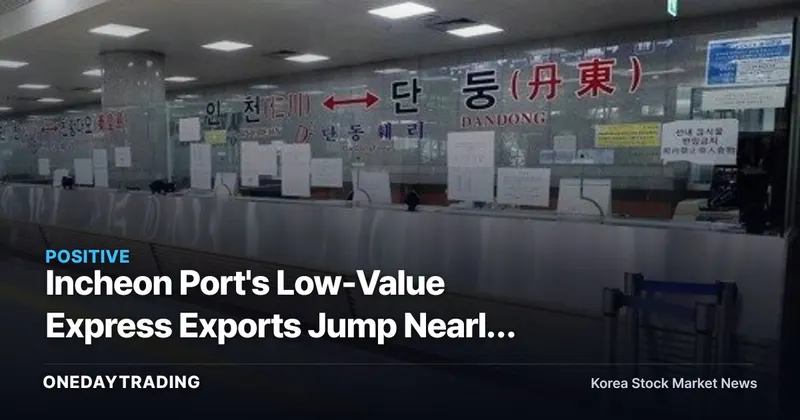
- Low-value express cargo exports through Incheon Port grew nearly 50% over the past year
- In terms of product mix, footwear and apparel together accounted for 70% of total volume
- The reality behind the reverse direct-purchase tailwind isn't diversified category growth — it's concentrated growth in a narrow set of categories
What's Changing
There's a gap between the headline of surging exports and the underlying data showing footwear and apparel at 70%. The surge figure alone gives the impression that a broad range of domestic consumer goods have begun selling well overseas. In reality, however, the breakdown shows that more than two-thirds of the volume is concentrated in just two product categories. Since the low-value express clearance format itself favors low-priced, lightweight items, it's structurally natural that footwear and apparel have become the mainstay of this channel. The real question is whether this concentration is a temporary trend or a lasting feature of the channel.
The true beneficiaries of this trend are not the brands themselves, but the infrastructure that processes the volume and the platforms connecting individual and small-business sellers to overseas buyers. Unlike large corporations' bulk contract exports, low-value express shipments are fundamentally a high-variety, low-volume business — so processing volumes rise in tandem for e-commerce solution providers that support individual sellers' overseas sales, and for logistics companies with express clearance and delivery networks.
Numbers in Context
Only two figures were disclosed: the 50% growth rate and the 70% product concentration. Since absolute year-over-year volume wasn't provided, whether that 50% growth is an optical illusion from a small base or a genuine expansion of the customer base needs to be confirmed alongside absolute volume figures in future data. The 70% product concentration means this channel remains dependent on specific categories, which points to both the upside and downside limits of future growth.
Stocks to Watch
- Cafe24: An e-commerce platform supporting overseas sales (reverse direct purchase) for small businesses and individual sellers; growing low-value express volume translates directly into higher overseas revenue for its merchant sellers
- CJ Logistics: Owns express clearance and fulfillment infrastructure, so rising processing volume directly translates into higher fee-based revenue
- Hanjin: In its express parcel segment, even though per-unit rates are low, rising volume offsets that through scale
- F&F: Its brands, such as MLB, are a prime example of strong overseas personal-purchase and resale demand, placing the company among the beneficiaries of the footwear/apparel-driven structure
Risk Check
- Since absolute volume figures weren't disclosed, the 50% growth rate could be an optical illusion driven by base effects
- With 70% concentrated in footwear and apparel, a slowdown in overseas demand for either category would shake the overall indicator
- If major countries continue tightening de minimis duty-free thresholds, the price competitiveness of low-value express shipments itself could be undermined
- Fluctuations in the won exchange rate affect both price competitiveness and logistics costs at the same time
Bottom Line
The rise in low-value express exports signals a broadening base for reverse direct purchases, but the 70% concentration in footwear and apparel also shows that this growth is still in an early stage reliant on a small number of categories. Future data should be checked for both product diversification and absolute volume trends.
Cafe24 by the Numbers
Cafe24's most recent closing price is 18,130 won (0.00% vs. the previous day), and the signal combining foreign investors/institutional investors order flow with news and momentum stands at 🔴 Caution. Foreign investors and institutional investors are net negative, so caution is warranted right now.
- ▼ Dual selling — foreign investors −₩0 and institutional investors −₩100 million, selling in tandem
- ▼ 52-week range position — near the 52-week low, at the 11% mark
※ Price and foreign/institutional investor order-flow (supply-demand) data are provided by Korea Investment & Securities (KIS) and are as of the time of publication.
This article is automatically summarized and analyzed based on the original news report. View original article (Yonhap News Agency, Industry)