
At a Glance
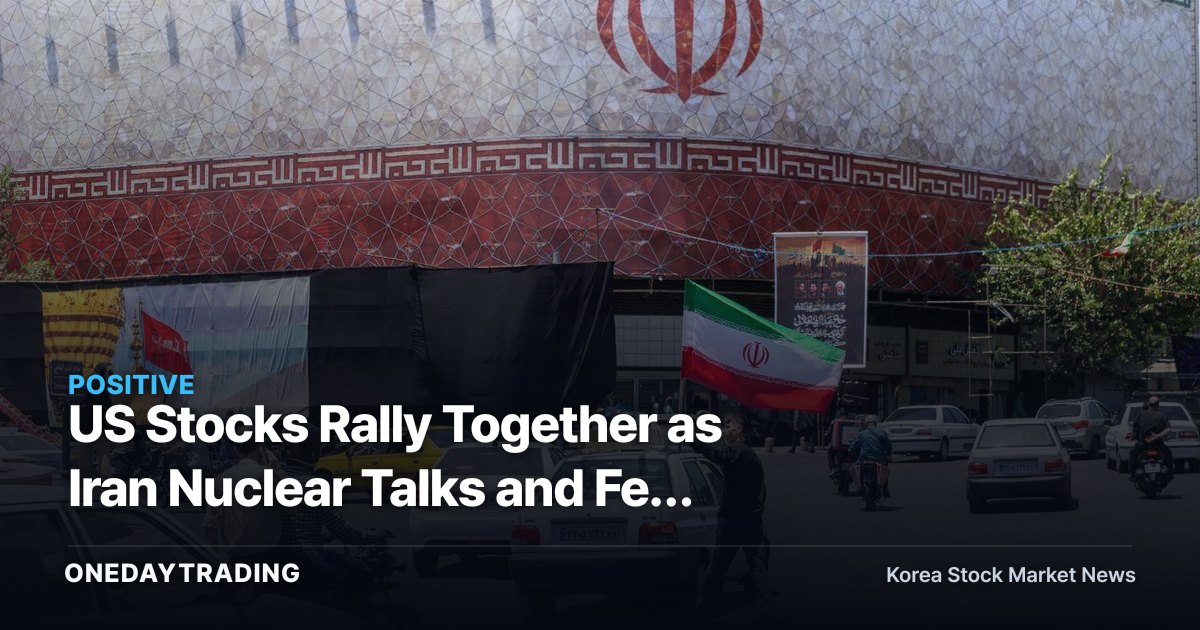
The Dow Jones, S&P 500, and Nasdaq all rose in unison, reviving appetite for risk assets. The market's attention is split two ways. One is the easing of crude supply concerns on the possibility of progress in Iran's nuclear talks; the other is a reassessment of the pace and scale of the Fed's further rate hikes. Both are variables tied directly to Korean exporters and the energy sector.
Why It Matters Now
If Iran's nuclear talks advance, expectations build that crude oil previously locked up by sanctions could be added back to the global supply chain. The expectation of rising supply caps the upside in oil prices, which in turn eases inflationary pressure. As inflation burdens recede, the Fed's justification for raising rates more aggressively weakens, and expectations of a lower discount rate work favorably for the valuations of growth and tech stocks. The Nasdaq's relative strength reflects this mechanism.
That said, the same factor cuts both ways for the Korean market. Falling oil prices weigh on refiners' refining margins and inventory valuation gains, but they are a positive catalyst in the form of cost savings for industry sectors where crude makes up a large share of costs, such as airlines, transportation, and chemicals. The Fed's rate path is also directly linked to exporters' earnings through the won-dollar exchange rate, so the key point is that the direction of sector-by-sector profit and loss diverges beneath the surface of a rising index.
Ultimately, this rally leans more on a partial easing of macro uncertainty than on improving fundamentals. The risk of a pullback remains, depending on whether the talks actually lead to an agreement and whether Fed officials' remarks tilt hawkish or dovish.
Frequently Asked Questions
- Why do Iran's nuclear talks lift the stock market — because expectations of eased sanctions translate into rising crude supply, which caps the upside in oil prices and leads to hopes of relief from inflation and rate pressures.
- Why is the Fed's rate path important for tech stocks — growth stocks, whose value rests heavily on future cash flows, are sensitive to the discount rate (interest rates), so expectations of a slower pace of hikes support their valuations.
- What is the direct impact on Korean investors — through the exchange rate and oil prices, it feeds into the costs and profitability of exporters, refiners, and airlines with a time lag.
- Is the rally sustainable — if the talks break down or the Fed signals a hawkish stance, a short-term pullback is possible, so it is too early to call this a trend reversal.
Related Stocks and Sector Impact
- Refiners (S-Oil, SK Innovation, GS) — when oil prices fall, refining margins and inventory valuation gains shrink, a short-term burden; conversely, a concurrent demand recovery provides a cushion.
- Airlines and transportation (Korean Air) — with fuel costs forming a large pillar of operating expenses, stable oil prices are a path to improved profitability.
- Large-cap exporters (Samsung Electronics, Hyundai Motor) — the Fed's rate path and the direction of the exchange rate affect the translation of overseas earnings and price competitiveness.
- Chemicals and refining downstream sectors — with a large share of crude and naphtha inputs, their profit and loss are sensitive to cost fluctuations.
- Brokerages and growth stocks — the recovery in risk appetite and expectations of a slower pace of rate hikes are favorable for trading value and valuations.
Points to Watch When Investing
- Hopes around the talks are a factor that can reverse until an agreement is reached. Chasing the rally in the short term amid headline volatility is risky.
- If falling oil prices stem from slowing demand, they could instead be a negative catalyst as an economic signal, so the cause needs to be distinguished.
- Remarks from Fed officials and changes in the dot plot can overturn rate-path expectations in an instant.
- Since the rising index and the direction of individual sectors' profit and loss diverge, exposure should be assessed separately by industry sector.
Overall Outlook
The optimistic scenario is one in which progress in the Iran talks stabilizes oil prices, the Fed's hiking intensity eases, and risk appetite carries on. In that case, a stable exchange rate and easing costs become a gradually favorable factor for exporters and transportation stocks. Conversely, if the talks fall through or inflation readings flare up again and the Fed pivots hawkish, this rally's gains could be handed back quickly. The reasonable approach is to use the rate decision and dot plot at the next Fed meeting, key negotiation schedules, and the level of international oil prices as confirmation indicators, and to respond in phases.
This article is content automatically summarized and analyzed based on the original news. View original (Yahoo Finance)