
Key Takeaways
Local governments nationwide are rolling out "agricultural creator" training programs that teach farmers short-video production techniques, including YouTube Shorts. While local authorities are promoting these programs as a catalyst for expanding SNS-based direct produce sales, an unverified gap remains between the promotional messaging and any actual change in distribution structure.
What Happened
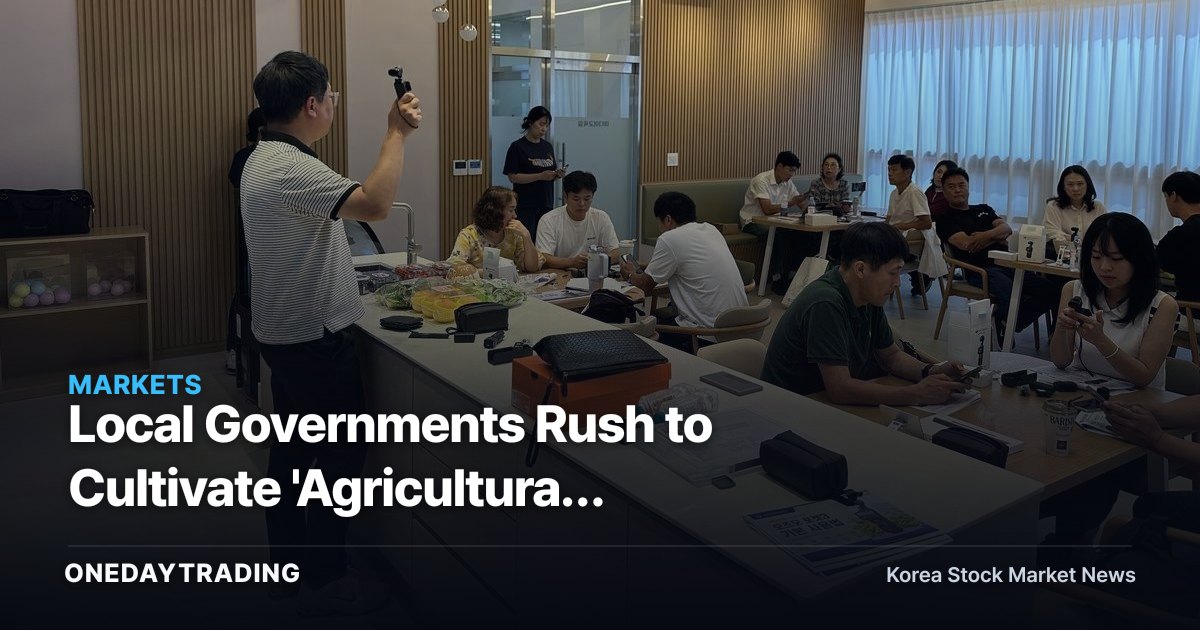
According to a Yonhap News report, amid a broader trend of increasing produce sales via social media, several local governments are running programs that provide content-creation training to farmers. The core of the training is teaching farmers to introduce their produce through short-video formats — Shorts — and connect directly with consumers.
From the local governments' perspective, the programs appear designed as a low-cost way to expand sales channels with outsized impact relative to budget. However, concrete performance indicators — such as the number of participating farm households, actual sales conversion rates, and budget size by municipality — have not yet been disclosed.
Background and Context
Produce distribution has traditionally run through a multi-tiered structure of local collection merchants, wholesale markets, and large retailers, which has limited the share farmers ultimately receive relative to the final sale price. SNS-based direct sales are seen as a channel that could widen farmers' margins by cutting out these intermediary stages, but they also shift the burden of content production, logistics, and payment handling directly onto farmers.
Market and Stock (Ticker) Impact
- Online direct produce sales and live-commerce platforms: As local government-driven agricultural creators increase, the pool of onboarding suppliers could widen, serving as a mild tailwind for platform transaction volume growth.
- Content production and MCN-related services: Local government training programs create indirect beneficiary channels by generating demand for outsourced instructors and production support.
- Parcel delivery and logistics: As small-lot, multi-item direct produce sales increase, individual shipments originating from farm regions may rise, creating potential demand for logistics companies' produce-specialized delivery services.
- Existing local produce distributors and wholesale market intermediaries: As the share of direct sales grows, the existing business model of capturing intermediary distribution margins faces encroachment pressure.
Investor Checkpoints
- Track budget size and the trend in the number of participating farm households for each municipality's agricultural creator program via local government press releases and council budget documents.
- Check whether online direct produce sales platforms separately disclose the share of direct-from-farm GMV (gross merchandise value) in their quarterly earnings releases.
- Watch for whether the Farm Household Economy Survey by Statistics Korea and the Ministry of Agriculture, Food and Rural Affairs introduces new income items related to SNS sales, or shows meaningful changes.
- Check whether parcel delivery companies disclose performance data on individual shipments originating from farm regions, and whether changes appear in peak-season volume statistics.
Outlook
Optimistically, the spread of agricultural creators could be an early sign of a structural shift that reduces intermediary distribution margins and allows farmers to capture a share closer to the final sale price. On the other hand, content production is a specialized skill separate from farming itself, so there is a risk that local government training remains a one-off event without translating into actual revenue conversion. The key question is whether this initiative expands beyond scattered promotional cases to a scale that shows up in farm household income statistics.
This article was automatically summarized and analyzed based on the original news source. View original (Yonhap News Securities)