
Key Takeaways
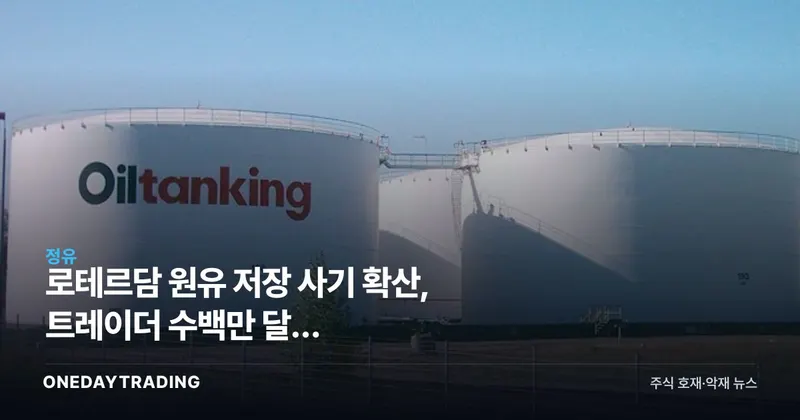
Reports have emerged that a growing number of storage-related fraud cases at Rotterdam in the Netherlands — Europe's largest hub for storing crude oil and petroleum products — are leaving global traders with losses running into the millions of dollars. At the heart of the issue are trust problems surrounding inventory quantity and quality, which are flagged as a structural risk that drives up the transaction and management costs of crude oil trading.
What Happened
Rotterdam is the gateway where crude oil, refined products, and biofuels bound for Europe are gathered and distributed. Cargo held in the port's large storage tanks serves as both trading collateral and a unit of settlement, but a series of cases have recently come to light in which actual stored volumes diverge from book inventories, or quality differs from what was contracted.
From a trader's perspective, this means committing capital on the strength of nothing more than paper inventory certificates, only to find at the point of delivery that the promised volume or grade is not actually available. Such disputes lead to litigation and higher storage and verification costs, and in some transactions they crystallize into losses that are difficult to recover at all — that is the gist of the reporting.
Background and Context
Crude oil trading is an industry that relies heavily on credit and paperwork. In the past, the metals and grains commodity sectors have repeatedly seen cases of double-pledging the same collateral to multiple parties and of fake warehouse receipts. As energy price volatility increases and trading volumes swell, the incentive for fraud that exploits gaps in lax verification grows alongside — making this episode less of a new event than a recurrence of a structural vulnerability.
Impact on the Market and Stocks
- Refiners: Companies such as S-Oil, SK Innovation, GS, and HD Hyundai Oilbank routinely engage in crude and product trading and storage, leaving them exposed to a potential rise in transaction and management costs as verification is tightened.
- Crude trading and logistics: As the burden of cargo verification and due diligence grows, trading turnover may slow and the cost of managing counterparty risk may rise.
- Shipping and tank storage industry: With storage reliability emerging as a key variable in transactions, preference for operators with robust verification systems may strengthen.
- Trade finance and insurance: If uncertainty over collateral value grows, financing terms become stricter and insurance premiums rise, putting pressure on overall transaction costs.
Investor Checkpoints
- Rather than treating this issue as a positive catalyst or negative catalyst for any specific stock (ticker), it is reasonable to read it as a signal of broadening operational risk across crude oil trading as a whole.
- For domestic refiner stocks, refining margins and the direction of oil prices are the key variables in earnings, and the direct impact of the storage fraud issue is limited.
- It is worth checking the trends in trading profit and loss, provisions, and verification and management costs in the relevant companies' quarterly earnings.
- Investors should first assess how international oil prices such as Brent and the exchange rate affect domestic energy stocks.
Outlook
On the optimistic side, this episode could serve as a catalyst that accelerates the upgrading of the industry's inventory verification and digital tracking systems, and may even become a point of differentiation for highly trusted operators. In the near term, however, the risk that disputes and rising costs erode trading profitability remains ever-present. Korean investors would do well to focus less on the storage fraud itself and more on the possibility that the resulting rise in transaction costs and tightening of trade finance will gradually be passed through to the refining and energy value chain.
This article is content automatically summarized and analyzed based on an original news report. View original (Yahoo Finance)