
Summary
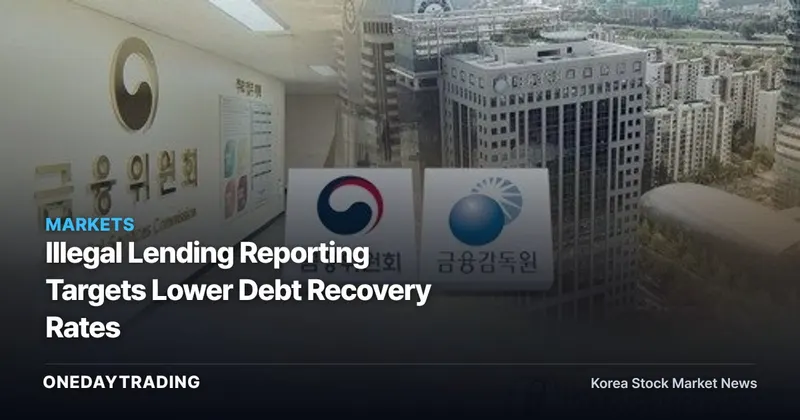
Strengthening one-stop reporting for illegal lending victims is not merely about improving convenience; it is designed to reduce recovery rates in the underground debt market. When reporting and legal support work as one, the expected returns from illegal debt collection decline and victims face lower costs in escaping the system.
For investors, the immediate focus should be less on bank and savings bank earnings and more on household delinquency risk and how quickly demand for inclusive finance returns to regulated channels. The market has yet to price this policy into the numbers, but its impact could become apparent sooner if the economic slowdown continues.
What Happened
The key change is to reduce the burden on victims who previously had to navigate multiple agencies and prepare separate reporting documents, while integrating support for legal procedures such as investigations and lawsuits. Illegal lending thrives when victims remain silent, so lowering reporting barriers threatens the viability of the business model itself.
If one-stop reporting works in practice, the share of cases progressing to criminal proceedings will matter more than the number of consultations. Accepting a report is different from launching an investigation. The former generates statistics, while the latter disrupts the cash recovery channels used in illegal debt collection.
This may appear to be a financial consumer protection issue, but its essence is raising transaction costs for underground finance. With legal support, victims are less isolated when securing evidence and pursuing legal remedies, while illegal lenders find it harder to rely on intimidation alone.
Structural Background
Why Is This Changing Now?
When interest rates remain high and the economy slows, more borrowers are shut out of regulated lending, creating an opening for illegal lenders. The problem is that losses recur whenever victims are reluctant to report abuse. Complex reporting procedures drive transactions further underground, and greater concealment makes them even harder to trace.
The measure therefore also serves to offset the spillover effects of interest-rate policy. Lower rates improve access to regulated finance, but blind spots widen again if rates rise or unemployment increases. In that case, a one-stop reporting channel becomes even more valuable.
Impact on Stocks and Industry Sectors
- Banks: Household credit-risk management matters more than direct revenue. Returning illegal lending victims to regulated finance could help reduce lingering delinquency exposure and complaint-handling costs.
- Savings banks: Their broad exposure to vulnerable borrowers creates both benefits from inclusive-finance policies and additional regulatory burdens. The asset quality of outstanding high-interest loans will become more important.
- Credit cards and installment finance: Some replacement demand may flow into legitimate channels as borrowers leave illegal collection arrangements. The impact will be limited, however, if their creditworthiness recovers slowly.
- Credit information and debt management: Stronger evidence-gathering requirements and collection regulations could change operating practices. Compliance capabilities, rather than volume growth, will be the key variable.
- Fintech and inclusive-finance platforms: Services combining reporting, counseling, refinancing, and debt restructuring on one screen will become more important. Without matching conversion rates, however, only their headline scale will grow.
Bullish vs. Bearish Scenarios
In the bullish scenario, one-stop reporting moves beyond intake and leads directly to investigations, litigation, and debt restructuring. This would lower recovery rates for illegal lenders and relatively strengthen trust in regulated finance. For financial stocks, it would be less a direct positive catalyst than a factor that reduces the risk premium.
In the bearish scenario, the number of reporting channels increases but actual case processing remains slow. Victims would still hesitate to report abuse, allowing illegal lenders to buy time. In that case, the market would place greater weight on the number of cases processed and the referral-for-prosecution rate than on the policy headline.
Investor Action Points
- Review the detailed implementation plans from the Financial Services Commission and related agencies. Determine whether counseling, reporting, investigations, and litigation support are integrated into a single process.
- Track next quarter’s financial complaints and illegal lending reports, the investigation conversion rate, and the share of cases linked to debt restructuring.
- Review banks’ and savings banks’ delinquency rates, loan-loss reserve coverage ratios, and outstanding balances of inclusive-finance products together.
- If the economic slowdown continues, the policy’s impact could grow. Monitor household loan delinquencies alongside indicators for vulnerable borrowers.
Frequently Asked Questions
What Changes Under One-Stop Reporting for Illegal Lending Victims?
The key is to combine reporting and follow-up support in one channel so victims do not have to approach multiple institutions separately. A shorter process should reduce abandoned reports and make illegal debt collection harder to conceal.
Is This an Immediate Positive Catalyst for Bank Stocks?
It is difficult to view it as a direct earnings catalyst. However, if vulnerable borrowers return to regulated finance more quickly, it could help reduce delinquency risk and complaint-handling costs. For policies that do not immediately move the numbers, next quarter’s delinquency rates matter more.
Which Indicators Show Whether the Policy Is Working?
Report volumes alone are insufficient. The investigation conversion rate, number of cases receiving litigation support, share linked to debt restructuring, and household delinquency rate must move together to demonstrate effectiveness. Reporting is only the beginning; whether the policy lowers recovery rates depends on what happens next.
KOSPI Index MetricsAs of 2026-08-30
| Performance | 1 Week -0.93% 1 Month +12.70% |
|---|
Index, commodity, and exchange rate figures are based on global markets and reflect values at the time of publication.
This article was automatically summarized and analyzed from the original news report. View the original article (Yonhap News Agency Securities)