
Three-Line Briefing
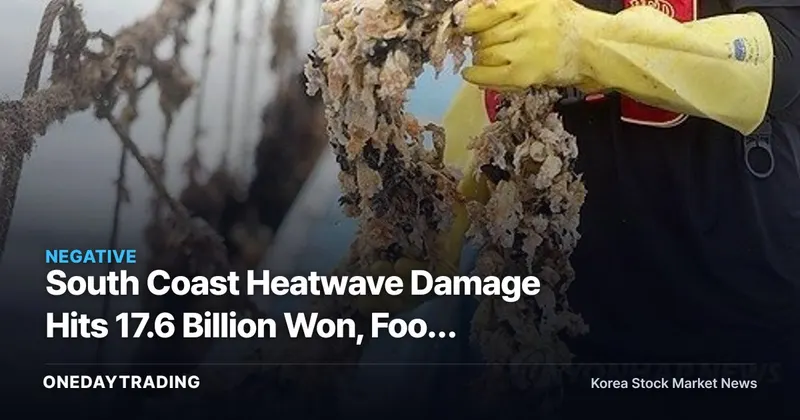
- High water temperatures along Gyeongsangnam-do’s southern coast persisted into September, with farmed shellfish and other aquatic products continuing to die and cumulative property damage reaching 17.6 billion won.
- The key issue is not simply losses at fish farms, but that reduced shippable volumes could push up seafood procurement prices and processed-food costs.
- However, the actual stock-price impact will depend on producers’ ability to pass through origin-price increases, the availability of import substitutes and whether the heatwave persists.
What Is Changing
The high-temperature damage along Gyeongsangnam-do’s southern coast is a classic supply shock in which production disruptions in aquaculture spread to the earnings of food and distribution companies. High water temperatures raise mortality rates and slow growth in farmed shellfish and other aquatic products, reducing volumes available for shipment. Aquaculture operators lose revenue, while processors may have to pay higher raw-material prices to secure the same volume.
According to an industrial report by Yonhap News Agency, high water temperatures continued in September and the damage accumulated. The 17.6 billion won figure represents property losses tallied so far and does not indicate the final scale. If additional deaths occur before water temperatures return to normal, farms’ restocking costs and shipment gaps will both increase.
For investors, the crucial point is not the damage figure itself but where along the supply chain prices move. If origin prices rise but processed-food companies pass the increase on to selling prices, revenue per unit can be defended; however, higher prices may reduce demand and sales volume. Conversely, if imports or frozen inputs can be used as substitutes, the cost shock will be limited.
Putting the Numbers in Context
The cumulative 17.6 billion won loss is a direct hit to farmed-aquatic-product producers. But listed food companies’ earnings do not move one-for-one with the damage figure. These companies source multiple species from multiple suppliers and mix in frozen and imported inputs. For their stock prices to react, actual purchase prices must rise for products with a high share of domestic inputs, and the increase must flow through to quarterly cost ratios.
If the heatwave ends quickly, inventories and alternative sourcing can cushion price increases. If it continues, prolonged shipment gaps could lift both origin prices and import dependence. In particular, delays in water-temperature recovery that disrupt autumn shipments would affect next quarter’s earnings more heavily than a short-term hit.
Potential Beneficiaries · Affected Stocks
- Dongwon Industries: Its seafood sourcing and processed-food businesses face higher costs when raw-material prices rise. The share of imported and frozen sourcing, along with its ability to pass through prices, provides some cushioning.
- Sajo Industries: Procurement costs for its seafood and food businesses may increase. If the heatwave damage is concentrated in specific species, margin differences by product could widen.
- CJ Seafood: Higher input prices for fish cakes and processed seafood would raise its cost of sales. If it responds with price increases, sales volume and consumer demand become key variables.
- Aquaculture industry overall: Mortality and restocking costs occur simultaneously, making direct damage greatest. Losses may first widen at unlisted producers and regional fisheries cooperatives rather than at listed companies.
Risk Check
- If high water temperatures continue beyond September, losses could exceed the currently tallied 17.6 billion won.
- If processors and distributors cannot pass higher origin prices on to selling prices, profit margins will fall before revenue does.
- Expanded imports would be negative for domestic aquaculture operators but could reduce cost pressure on processors.
- Even if the damage grows, prompt government aid or disaster-insurance payouts could offset part of the losses.
Bottom Line
High water temperatures along Gyeongsangnam-do’s southern coast are an immediate negative catalyst for aquaculture, but their impact on listed food-company stock prices will vary with sourcing structures and pricing power. If temperatures normalize, the shock may prove temporary; if the heatwave persists, next quarter’s costs and supply volumes will both be tested.
Frequently Asked Questions
How large is the damage from high water temperatures along Gyeongsangnam-do’s southern coast?
Based on Yonhap News Agency’s industrial report, cumulative property damage to farmed shellfish and other aquatic products reached 17.6 billion won as high water temperatures continued into September. This is the cumulative tally before any additional deaths.
How do high water temperatures affect seafood prices?
Reduced shipment volumes caused by mortality and delayed growth can push up origin prices. However, substituting imported or frozen inputs and using inventories can limit increases in consumer prices and corporate costs.
Which earnings figures should investors monitor?
At the next earnings release, investors should check seafood raw-material purchase prices, cost-of-sales ratios and whether selling prices were raised. If high water temperatures persist, they should also monitor additional damage at aquaculture operators and the timetable for government support.
Dongwon Industries Key MetricsAs of 2026-09-06
| Period returns | 1 week -1.42% 1 month +5.25% |
|---|---|
| Trading value · trading volume | 11억원 · 2만 9,379주 |
| Supply-demand (order flow) | Foreign investors −3억 net selling Institutional investors +1억 net buying |
Price and supply-demand data are real-time values from Korea Investment & Securities (KIS); supply-demand and news-tone aggregates are calculated by One Day Trading.
Supply-Demand · Momentum Assessment🟡 Neutral · Watch
Positive and negative signals are mixed, calling for continued observation.
Upcoming Dates to Watch
- 09.10Simultaneous futures and options expiryModerateQuadruple witching — watch for volatility and supply-demand disruptions
- 09.16FOMC policy-rate decisionHighU.S. Federal Reserve monetary-policy announcement — direction of rates and the dollar
- 10.08Index options expirationLowKOSPI200 options expiration
- 10.22Bank of Korea Monetary Policy BoardHighBenchmark interest rate decision meeting
This article was automatically summarized and analyzed from the original news report. View original (Yonhap News Agency, Industry)
。