
Key Takeaways
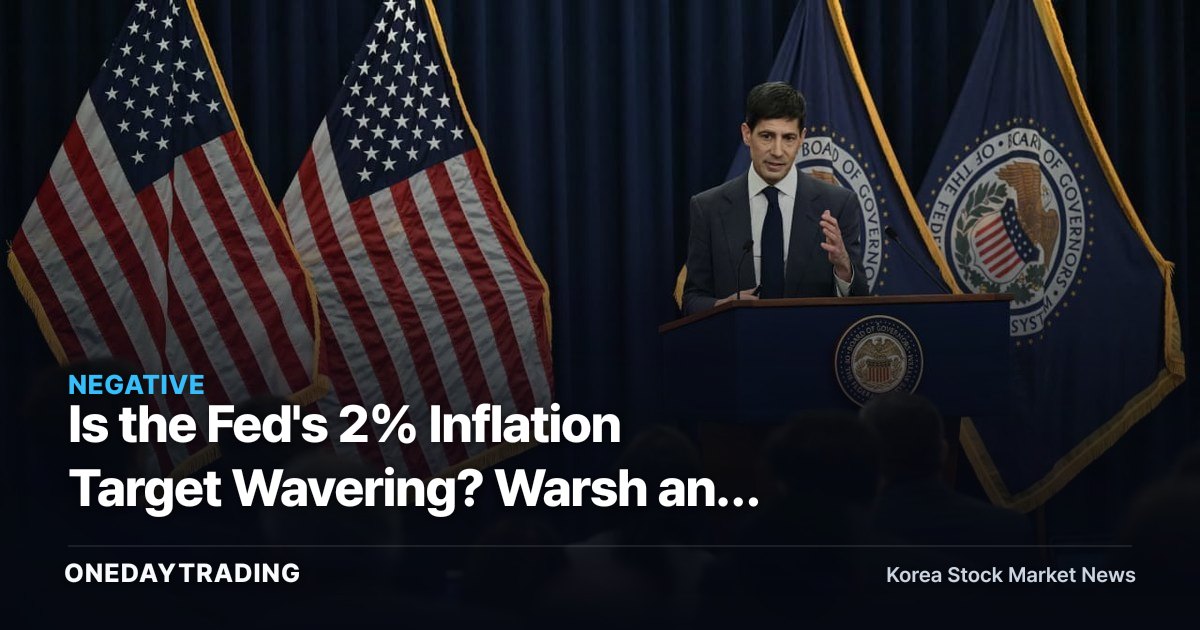
The 2% inflation target that has anchored U.S. monetary policy for three decades is being shaken by comments from Kevin Warsh and Vice President J.D. Vance, both mentioned as potential candidates for the next Federal Reserve chair. The discussion around raising the target isn't merely academic — it signals that the benchmark underlying asset allocation across long-term rates and real value could be shifting.
For investors, what matters most is direction. Greater tolerance for inflation would pressure nominal bonds and long-duration growth-stock valuations, while gold, hard assets and commodities, and the nominal revenue of export manufacturers would stand to benefit relatively.
What Happened
Warsh and Vance questioned the legitimacy of the 2% inflation target that the U.S. government has effectively treated as standard. The 2% figure isn't set by law — it's a conventional benchmark the Fed has adopted for price stability — and these remarks have now publicly put it up for reconsideration.
The market is reacting sharply because of who is making these comments. When figures directly tied to the selection of the next Fed leadership question the target itself, it resets market expectations about the future path of rate cuts and the limits of inflation tolerance.
The core of the debate: raising the target to, say, 3% would lower real rates at the same nominal rate — an easing effect in the short term — but it raises the risk that inflation expectations become de-anchored from their reference point.
Background and Context
Since the pandemic, the U.S. has endured high inflation and paid a substantial tightening cost to bring prices back down to the 2% target. Against this backdrop, arguments for raising the target risk diluting the rationale for that tightening after the fact, and could be read as a credibility problem — fiscal and political considerations encroaching on monetary policy independence.
Impact on Markets and Stocks (Tickers)
- Gold and precious metals (Korea Zinc, etc.): Greater inflation tolerance and falling real rates increase the relative appeal of gold, which pays no interest. Companies with significant non-ferrous and precious metals refining exposure are positioned to benefit nominally from stronger metal prices.
- Export manufacturers (Samsung Electronics, Hyundai Motor): If dollar inflation expectations weaken the Korean won, the won-denominated value of export unit prices rises, which can positively affect nominal revenue and margins.
- Long-duration growth stocks and high-valuation tech: If inflation expectations push long-term rates higher, the discount rate applied to distant future cash flows rises, increasing pressure on valuations. Stocks priced on growth expectations rather than current earnings face the most direct impact.
- Bonds and rate-sensitive assets: Nominal government bonds lose real value in proportion to inflation. Portfolios with heavy exposure to long-duration bonds face repricing risk.
Investor Checkpoints
- Appointment timeline: Watch whether target reconsideration becomes an actual policy agenda item during the next Fed chair nomination and confirmation process.
- Long-term inflation expectations: Track whether U.S. 10-year breakeven inflation expectations and 10-year government bond yields rise together, which would signal de-anchoring.
- Exchange rate: Watch whether the won-dollar exchange rate trends toward weakness, and whether that shows up in export stocks' earnings guidance during quarterly earnings releases.
- Gold price: Watch whether gold forms a meaningful trend during periods of falling real rates, distinguishing it from short-term volatility.
Outlook
If the target is actually raised, easing expectations could support risk assets in the near term, creating a favorable environment for gold, hard assets, and export stocks. But the opposite scenario is just as plausible: if the comments amount to nothing more than debate and the Fed holds firm at 2%, inflated expectations could unwind. Conversely, if the target genuinely shifts, the resulting damage to monetary policy credibility could push long-term rates even higher, creating headwinds across growth stocks and bonds broadly. Rather than betting on direction alone, a more reasonable approach is to treat the pace of change in policy credibility as the key variable, monitoring inflation expectation indicators and the exchange rate together while adjusting position sizing accordingly.
This article is automatically summarized and analyzed content based on the original news source. Read the original article (MarketWatch)