
Key Takeaways
With follow-up talks between the United States and Iran postponed, concerns over Middle East supply disruptions have resurfaced and international oil prices rebounded. The direction of oil prices is a variable that pulls refining and energy stocks and airline and shipping stocks in opposite directions on Korea's stock market, and it is not merely a matter of price swings — it feeds directly into earnings through refining margins and cost structures.
What Happened
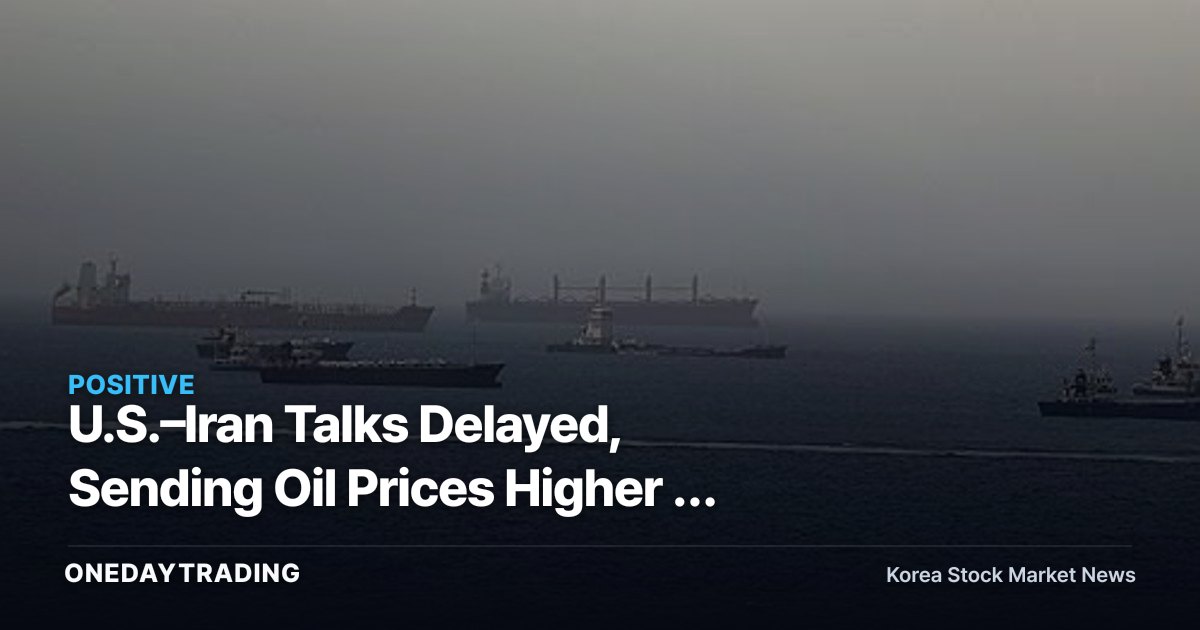
On the 19th (local time), news broke that the follow-up talks between the United States and Iran, set to be held in Switzerland, had been postponed, and international oil prices rose. Brent crude, the global benchmark, climbed about 0.9%. The mere fact that the negotiation schedule has been pushed back does not immediately cut supply, but the market leaned toward the view that the longer a diplomatic solution is delayed, the longer geopolitical risk from the Middle East could persist.
The crux lies in Iran's crude oil exports and the Strait of Hormuz as a conduit. If talks progress and sanctions are eased, more Iranian crude would flow into the market, acting as a force to push prices down; conversely, if the talks tilt toward delay or breakdown, expectations of expanded supply retreat and a risk premium is reattached. This rise can be seen as the latter scenario being temporarily priced in.
Background and Context
Tensions and negotiation phases among Middle Eastern oil-producing nations have been a key driver swaying oil prices recently. Oil prices move on both demand (the economy) and supply (oil producers and geopolitics), and the fact that a single diplomatic event can shake prices, as in this case, is a sign that the market is reacting sensitively to supply-side uncertainty. That said, since a delay in talks is a postponement rather than a collapse, there is ample room for the direction to flip again depending on the additional schedule and remarks from both sides.
Impact on the Market and Stocks
- Refiners such as S-Oil, SK Innovation, GS, and HD Hyundai Oilbank: When oil prices rise, expectations grow for valuation gains on inventory holdings and improving refining margins. However, the essence of profitability lies less in the absolute level of oil prices than in the refining margin spread — product prices minus crude prices — so if only oil prices rise while product prices fail to keep pace, the effect is limited.
- Airlines such as Korean Air and Asiana Airlines: Fuel costs account for a large portion of operating expenses, so rising oil prices are a direct cost burden. On top of that, if geopolitical instability stirs the exchange rate, it can create a double squeeze of foreign-currency debt and fuel costs.
- Shipping stocks such as HMM: Rising bunker fuel costs are a burden, but there is a two-sided nature in that freight rates rise to offset them when Middle East route risk comes to the fore.
- Korea Gas Corporation and energy infrastructure: When oil and gas strengthen together, they are affected in terms of linked selling prices and the recovery of receivables.
- Petrochemical stocks: If naphtha costs rise and squeeze spreads, it can work unfavorably for the chemical industry sector.
Investor Checkpoints
- The resumption schedule and outcome of the U.S.–Iran talks: progress brings downward pressure on oil prices via expectations of expanded supply, while a breakdown widens the risk premium.
- Alongside Brent and WTI price levels, track the trend in the Singapore complex refining margin, which is central to refiners' profits.
- The won-dollar exchange rate level: if oil prices and the exchange rate rise together, the profit-and-loss direction for airlines, refiners, and chemicals becomes more pronounced.
- In the next quarter's earnings releases, check how oil price swings were actually reflected in the numbers through inventory-related gains/losses and fuel cost line items.
Outlook
If the delay in talks drags on and supply uncertainty persists, a favorable short-term environment could continue for the refining and energy sector. On the other side, airlines and shipping lines may see fuel cost burdens weigh on earnings. That said, this rise is limited to around 1%, and since the talks are a postponement rather than a collapse, it could quickly reverse if material pointing the other way emerges. Betting on oil prices is a phase that calls for multi-layered scrutiny — looking at refining margins, exchange rates, and demand indicators together rather than predicting direction.
This article is auto-summarized and analyzed content based on the original news. View original (Yonhap News Securities)