
At a Glance
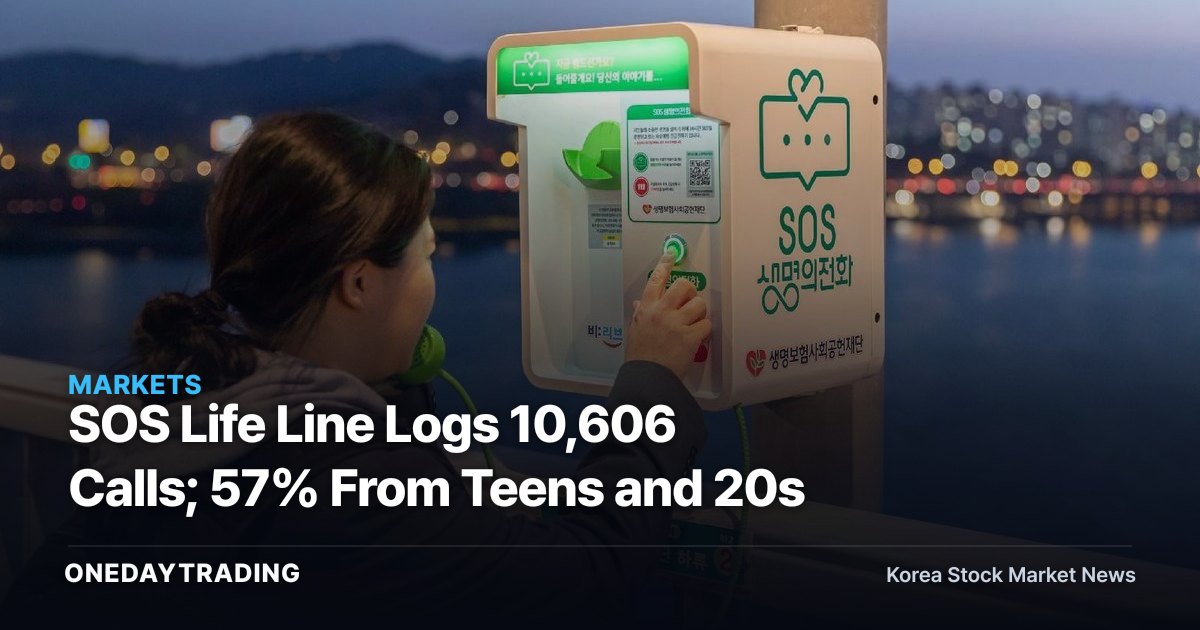
On the 9th, the Life Insurance Social Contribution Foundation announced the results of 15 years of operating the SOS Life Line. According to Maeil Business Newspaper’s Economy section, the SOS Life Lines installed on 20 Han River bridges received 10,606 crisis calls from 2011 through the announcement date, of which 2,515 led to rescues by the 119 emergency service. The key takeaway for investors is not the revenue of any particular company, but where demand for crisis-response infrastructure is concentrated. The figures currently available show usage patterns for public and social-contribution services, with no confirmed connection to the earnings or contracts of any individual listed company.
Why It Matters Now
The SOS Life Line received 188 calls in the first half of this year, up 19.7% from the same period a year earlier. This is more than simply an increase in cumulative results. It is the latest data showing that demand for counseling remains active. However, the Maeil Business Newspaper report did not provide reasons for the increase or individual outcomes following counseling.
The age distribution offers insight into how the service should be designed. Among cumulative callers, 3,314 were in their 20s, accounting for 31%, while 2,757 were teenagers, representing 26%. The announcement stated that teens and people in their 20s made up 57% of SOS Life Line users. Because the calculation methodology was not separately explained, there is no basis for extrapolating this percentage to the overall population experiencing crises.
The time distribution also affects operational efficiency. A total of 5,275 calls, or 49.7%, were received between 6 p.m. and midnight. With the system connecting callers to professional counselors 24 hours a day, 365 days a year, demand during evening hours accounts for nearly half of all calls, making staffing and referral arrangements critical to effective crisis response.
Key Issues
- Calls that led to rescues: Of the 10,606 crisis calls received over the 15 years since installation in 2011, 2,515 led to rescues by the 119 emergency service. Individual outcomes after those rescues were not disclosed.
- Usage concentrated among young people and teens: The figures included 3,314 people in their 20s (31%) and 2,757 teenagers (26%). The leading categories of concern were interpersonal relationships at 20%, career and academic issues at 17%, life in general at 16%, and family problems at 13%.
- Calls concentrated in the evening: A total of 5,275 calls (49.7%) were received between 6 p.m. and midnight. This confirms that calls are concentrated during a specific period rather than being evenly distributed across operating hours.
- Scale of follow-up support: From 2016 through June this year, the Life Insurance Social Contribution Foundation provided 6.26 billion won in support to 6,430 suicide-attempt survivors and 3,927 people bereaved by suicide.
Impact on Related Stocks and Sectors
- No confirmed stocks with direct benefits: The materials reported by Maeil Business Newspaper did not disclose any listed-company contracts, revenue, or profitability related to partner hospitals or counseling services. There is therefore no basis for identifying any particular stock as a beneficiary.
- Indirect signal for healthcare services: Through 100 partner hospitals nationwide, the foundation coordinates physical and psychiatric treatment and follow-up care for suicide-attempt survivors, beginning at the emergency-room stage. This indicates demand for coordinated medical services, but earnings and cost structures for individual hospitals were not disclosed.
- Expansion of social-contribution infrastructure: The first Mind Phone was installed in Seoul Forest in May, with an additional service planned for Maeheon Citizen’s Forest in October. While this indicates an expansion of operations, it does not mean that investment by listed companies or higher profits have been confirmed.
Investor Considerations
- An increase in counseling calls should not be directly equated with higher revenue for related companies. The materials do not identify the service operator or explain the cost-bearing structure.
- The stated 57% share for teens and people in their 20s appears in the announcement, but the calculation methodology was not confirmed. Mixing age-group counts and percentages derived through different aggregation methods could change the interpretation.
- The 6.26 billion won in support for 6,430 suicide-attempt survivors and 3,927 bereaved family members covers the period from 2016 through June this year. Additional data would be required to calculate annual support or the amount provided per person.
- Only a plan to begin additional Mind Phone operations at Maeheon Citizen’s Forest in October has been announced. Until the exact launch date and usage figures are confirmed, the plan cannot be treated as a completed outcome.
Overall Outlook
The Life Insurance Social Contribution Foundation’s announcement shows that the SOS Life Line has operated on 20 Han River bridges for an extended period, connecting counseling with rescue services. The reported 57% share of users who are teens or in their 20s, together with the prevalence of concerns about interpersonal relationships, careers, and academics, suggests that future services should be designed around accessibility for younger people and evening-hour response. This interpretation is based on figures reported by Maeil Business Newspaper.
Conversely, there are few company-specific variables that investors can immediately price into stocks. The materials do not show whether participation by the 100 partner hospitals has generated actual revenue or profitability, or how the expansion of the Mind Phone service will be funded. Future operating results and disclosures from relevant organizations could broaden the basis for assessment, but the current announcement alone does not support equating social value with stock returns.
Three indicators merit further attention. First, whether counseling calls in the second half of this year maintain the first half’s 19.7% growth trend. Second, the exact October launch date and usage figures for the Mind Phone at Maeheon Citizen’s Forest. Third, how the network of 100 partner hospitals nationwide is sustained. Continued demand for counseling would strengthen the case for expanding support infrastructure, while declining usage would require reassessing the effectiveness of expansion plans.
Frequently Asked Questions
Where are the SOS Life Lines installed?
According to Maeil Business Newspaper, SOS Life Lines are currently installed on 20 Han River bridges. In a crisis, picking up the handset connects the caller to a professional counselor 24 hours a day, 365 days a year.
When were the most calls received?
A total of 5,275 calls were received between 6 p.m. and midnight, accounting for 49.7% of all calls. This figure was compiled from operating data covering 2011 through the announcement date.
Where does the Mind Phone operate?
The Life Insurance Social Contribution Foundation installed the first Mind Phone in Seoul Forest in May. An additional service is planned for Maeheon Citizen’s Forest in October, but the announcement did not specify the exact launch date.
This article was automatically summarized and analyzed based on the original news report. View the original article (Maeil Business Newspaper, Economy)