
At a Glance
The fourth week of June (the 22nd–26th) brings a concentrated batch of indicators for gauging domestic demand and financial conditions, including domestic business sentiment, the soundness of financial institutions, and birth statistics. These are not earnings releases that move individual names directly, but they offer material for assessing the direction of domestic-demand and financial stocks through the pace of the consumption recovery and the asset soundness of the banking sector.
Because short-term market sentiment can hinge on whether the data meet market expectations, it is worth monitoring shifts in the supply-demand (order flow) of the relevant sectors around the releases.
Why It Matters Now
These indicators are drawing attention because they offer a first read on whether the long-sluggish domestic economy is genuinely finding a bottom. Business-survey-style readings on corporate sentiment tend to lead decisions on production, hiring, and investment, so confirmation of an improving trend could revive demand expectations for the retail, services, and consumer-goods sectors. Conversely, a renewed contraction in sentiment would add downward pressure to earnings estimates for domestic-demand stocks.
Indicators of financial-institution soundness are a key variable determining the investment appeal of banks and financial holding companies. If delinquency rates and non-performing loan ratios are kept stable, lighter provisioning burdens improve earnings visibility; but if bad debt expands in real estate project financing and small-business loans, additional provisioning would weigh on dividend capacity and capital adequacy ratios. In other words, even the same release can send opposite signals to financial stocks depending on the direction of the numbers.
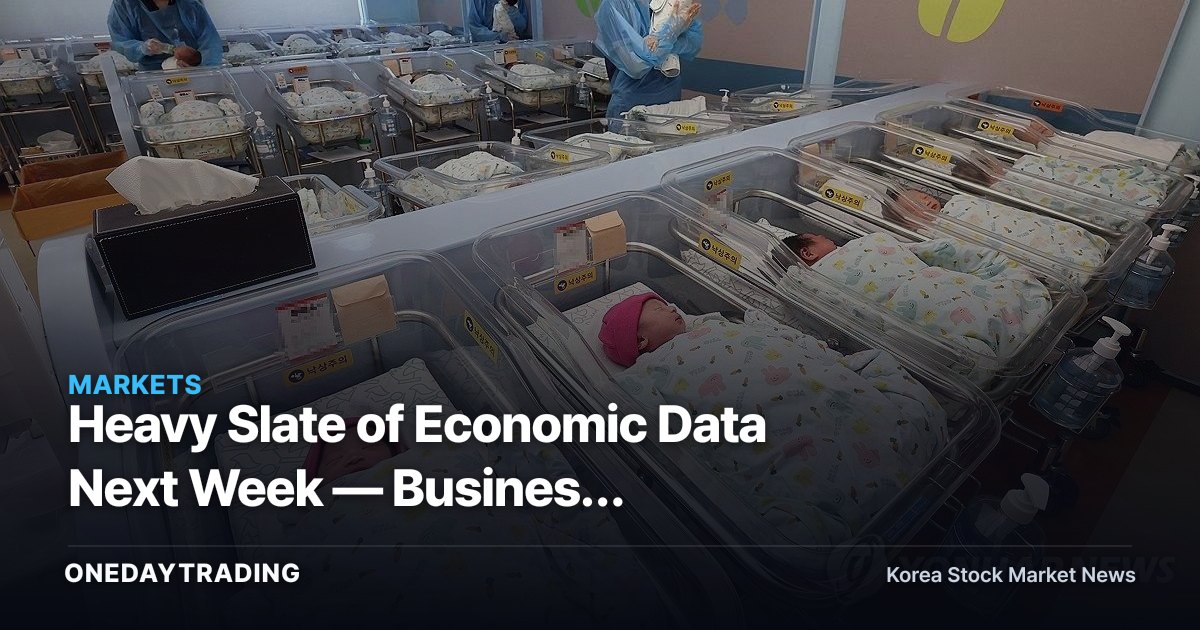
Whether birth statistics keep rising is tied less to short-term share prices than to medium- to long-term structural themes. A sustained uptrend in the number of births would reinforce the long-term demand base for population-sensitive sectors such as infant care, education, and food and beverage; if it proves only a temporary rebound, the premium on related stocks built purely on policy expectations could unwind.
Frequently Asked Questions
- Which indicator carries the greatest market impact this week? The financial-institution soundness data, because they connect directly to the provisioning and dividend outlook for banks and financial holding companies.
- How does improving sentiment translate into share prices? When corporate sentiment improves, capital expenditure and hiring rise, which in turn feeds expectations of a revenue recovery for retailers and consumer goods.
- Is rising births really a positive catalyst? It is favorable as a long-term theme, but several consecutive quarters of data are needed to tell whether it is a one-off rebound or a genuine trend reversal.
- What should I watch if the data disappoint? Check for downward revisions to domestic-demand earnings estimates and the potential for higher provisioning in the banking sector, while tracking exchange-rate and interest-rate trends alongside.
Affected Stocks and Sectors
- Banks and financial holding companies Stable soundness indicators would ease provisioning burdens, highlighting earnings and dividend appeal. A widening of bad debt would create the opposite pressure.
- Retail and domestic consumer goods Improving business sentiment points to a recovery in end demand, which is favorable for department store, hypermarket, and household-goods demand.
- Infant care and education stocks If the rise in births hardens into a trend, the long-term demand base for infant products and education services would strengthen.
- Construction and real estate finance If project-financing bad-debt issues come to the fore during the review of financial-sector soundness, volatility could increase.
Points to Watch When Investing
- Economic data are often priced in on expectations before the direction is confirmed, so contrarian trades can emerge after the release.
- Improving sentiment does not translate directly into earnings; there is a lag until actual revenue and operating profit are reported.
- Birth statistics carry heavy seasonality and base effects, making it hard to declare a trend from just one or two months of figures.
- For financial stocks, interest-rate direction and dividend policy work alongside soundness, so judgments should not rest on a single indicator.
Overall Outlook
If the data come in above market expectations, hopes for a domestic-demand recovery combined with stable banking-sector soundness could foster a favorable tone across consumer and financial stocks. That said, since both business sentiment and birth figures are highly volatile in the short term, one should be wary of stretching a single strong reading into a trend reversal. Rather than the headline number on release day, a reasonable approach is to track and confirm it alongside the next quarter's earnings, the trajectory of delinquency rates, and shifts in exchange rates and interest rates.
This article is auto-summarized and analyzed content based on the original news report. View original (Yonhap News Securities)