
Summary
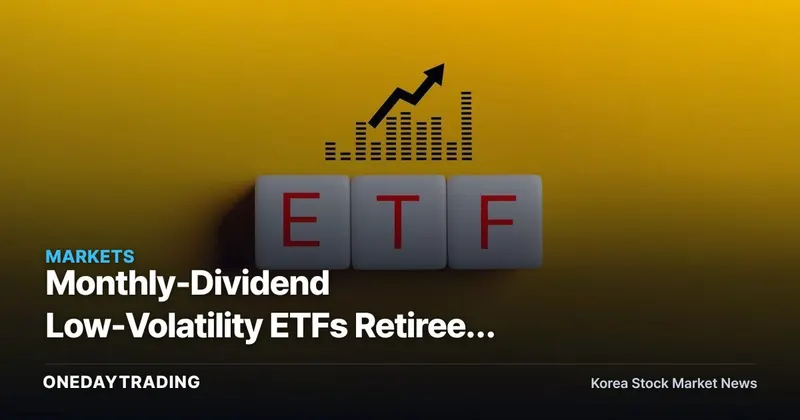
Low-volatility ETFs that generate monthly cash flow are products designed to prioritize stable distributions over capital appreciation, serving as both a bond alternative and a volatility buffer for retirees who need regular withdrawals. However, behind the high distribution yields lie structural costs — dependence on option premiums, underperformance in bull markets, and the possibility of return-of-capital eroding the principal — making it easy to misjudge these products by focusing on the distribution rate alone.
Background
In the U.S. market, ETFs that pay monthly dividends while managing downside volatility have emerged as a standard tool for retirement asset management. These products fall into two broad categories. The first is the traditional high-dividend, low-volatility approach, which selects stocks (tickers) with stable dividends and low price fluctuation to enhance distribution sustainability. The second is the covered-call approach, which sells call options on held shares and uses the option premiums as the monthly distribution source.
Covered-call products can achieve double-digit distribution yields when the market moves sideways or rises gradually, as option premiums accumulate steadily. However, because the structure transfers the upside of large moves in the underlying assets to the option buyer, returns lag the index in strong bull markets.
The reason retirees favor this product category is straightforward. A reliable monthly cash inflow reduces the need to sell assets at a fixed ratio to cover living expenses, and it mitigates sequence-of-returns risk — the danger of being forced to liquidate principal at depressed prices during a downturn.
Structural Context
An aging population combined with the transition into the drawdown phase of retirement is structurally driving demand for cash flow over capital gains. When interest rates are high, competing income assets such as bonds and deposits become more attractive; but as rates decline, bond yields fall and capital tends to rotate into equity income ETFs. The environment that simultaneously demands distribution stability and volatility management is the very soil in which this market grows.
Stock (Ticker) and Industry Sector Impact
- Covered-call income ETFs (JEPI, JEPQ, etc.) — The flagship category using option premiums as the distribution source. Their income appeal stands out in volatile but non-trending markets. The key weakness is capped upside in a strong bull market.
- High-dividend low-volatility ETFs (SPHD, DIVO, etc.) — Heavily weighted toward stocks (tickers) with stable dividends, these funds carry a large allocation to defensive names and tend to hold up relatively well during economic slowdowns and rate-cutting cycles.
- Asset managers — Capital inflows into income ETFs translate directly into fee-based revenue, creating a clear management-fee tailwind for large firms with established income product lineups.
- Defensive sectors (consumer staples, utilities, telecom) — These are the core holdings of low-volatility strategies; growing demand for such ETFs is favorable for high-quality dividend stocks (tickers) in these industry sectors.
Bull vs. Bear Scenarios
On the bullish side, when rate cuts coincide with a sideways market, option premiums and dividends become attractive simultaneously, offering the potential for solid total returns relative to volatility alongside steady cash flow. On the bearish side, in a rapidly rising bull market, covered-call products fail to keep pace with the index, creating significant opportunity cost; and in a sharp drop (plunge), option premiums provide only partial downside protection. In particular, when a high distribution yield is funded by return of capital rather than investment income, the net asset value gradually erodes over time — something the distribution rate figure alone does not reveal.
Action Points for Investors
- Look beyond the distribution yield and track total return (price + distributions) alongside NAV trends; determine whether the distribution source is option premiums and dividends or return of capital.
- Compare expense ratios and the specifics of each option strategy to assess how cost structure affects long-term performance, even among products with similar income profiles.
- For direct investment in U.S. ETFs, local withholding tax on distributions, domestic Korean taxation, and the exchange rate level all affect actual income received — evaluate whether to hedge currency exposure accordingly.
- Monitor the Fed rate-decision calendar and volatility index trends, and establish in advance the criteria for adjusting covered-call exposure should a bull market take hold.
This content was automatically summarized and analyzed based on the original news article. View original article (Yahoo Finance)