
Key Takeaways
Nuclear stocks (tickers) don't move on new orders alone. The longer the heat wave persists, the more the reliability of baseload power in withstanding peak demand reshapes the discount rate embedded in these share prices.
The Nuclear Safety and Security Commission's emergency inspection is an event with both a positive catalyst and a negative catalyst built in. If it confirms strong accident-prevention capability, the policy case for nuclear power gets stronger — but if it exposes weaknesses in cooling systems, equipment, or emergency response, operating rates and regulatory costs will be the first things to wobble.
What Happened
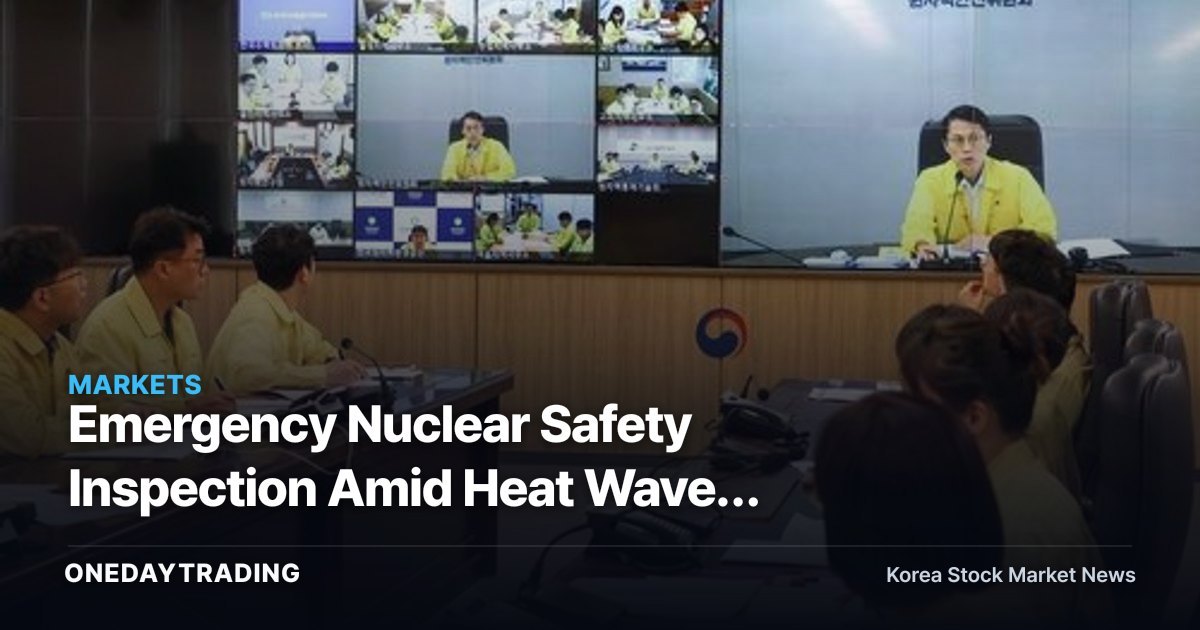
With the heat wave continuing nationwide, the Nuclear Safety and Security Commission has decided to conduct an emergency inspection of the safety and response readiness of nuclear power plants and other nuclear facilities. The focus isn't expanding output — it's confirming whether the equipment can hold up reliably in high-temperature conditions.
For investors, this news reopens the question of where the nuclear theme is headed. Nuclear power plants are valued as baseload power sources during summer months when electricity demand spikes, but at the same time, operational risks tied to high temperatures, cooling water, external grid connections, and worker safety also grow. In a stretch where share prices have risen mainly on policy optimism, inspection headlines like this test the defensive line under the current valuation.
Notably, in the nuclear value chain, order backlogs don't translate directly into profit. Design, equipment procurement, maintenance, commissioning, and regulatory approval all take time. This heat-wave response inspection checks the very first link in that long chain: operational reliability.
Background and Context
Heat waves push up electricity demand. As cooling load rises, the grid places heavier demands on reserve capacity and baseload stability. Nuclear power has the advantage here of low fuel-cost volatility and the ability to sustain large-scale output.
But the moment reliability comes into question, the economics of nuclear power flip. If scheduled preventive maintenance runs long or regulatory inspections tighten, operating rates fall — and while maintenance and equipment suppliers may see a short-term bump in work volume, it becomes a burden for power generators and policymakers. That's why nuclear-related investing needs to track operating rates and regulatory rhythm just as closely as order news.
Impact on the Market and Individual Stocks
- Doosan Enerbility: As the flagship nuclear equipment stock (ticker), it's typically the first to price in policy optimism. But this particular issue is a safety inspection of existing facilities, not a new plant order. In the near term, the risk-management premium matters more to the share price than expectations.
- KEPCO Engineering & Construction: Nuclear design and engineering capability is the core value driver here. If safety standards for equipment tighten as a result of the heat-wave response, demand for design and safety-assessment work could build over the medium to long term.
- KEPCO Plant Service & Engineering (KEPCO KPS): Maintenance and upkeep are directly tied to the heat-wave inspection. Preventing equipment malfunctions and expanding inspection frequency could be positive in terms of work volume, but whether that actually flows through to earnings depends on the contract structure and scope of maintenance work.
- Woojin: Expectations may build around nuclear instrumentation and monitoring equipment, since high-temperature conditions raise the importance of measurement and monitoring systems. That said, theme-driven buying could run hot ahead of any confirmed supply contracts.
- KEPCO (Korea Electric Power Corporation): The operational stability of nuclear plants ties directly into power procurement costs and grid stability. If nuclear utilization holds up, it helps ease cost pressure — but if safety issues force shutdowns, both power purchase costs and market sentiment could deteriorate at the same time.
Investor Checkpoints
- Check whether the Nuclear Safety and Security Commission's inspection results mention any equipment abnormalities, additional remedial measures, or follow-up inspections.
- Watch whether nuclear operating rates and scheduled maintenance timelines hold steady through the summer power-demand peak.
- Distinguish between actual order disclosures and maintenance contract changes at Doosan Enerbility, KEPCO Engineering & Construction, and KEPCO KPS.
- In stretches where nuclear policy news is already priced in, check trading value increases alongside valuation strain.
Outlook
The optimistic scenario is straightforward: if nuclear safety and response systems hold up without issue through the heat wave, nuclear power gets re-rated as a defensive asset for the summer demand peak. In that case, stocks (tickers) tied to the reliability of existing facilities — maintenance and engineering names — may carry more explanatory weight than equipment makers.
The opposite scenario also needs to stay on the table. If the emergency inspection leads to demands for further remediation or tighter regulation, the market will price in the risk of operational disruption before it prices in the nuclear-expansion narrative. What matters right now is whether the rally in nuclear stocks (tickers) has been driven by expectations of new orders or by genuine operational stability. The next signal will come from the inspection results and from how nuclear plants actually run through the peak demand period.
Doosan Enerbility: A Real-Time Data Snapshot
Doosan Enerbility's most recent closing price was KRW 76,700 (+5.07% from the previous session), and the composite signal combining foreign/institutional order flow with news and momentum reads 🟢 Buy-leaning. With foreign investors, institutional investors, and momentum all positive, this stock (ticker) is worth watching.
- ▲ Dual buying — Foreign investors +KRW 14.6 billion · Institutional investors +KRW 13.8 billion, bought in tandem
※ Price and foreign/institutional order-flow (supply-demand) data are provided by Korea Investment & Securities (KIS) and reflect figures as of publication time.
This article was automatically summarized and analyzed based on the original news report. View original (Yonhap News, Industry)