
At a Glance
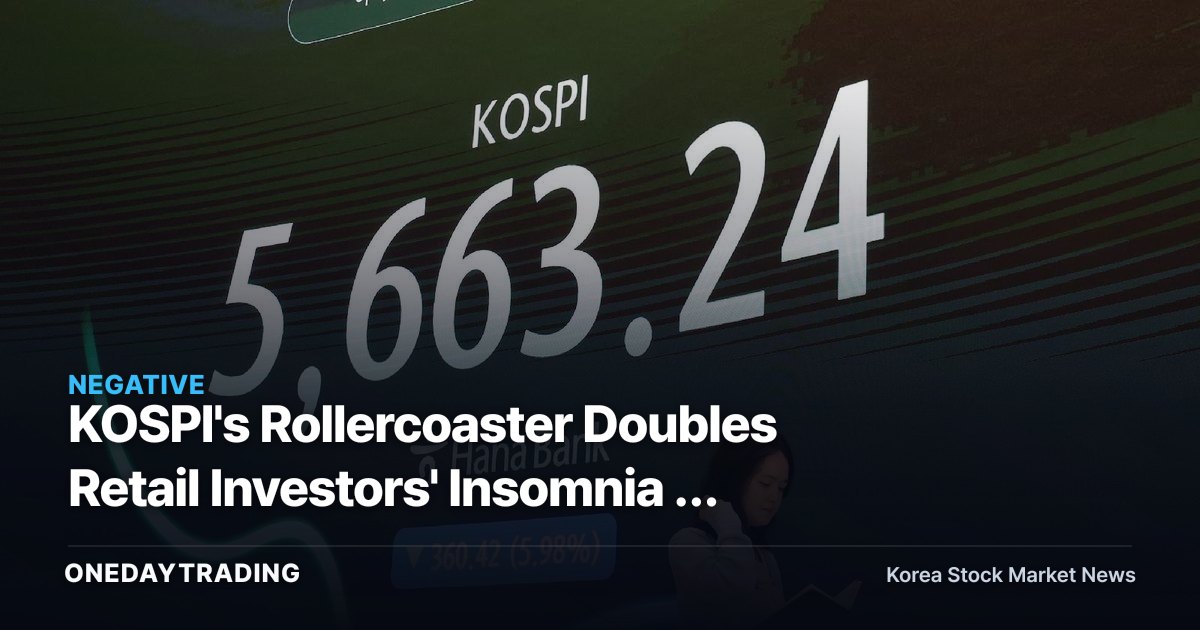
Last month, the domestic stock market repeatedly swung between record-breaking plunges and sharp rebounds. What this really signals isn't the direction of the index, but the fact that retail investors' risk tolerance is wearing thin first.
The fact that psychiatric visits for stock addiction, depression, insomnia, and panic attacks have doubled is not just a social-affairs story. For brokerage stocks, it's a signal carrying both a short-term positive catalyst from higher trading value and a medium-term negative catalyst from weakening retail stamina, arriving at the same time.
Why It Matters Now
Markets typically read volatility first as a rise in trading value. When share prices swing sharply, retail investors repeatedly cut losses, average down, and trade short-term. During this phase, brokerages with heavy retail exposure, such as Kiwoom Securities, can show temporary resilience in brokerage commission income. The problem is that this revenue doesn't come from healthy risk appetite, but from loss-averse, anxiety-driven trading.
Once retail investor sentiment deteriorates past a certain point, it shifts from more trading to market exit. If constantly checking stock screens all day is leading to insomnia and panic attacks, the next stage is shrinking account balances, repaying margin loans, and avoiding leveraged products. At that point, even if brokerage commission income holds up, margin loan balances and financial product sales come under pressure.
In a bull market, anxiety tends to stay parked as dry powder waiting to buy. But when plunges and sharp rebounds repeat within a short period, investors price in the possibility of losses more heavily than potential returns. The fact that anxiety hasn't subsided even after KOSPI rebounded means the market still doesn't trust the recovery. Prices have partly retraced, but sentiment has recovered less.
Frequently Asked Questions
- Why does news about stock addiction matter for the stock market? Excessive trading by retail investors boosts trading value, but as losses accumulate, it can lead to a decline in deposits and a contraction in margin lending.
- Is this a positive catalyst or a negative catalyst for brokerage stocks? It's a positive catalyst for short-term trading value, but if retail clients' loss fatigue drags on, it becomes a burden for both the brokerage and asset management businesses.
- Does the problem disappear once the index rebounds? No. A sharp rebound partially restores loss-making accounts, but if volatility persists, investors move defensively again.
- What indicators should retail investors watch? Rather than KOSPI's price change rate alone, they should watch client deposits, margin loan balances, trading value, and the share of leveraged ETF trading together.
Related Stocks and Sector Impact
- Kiwoom Securities. With heavy reliance on retail online trading, it's sensitive to rising trading value during volatile markets. However, once anxiety-driven trading turns into account outflows, its commission momentum cools quickly.
- Mirae Asset Securities. With a broad retail and wealth management base, client asset balance flows matter more than short-term trading increases. If risk aversion grows, sales of equity-type products could slow.
- NH Investment & Securities. A recovery in trading value is positive, but if market volatility spreads into credit risk, it becomes a valuation discount factor for the brokerage industry as a whole.
- Leveraged and inverse ETFs. The more plunges and sharp rebounds repeat, the more short-term money tends to flow in. But as loss experiences mount, discussions around regulation and investor protection may follow.
- Healthcare services. The link between financial stress and rising consultations for depression, insomnia, and panic attacks points to the potential for a structural expansion in mental health demand.
Investment Considerations
- Don't assume brokerage earnings are improving based on rising trading value alone. Even if trading increases, if client deposits are falling, it isn't high-quality revenue.
- A rapid decline in margin loan balances signals that retail investors have begun de-risking. Conversely, if balances stay high while the index shakes again, the burden of forced margin-call selling increases.
- Mental health issues don't show up directly on an income statement. But changes in investor behavior shake up supply-demand (order flow) and sector multiples with a lag.
- The next indicators to watch are monthly trading value, client deposits, margin loan balances, and KOSPI volatility. Whether capital remains in the market matters more than whether it rebounds.
Overall Outlook
The bullish scenario is simple. If KOSPI stably recovers its losses and trading value holds up, brokerage stocks can price in a brokerage-business recovery. In markets with heavy retail participation especially, resilient earnings at retail platforms tend to show up first.
The trigger for the bearish scenario is a sentiment exit. Reports that cases of depression, insomnia, and panic attacks have doubled look more like evidence that retail investors are starting to treat volatility as a threat rather than an opportunity. If deposits and margin loan balances both decline next month, the market will start pricing in fatigue rather than a rebound. What to watch before the index is retail investors' cash balances.
This article is content automatically summarized and analyzed based on the original news report. View Original (Maeil Business Newspaper Securities)