
Key Summary
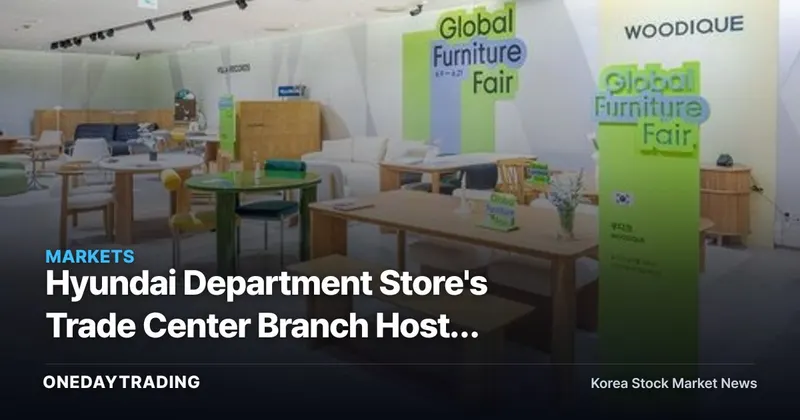
Hyundai Department Store is hosting a furniture fair at its Trade Center branch in Gangnam-gu, Seoul, through the 21st, showcasing products from renowned furniture brands worldwide. The event, featuring 19 companies from 7 countries, is seen as an extension of the company's strategy to strengthen its high-end living category and attract high-value customers with greater spending power.
What Happened
Hyundai Department Store is running a special exhibition at its Trade Center branch that brings together global premium furniture brands under one roof. Nineteen companies from 7 countries are participating, displaying and selling a wide range of living products including sofas, dining tables, and storage furniture.
The Trade Center branch in the Gangnam area is one of Hyundai Department Store's flagship stores, with a high proportion of customers with strong purchasing power. Hosting a limited-run furniture fair at such a location goes beyond simple event revenue — it reflects an intent to strengthen the brand experience across the entire living category.
Background and Context
Amid slowing growth in traditional categories like apparel, department stores have increasingly turned to high-involvement, high-price categories such as living, furniture, and appliances as a way to defend average spending per customer. Premium furniture, where a single purchase can run into the millions of won, is an attractive area for department stores in terms of extending time spent in-store and securing loyal customers.
Impact on the Market and Stocks (Tickers)
- Hyundai Department Store: Strengthening its premium living lineup is positive for average spending per customer and for attracting high-value shoppers, but the impact of a single event on earnings is limited.
- Shinsegae and Lotte Shopping: Rival department store operators face greater incentive to intensify competition in the living and furniture categories.
- Domestic furniture makers: Homegrown brands such as Hanssem and Hyundai Livart could be affected by the competitive dynamic with imported premium furniture.
- Living and interior sector overall: This event could serve as a barometer for whether high-end living consumption is recovering.
Investor Checkpoints
- This furniture fair should be viewed as a short-term marketing event, not something with the scale to move quarterly earnings.
- The key variables for department store earnings — consumer sentiment, luxury and living category spending per customer, and store efficiency — should be monitored together.
- Hyundai Department Store's share price is also evaluated on shareholder-return policies such as dividends and buybacks, as well as its asset value as a real-estate-backed stock.
- Investors should track the living category's share of revenue and its growth trend in upcoming quarterly earnings.
Outlook
In an optimistic scenario, a recovery in premium living demand combined with Hyundai Department Store proving its competitiveness in high-end categories could lead to improved average spending per customer and stronger lock-in of high-value shoppers. However, slowing domestic consumption and reduced spending on high-priced durable goods amid high interest rates remain clear risks. The event itself is largely symbolic, and actual investment decisions should be based on the structural profitability of the department store division and the company's overall earnings trend.
This article is auto-summarized and analyzed content based on the original news report. View original (Yonhap News)