At a Glance
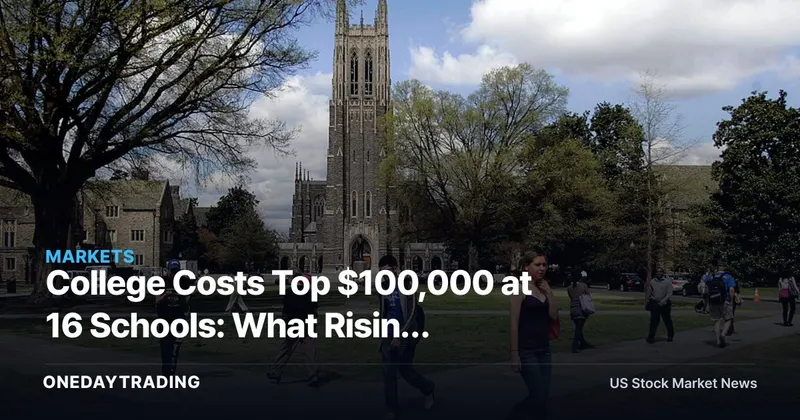
A growing number of U.S. colleges now carry a published cost of attendance above $100,000 per year, with 16 schools crossing that six-figure threshold according to data from The Princeton Review. Yet the headline sticker price overstates what most families actually pay, since grants, scholarships and institutional aid pull net costs meaningfully lower for many students.
Why It Matters Now
The six-figure sticker price is a powerful signal of long-running tuition inflation that has outpaced general consumer prices for decades. For an international retail-investor audience, the story is less about any single university and more about the structural growth of education spending, the swelling pool of student debt, and the financial-services firms that profit from financing, refinancing and servicing that debt.
The gap between published prices and net prices is central. Wealthier and need-based students secure discounts through institutional aid, while full-pay families and those relying on loans shoulder the heaviest burden. That dynamic feeds demand for private student lending, refinancing platforms, and college-savings vehicles, while also fueling political pressure around affordability that could reshape federal loan policy.
FAQ
- Are students really paying $100,000 a year? Many are not. The figure is the sticker cost of attendance; grants and scholarships often reduce the net price substantially, though full-pay families do face the full amount.
- Why do sticker prices keep climbing? Tuition inflation reflects rising labor, facilities and administrative costs, plus a high-discount pricing model where headline prices fund aid for others.
- How does this touch the stock market? Higher education costs expand the student-loan and refinancing market and increase demand for 529 savings products and tuition financing.
- Is this bullish or bearish? It is broadly supportive for education-finance firms, but a policy-driven risk for the sector if loan rules tighten.
Related Stocks & Sectors
- SLM (Sallie Mae) — a leading private student lender that benefits directly from rising tuition and financing demand.
- NAVI (Navient) — student-loan servicing and refinancing exposure tied to outstanding balances.
- SOFI (SoFi) — student-loan refinancing remains a meaningful product line within its lending mix.
- Education-finance and consumer-credit sector — broadly sensitive to tuition trends and federal loan policy.
What to Watch
- Federal student-loan policy changes, including repayment, forgiveness and origination rules.
- Net tuition trends versus sticker prices and enrollment data at private universities.
- Private student-loan origination volumes and delinquency rates at SLM, NAVI and SOFI.
- Interest-rate direction, which drives refinancing demand and lender margins.
Overall Outlook
The bull case is that relentless tuition inflation sustains a large, durable market for student lending, servicing and refinancing, benefiting firms positioned in education finance. The risk is regulatory: affordability anger could trigger tighter loan rules, forgiveness measures, or pricing scrutiny that compress lender economics. The wide gap between sticker and net prices also means demand is more nuanced than the headline suggests, so investors should weigh policy exposure as carefully as growth.
📊 Analysis
Signal Neutral
Why Rising college sticker prices loosely support student-lending demand but carry offsetting regulatory risk, leaving no clear directional edge.
This article was independently written by OneDayTrading from public reporting. Read the original (CNBC)