What Changes
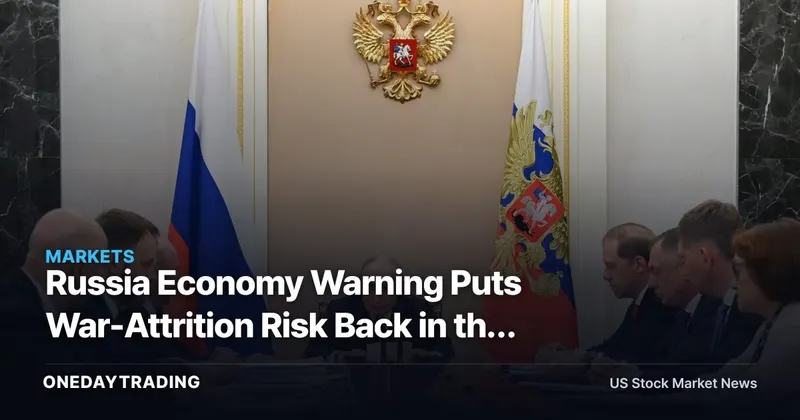
The market issue is not whether Russia says its economy is strong. Governments under pressure often say that. The investable point is that a senior economist reportedly lost his role after presenting a report that challenged the durability of that strength under a long war with Ukraine.
That changes how investors should price Russian macro headlines. A warning about attrition is a warning about time: fiscal capacity, labor strain, industrial output and external pressure compound when conflict stretches. If dissenting analysis is punished, the tape gets less usable information from official channels, not more confidence.
For U.S. equities, this is a second-order story. It does not reset earnings models for Lockheed Martin, Exxon Mobil or major banks by itself. It does keep geopolitical risk alive in the parts of the market that already trade on war duration, sanctions exposure, energy security and defense procurement expectations.
By the Numbers
The source gives no GDP figure, budget number, inflation print or market move. That absence matters. Investors have one hard event to work with: Andrei Klepach was reportedly fired after a report argued Russia could not win a prolonged war of attrition with Ukraine.
With no published figure attached, the useful analytical frame is binary but disciplined: either the report identified a real capacity problem, or the firing mainly reflects political intolerance of pessimistic analysis. Both weaken the credibility of clean, bullish macro claims from Moscow.
Winners & Losers
- Defense primes: U.S. contractors tied to missile defense, munitions and aerospace systems benefit if policymakers see the Ukraine war as structurally prolonged rather than near resolution.
- Energy majors: Oil and gas equities can retain a geopolitical-risk bid when Russia remains central to the war-risk narrative, though this story provides no price or supply figure.
- Commodity-linked equities: Materials and commodity producers may see sensitivity to any sanctions or supply-chain headlines that follow, but the evidence here is macro-political, not demand data.
- European-exposed multinationals: Companies with revenue or cost exposure tied to Europe face the risk that a longer conflict keeps uncertainty embedded in planning and capital allocation.
- Emerging-market risk assets: The losers are not obvious single stocks; the broader risk is lower confidence in official data from politically constrained economies.
Risk Check
- The report is described through a reported firing, not a public economic dataset, so investors should avoid treating it as a quantified forecast.
- Markets may already price a long Russia-Ukraine conflict, limiting the immediate equity reaction.
- A policy or diplomatic shift could reduce the risk premium faster than company earnings can respond.
- Defense and energy stocks still trade on orders, margins, production costs and commodity prices, not geopolitics alone.
Bottom Line
This is a credibility story with market consequences. Russia's strength narrative now has to be weighed against the reported removal of an economist who warned the country could not prevail in a prolonged attrition war. The upside for defense and energy risk premia is real but indirect; the live risk is that investors overtrade a political signal before it appears in orders, guidance, commodity prices or official policy.
📊 Analysis
Signal Neutral
Why The report raises geopolitical and information-quality risk but does not provide a direct earnings, price or policy catalyst for U.S.-listed stocks.
This article was independently written by OneDayTrading from public reporting. Read the original (CNBC Markets)