Key Takeaways
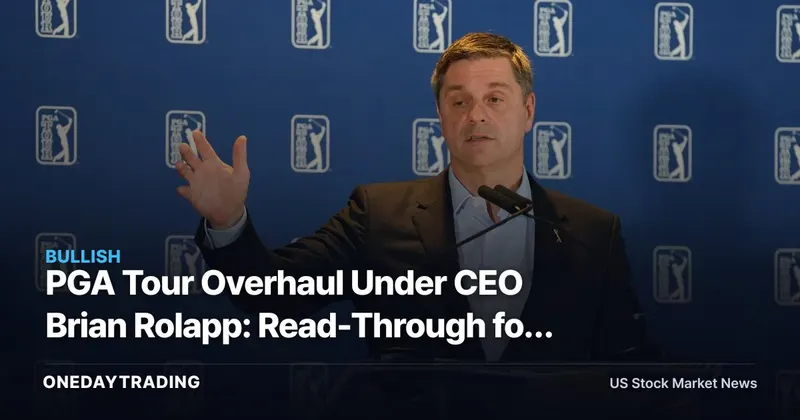
New PGA Tour CEO Brian Rolapp is reshaping the competitive structure of men's professional golf, with the stated aims of sharpening on-course competition and increasing the money that goes to event winners. The Tour itself is not publicly traded, so the cleaner investable angle sits in the golf equipment and broader sports-business ecosystem rather than in any single pure-play stock.
What Happened
Rolapp, who stepped into the chief executive role overseeing the commercial side of the Tour, laid out a slate of structural changes to how the professional circuit operates. The framing is straightforward: make the product more competitive at the top and reward winning more heavily through larger payouts.
The notable feature here is what was emphasized rather than what was quantified. The announced direction centers on competitive quality and prize economics, the two levers that most directly shape player participation, fan engagement and the value of media and sponsorship inventory attached to the Tour.
Background and Context
Professional golf has spent recent seasons absorbing disruption from rival circuits and shifting media economics, which pressured the incumbent Tour to defend the strength of its fields and the appeal of its broadcasts. A CEO mandate built around elevating competition and raising payouts is a response to that backdrop: a stronger, more concentrated product is easier to monetize through television, streaming and corporate partners.
Market and Stock Impact
- Topgolf Callaway (MODG): A healthier, higher-profile pro Tour supports the aspirational marketing funnel that sells premium clubs, balls and apparel, and reinforces participation trends that drive its equipment and venue revenue.
- Acushnet (GOLF): As the owner of Titleist and FootJoy, it is heavily indexed to elite-player credibility and golf engagement; stronger fields and richer purses keep its products in the hands of the most-watched professionals.
- Sports media and broadcasters: Networks and streaming platforms carrying Tour events benefit if a more competitive product lifts ratings and ad value, while sponsors gain a more visible stage.
- Sportsbook and engagement platforms: More compelling, win-focused competition can support golf betting handle and fan interaction, a secondary tailwind for operators with golf exposure.
Investor Checkpoints
- Watch for the specific payout figures, purse sizes and field-size rules once detailed, since the economics announced so far are directional, not quantified.
- Track next-quarter results and commentary from MODG and GOLF for any read on participation and premium-equipment demand.
- Monitor Tour media-rights and sponsorship terms, the clearest channel through which these changes turn into measurable revenue.
- Follow whether rival circuits respond, as competitive escalation can raise costs across the sport.
Outlook
The bull case is simple: a stronger, win-rewarding Tour deepens fan engagement and reinforces the premium positioning that golf equipment makers depend on. The risk is that this is, for now, a strategy framework without disclosed dollar figures, and the listed beneficiaries are indirect rather than pure plays. Equipment demand is also cyclical and discretionary, so a richer Tour does not automatically translate into unit sales if the consumer backdrop softens. The signal to weight most heavily is execution detail and the eventual media and sponsorship economics, not the announcement itself.
📊 Analysis
Signal Bullish
Why A more competitive, higher-payout PGA Tour strengthens golf's profile and supports the premium-equipment and sports-media ecosystem, a modest tailwind for listed golf names.
This article was independently written by OneDayTrading from public reporting. Read the original (CNBC)