What Changes
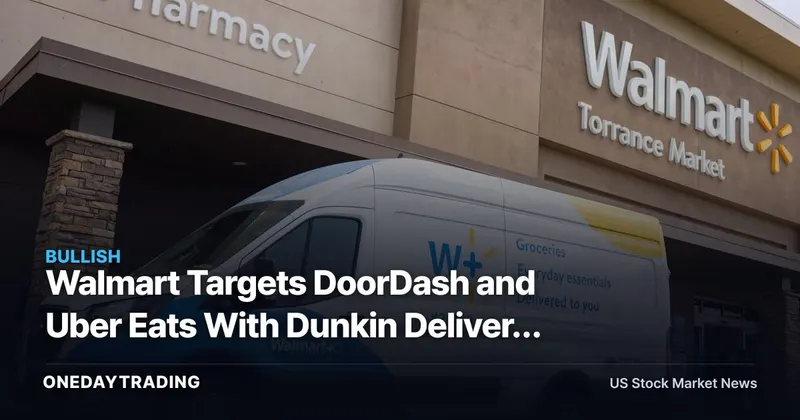
Walmart’s Dunkin delivery deal matters because it turns a high-frequency food purchase into another reason to use Walmart’s platform. Dunkin sells inexpensive, repeatable items such as coffee, donuts and sandwiches; those orders can fit naturally alongside Walmart’s grocery, retail and delivery infrastructure. The strategy is less about one breakfast order than about increasing the number of occasions on which customers open Walmart’s app.
Dunkin delivery through Walmart means the retailer is adding restaurant supply without owning restaurants. The Subway agreement earlier this year established the same model with sandwiches, while the Dunkin deal broadens the daypart mix toward morning coffee and snacks. That gives Walmart a way to compete on selection and convenience while restaurant brands gain another route to customers.
DoorDash and Uber Eats remain the established specialists, with restaurant density and consumer habits built around their marketplaces. Walmart’s advantage is a larger retail relationship and an existing delivery proposition; its challenge is making a restaurant order feel as reliable and economical as an order from a dedicated food-delivery app. Delivery fees, timing and repeat usage will determine whether the partnership adds durable engagement or simply shifts orders between platforms.
By the Numbers
The source reports two concrete moves: Walmart’s Dunkin agreement and an earlier Subway delivery deal in 2025. The Dunkin menu cited in the announcement centers on donuts, coffee and sandwiches, products with frequent purchase potential but generally modest basket values.
That basket profile creates an economic test. Walmart must generate enough order density to support delivery costs, while Dunkin must gain incremental demand after fees and commissions. The relevant comparison is not headline partner count; it is order frequency, delivery economics and whether customers use Walmart for more than one occasion.
Winners & Losers
- Walmart (WMT): Gains another everyday-use category and can cross-sell restaurant delivery through its retail ecosystem. Execution depends on order density and service consistency.
- Dunkin: Receives additional digital distribution for coffee, donuts and sandwiches without building a standalone delivery network, potentially extending reach beyond its existing channels.
- DoorDash (DASH): Faces a stronger retailer-backed alternative in routine food orders, particularly if Walmart bundles convenience or delivery access with broader shopping activity.
- Uber Technologies (UBER): Uber Eats faces competitive pressure from Walmart’s national footprint and restaurant partnerships, although Uber retains a specialized marketplace position.
- Restaurant delivery sector: The deal reinforces a contest over who owns the customer relationship: a dedicated marketplace or a broad commerce platform.
Risk Check
- Low-value coffee and donut orders can be difficult to deliver profitably when fees, labor and distance consume the basket.
- Customers may use Walmart for occasional restaurant orders without changing their primary DoorDash or Uber Eats habit.
- Restaurant partners still depend on accurate preparation and on-time handoff; weak service would damage repeat demand for every participant.
- Competitive responses from DoorDash and Uber Eats could raise promotions, reducing the economic benefit of Walmart’s expansion.
Bottom Line
Walmart’s Dunkin partnership is a bullish strategic signal for Walmart’s convenience ambitions because it adds a second national restaurant relationship after Subway and targets frequent purchases. The investment case strengthens only if Walmart converts those orders into repeat platform usage while controlling delivery costs; the live risk is that small restaurant baskets produce engagement without attractive margins.
FAQ
Why is Walmart delivering Dunkin?
Walmart is using Dunkin delivery to expand its convenience offering beyond traditional retail and grocery orders. Donuts, coffee and sandwiches create frequent occasions for customers to use Walmart’s delivery platform.
Is Walmart competing with DoorDash and Uber Eats?
Yes. Walmart’s Dunkin deal and earlier Subway agreement place the retailer directly against DoorDash and Uber Eats for restaurant delivery demand. Walmart brings a broad retail ecosystem, while the established platforms bring specialized restaurant marketplaces.
What should investors watch in Walmart’s delivery strategy?
Investors should track whether restaurant partnerships increase repeat order frequency and broader customer engagement. Delivery economics, order density and service reliability will show whether the expansion creates profitable usage rather than only additional volume.
Market data check: WMT
WMT last traded near $107.14 (-1.18%). Our composite signal — blending price momentum and news flow — reads 🟡 neutral. Price momentum scores 41/100.
Data as of publication. Price via market feeds; for reference only, not investment advice.
📊 Analysis
Signal Bullish
Why Walmart is adding a second national restaurant partner and expanding into frequent food-delivery occasions, though profitability depends on order density and delivery costs.
This article was independently written by OneDayTrading from public reporting. Read the original (CNBC)