At a Glance
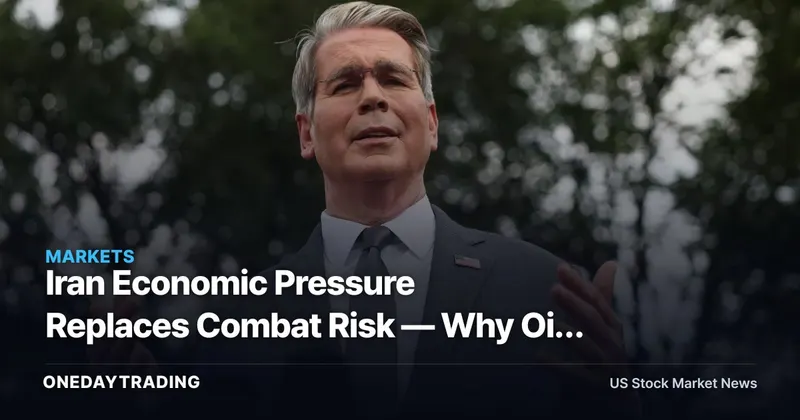
Iran economic pressure, not renewed large-scale U.S. combat, is the market signal from Bessent and President Donald Trump, per CNBC reporting on Aug. 20, as the Iran war approaches six months without a clear end. For investors, the read-through is less about peace and more about the kind of risk premium oil, defense and macro assets should carry.
Economic pressure means the U.S. is emphasizing sanctions, financial restrictions and commercial leverage instead of large-scale military escalation. That channel can still affect crude supply expectations, shipping risk, the dollar and defense shares, but the market prices it differently from direct combat.
Why It Matters Now
The tape already tends to price Middle East conflict through energy first: a higher probability of supply disruption lifts oil-linked equities such as Exxon Mobil and Chevron before broader equities fully react. Bessent saying the U.S. likely will not restart large-scale Iran combat reduces one tail risk, but CNBC reported that Washington is stepping up economic pressure, so the sanction-risk channel remains alive.
The distinction matters for multiples. A combat shock usually hits risk appetite quickly through crude prices, inflation expectations and rates. An economic-pressure campaign works more slowly, through enforcement, trade flows and countermeasures, which means the market can fade the war premium while still demanding compensation for policy uncertainty.
Defense stocks such as Lockheed Martin and RTX do not get the same clean signal as oil producers. The Iran war continues without a clear end, per the source, but Bessent and Trump unveiling an economic operation points to policy pressure rather than a fresh procurement impulse tied to renewed large-scale combat.
Key Debates
- Oil risk premium: WTI-linked equities benefit if sanctions pressure tightens perceived supply, but the absence of renewed large-scale U.S. combat can cap the fear bid.
- Inflation channel: Energy is the macro transmission line; if crude stays contained, the policy shift matters less for rates and equity multiples.
- Defense demand: The Iran war supports geopolitical vigilance, but an economic operation is not the same as a combat-driven order cycle.
- Policy uncertainty: The war has lasted nearly six months, and no clear end means investors still need a risk discount even without a combat restart.
Related Stocks & Sectors
- XOM: Exxon Mobil is exposed to oil-price risk because conflict premiums flow directly into upstream revenue expectations.
- CVX: Chevron reacts to the same crude-price channel, with sanctions risk supporting oil while reduced combat risk limits upside urgency.
- LMT: Lockheed Martin is tied to defense spending expectations, but the reported economic-pressure emphasis weakens the immediate combat catalyst.
- RTX: RTX remains a geopolitical-risk proxy, though the market needs order and backlog evidence before treating the Iran shift as an earnings catalyst.
- Energy sector: Oil producers are the cleanest market expression of Iran escalation risk because supply expectations translate fastest into cash-flow assumptions.
What to Watch
- WTI crude: If crude fails to hold a war premium after the Aug. 20 CNBC report, equities may treat the policy shift as de-escalation.
- Sanctions details: The next market-moving input is the scope of the economic operation unveiled by Bessent and Trump.
- Iran response: Any retaliation that threatens supply routes would reprice energy faster than defense earnings estimates.
- Fed inflation lens: Oil stability keeps the Iran story from becoming a rates story; an oil spike would pull CPI risk back into focus.
Overall Outlook
The investor case is balanced: reduced odds of renewed large-scale U.S. combat can compress the geopolitical premium in oil and defense proxies, while stepped-up economic pressure keeps sanctions and supply uncertainty on the board. The cleanest stance is neutral for broad markets and selectively sensitive for energy: the next move depends on whether policy pressure changes barrels, not headlines.
FAQ
Why did Iran economic pressure matter for oil stocks today?
Iran economic pressure matters for oil stocks because sanctions and enforcement can affect perceived crude supply even without renewed large-scale U.S. combat. Exxon Mobil and Chevron are sensitive because upstream earnings expectations move with oil-price assumptions.
Will the U.S. restart large-scale combat in Iran?
Bessent said the U.S. likely will not restart large-scale Iran combat, according to CNBC reporting on Aug. 20. That statement lowers one escalation scenario, but the Iran war continues without a clear end after nearly six months.
What should investors watch after the Bessent Iran comments?
Investors should watch WTI crude prices, sanctions details and any Iranian response after Bessent and President Donald Trump unveiled the economic operation. If crude stays contained, the market will treat the shift as a policy story rather than a broad inflation shock.
📊 Analysis
Signal Neutral
Why The shift away from renewed large-scale combat reduces escalation risk, but stepped-up economic pressure keeps sanctions and oil-supply uncertainty active.
This article was independently written by OneDayTrading from public reporting. Read the original (CNBC)