At a Glance
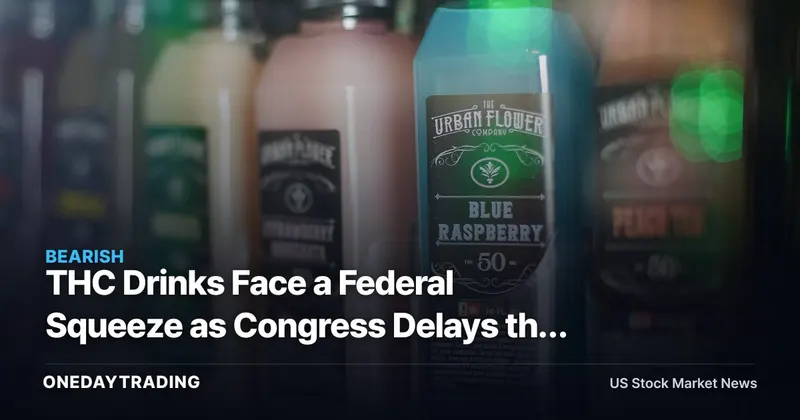
THC drinks are becoming harder to secure as Congress again delays a federal hemp ban, putting the fast-growing alcohol-alternative category between rising consumer demand and an unresolved regulatory threat. The immediate pressure falls on drink makers, distributors and retailers whose product availability depends on how lawmakers define and enforce the ban.
The central investment question is not whether THC beverages have found an audience; the source identifies clear momentum. The question is whether that demand can survive a federal policy change that would restrict the products reaching shelves.
Why It Matters Now
Congressional delay extends uncertainty rather than removing it. A delayed hemp ban leaves companies operating in a market where the commercial opportunity is visible, but the legal framework remains unsettled. That combination can force distributors to manage inventory cautiously and retailers to limit shelf exposure.
THC drinks are marketed as an alternative to alcohol, giving the category a demand narrative distinct from traditional beer, wine and spirits. If consumers continue shifting occasions toward cannabis-infused beverages, producers can gain a new route to beverage spending. If federal restrictions tighten, that same growth channel becomes a policy liability rather than a dependable revenue stream.
The crackdown risk also travels through the supply chain. Makers face the prospect of products becoming harder to sell, distributors face assortment and compliance uncertainty, and consumers face reduced selection or higher friction at purchase. Congress has delayed the hemp ban again, so each participant must plan around a rule that has not yet settled.
Key Debates
- Demand versus legality: THC drinks are booming as an alcohol alternative, but demand does not guarantee continued access if Congress advances a federal hemp ban.
- Inventory risk: Distributors and retailers must decide how much product to carry while the timing and final scope of federal action remain unresolved.
- Category credibility: Repeated delays can sustain sales momentum, yet they can also discourage investment in brands and distribution capacity exposed to policy reversal.
- Consumer substitution: The category benefits when shoppers seek alternatives to alcohol; a crackdown could redirect that spending back to conventional beverages or other cannabis formats.
Related Stocks & Sectors
- THC beverage makers: Producers are the most direct exposure because a federal ban would affect whether their drinks can remain in commerce.
- Beverage distributors: Distributors absorb assortment, logistics and compliance risk as lawmakers delay a decision.
- Retailers: Stores selling THC drinks must balance an apparently strong alcohol-alternative trend against potential product restrictions.
- Beer, wine and spirits: Traditional alcohol suppliers could benefit if consumers lose access to hemp-derived THC beverages, although the source provides no evidence that such a shift has occurred.
What to Watch
- Congressional action on the hemp ban, including any new timetable after the latest delay.
- Whether makers, distributors and retailers report tighter availability or reduced shelf space.
- Consumer demand for THC drinks as an alcohol alternative while the federal debate continues.
- Any indication that the final policy distinguishes among products, producers or distribution channels.
Overall Outlook
The bull case rests on a straightforward mechanism: THC drinks are attracting consumers looking beyond alcohol, creating room for beverage sales to expand. The bear case is equally direct: a federal hemp ban could interrupt distribution before the category develops durable national scale.
For investors, the delay preserves optionality but not certainty. The next decisive signal will come from Congress, while commercial evidence will appear in product availability and channel participation. Until those two signals align, the category carries meaningful policy risk alongside its consumer momentum.
FAQ
Why are THC drinks becoming harder to find?
THC drinks are becoming harder to find because Congress has delayed a federal hemp ban again, leaving makers, distributors and retailers uncertain about future product legality. That uncertainty can encourage more cautious stocking and distribution decisions.
What is driving THC drink demand?
THC drinks are gaining demand as an alternative to alcohol, according to the source. The category therefore competes for beverage occasions that have traditionally gone to beer, wine and spirits.
When will the hemp ban affect THC beverages?
The source does not provide an effective date because Congress has delayed the hemp ban again. The next concrete checkpoint is a congressional decision on the ban’s timing and final scope.
📊 Analysis
Signal Bearish
Why A delayed but looming federal hemp ban threatens the availability and distribution economics of a booming THC-drink category.
This article was independently written by OneDayTrading from public reporting. Read the original (CNBC)