Saudi Arabia and Bahrain Put Oil’s Risk Premium to the Test
Saudi Arabia and Bahrain reported attacks by Iran-linked forces as oil prices completed 3 straight weeks of declines, CNBC reported in an article dated 2026-11-22. For energy investors, the central tension is clear: the physical threat around regional infrastructure and shipping has intensified, while the crude tape still reflects ample resistance to a sustained disruption thesis.
The investable subject is the Strait of Hormuz risk premium—the extra value crude may acquire when traders judge that threats to vessels or restrictions on passage could reduce dependable energy flows. Iran has imposed curbs on vessels moving through the strait, while incidents on land and at sea have widened the range of assets exposed to the conflict.
That does not establish an oil shortage or a durable price direction. It establishes a more demanding test: whether attacks and vessel restrictions translate into observable impairment of flows. Until that transmission becomes clearer, the market must weigh physical risk against the evidence already embedded in weekly crude performance.
Attacks Expand Across Saudi Arabia and Bahrain
Saudi Arabia said it destroyed a drone launched by the Iran-backed Houthis toward the Riyadh area. The Saudi-led Coalition to Support Legitimacy in Yemen also said its air defenses destroyed a ballistic missile launched by the Yemen-based Houthis toward Saudi Arabia’s western region.
The coalition said it “Intercepted and destroyed a drone launched by the Houthi terrorist militia toward the Riyadh area.” The wording identifies both the claimed origin and intended direction of the drone, while the reported interception means the fact sheet records no resulting damage from that specific incident.
Bahrain's Ministry of Interior said a civilian industrial facility was targeted and a fire followed. CNBC reported that 2 people—a Bahraini citizen and a Pakistani resident—were injured in the Bahrain attack. Their names and conditions, along with the identity and location of the facility, were not provided.
Bahrain also hosts the U.S. Navy’s Fifth Fleet, giving the episode a direct military dimension beyond the damaged civilian site. Iranian state media reported that the Islamic Revolutionary Guard Corps fired missiles and drones at U.S. military facilities in Bahrain.
A separate Iranian media report claimed that Islamic Revolutionary Guard Corps air defenses destroyed a U.S. MQ-9 drone. Those Iranian accounts were not independently verified in the supplied evidence, and U.S. Central Command did not immediately respond to CNBC’s request for comment.
Oman Tanker Strikes Raise the Physical-Flow Question
The United Kingdom Maritime Trade Operations reported that 2 tankers near Oman were struck by unidentified projectiles on Saturday. The attacker remains unknown, so the incident cannot be assigned to Iran, the Houthis or any other party on the available facts.
For the oil market, the distinction between an attack and a sustained flow interruption matters. A tanker strike is evidence of physical danger; it is not, by itself, evidence of how much crude failed to move. Iran’s curbs on vessels transiting the Strait of Hormuz make passage conditions the next observable checkpoint.
The physical-economy mechanism runs through vessel movement. If passage remains constrained, the market may attach more weight to shipment reliability; if energy flows continue despite the security incidents, the case for a larger and persistent risk premium weakens. Neither outcome is confirmed by the supplied record.
Crude Prices Resist the Escalation Narrative
CNBC reported that oil prices fell for 3 straight weeks. Brent crude declined 3.4% for the week, while U.S. crude fell 5.2% over the same period. Those moves are the clearest market evidence in the fact sheet and prevent a one-sided interpretation of the attacks.
The tape has not treated every military development as proof of tightening physical supply. That is not the same as dismissing the threat. It means the market has separated reported attacks from demonstrated, durable loss of energy flows—a distinction investors should preserve rather than infer an outcome from headlines alone.
The counter-scenario is equally important. Repeated attacks, additional tanker incidents or tighter vessel curbs could make flow continuity harder to assume. In that case, weekly declines would describe what crude had priced before clearer disruption evidence, not what it must price afterward.
Negotiations Offer a Second, Conflicting Signal
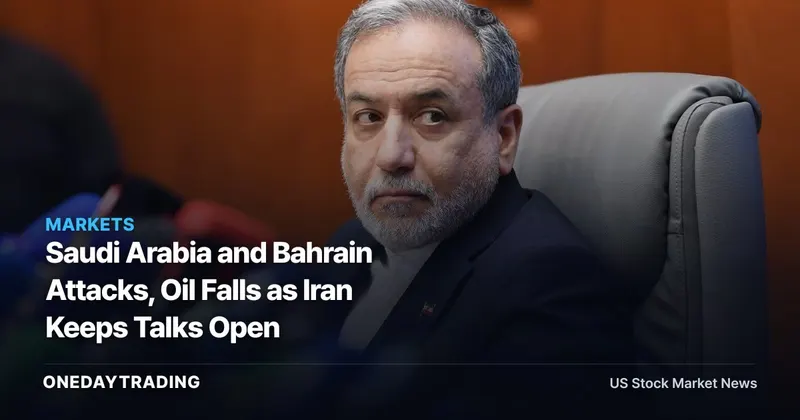
Iranian Foreign Minister Abbas Araghchi said Iran remained open to a negotiated settlement with the United States. His statement supplies a diplomatic counterweight to the attacks, though openness to talks is not evidence that an agreement has been reached or that military activity has stopped.
The prior framework offers limited reassurance. An agreement signed in June by Donald Trump and Masoud Pezeshkian—the Islamabad Memorandum of Understanding—later broke down. Araghchi said the memorandum “is no longer on the table and has no implementation relevance.”
The war began on Feb. 28 with U.S. and Israeli airstrikes on Iranian targets. Against that backdrop, investors should treat negotiations as a live path rather than a resolved catalyst. The next meaningful diplomatic evidence would be concrete progress toward a replacement settlement, not another statement of willingness.
Energy-Market Winners, Losers and Unresolved Exposure
- Crude-price exposure: Brent crude and U.S. crude are the clearest market instruments in the supplied evidence. Their weekly declines show that escalation has not produced an unambiguous positive price signal.
- Physical shipping exposure: The 2 tankers struck near Oman illustrate the direct operational risk. Attribution remains unresolved, limiting any stronger conclusion about who controls the threat or whether it will persist.
- Saudi Arabia and Bahrain: Both reported attacks, with Bahrain also reporting a civilian industrial-site fire and injuries. The available facts do not quantify commercial losses or identify affected listed companies.
- Negotiation-sensitive energy risk: A negotiated settlement could reduce concern around vessel curbs, while failure to advance beyond stated openness could leave the physical threat intact. The evidence supports the conditional mechanism, not either outcome.
Checks That Could Reprice the Iran-Oman Oil Risk
- Strait of Hormuz passage: Check whether Iran’s vessel curbs remain in force and whether energy shipments continue moving through the strait.
- Maritime incident attribution: Watch for identification of who launched the projectiles that struck the tankers near Oman.
- Military verification: Look for a response from U.S. Central Command concerning Iranian reports about U.S. facilities in Bahrain and the MQ-9 claim.
- Diplomatic substance: Separate Abbas Araghchi’s stated openness from evidence of a negotiated replacement for the failed June agreement.
The Oil Market’s Next Test Is Flow, Not Rhetoric
The balanced reading is not that geopolitical risk has vanished, nor that every attack must lift crude. Saudi Arabia intercepted Houthi-launched weapons, Bahrain reported an industrial-site fire and 2 injuries, and tankers near Oman were hit as Iran restricted vessel movement through the Strait of Hormuz. At the same time, Brent crude fell 3.4% for the week and U.S. crude fell 5.2%.
The next price-relevant evidence will come from physical passage, attribution of the Oman strikes, verification of the Iranian military claims and concrete negotiating progress. Continued flows would support the restraint already visible in crude prices; clearer disruption or tighter curbs could challenge it quickly. Until one of those conditions changes, the market is pricing a dangerous conflict without treating disrupted supply as a confirmed outcome.
📊 Analysis
Signal Neutral
Why Escalating attacks increase physical energy-shipment risk, while falling crude prices and Iran's openness to negotiations provide a counterweight.
This article was independently written by OneDayTrading from public reporting. Read the original (CNBC)