At a Glance
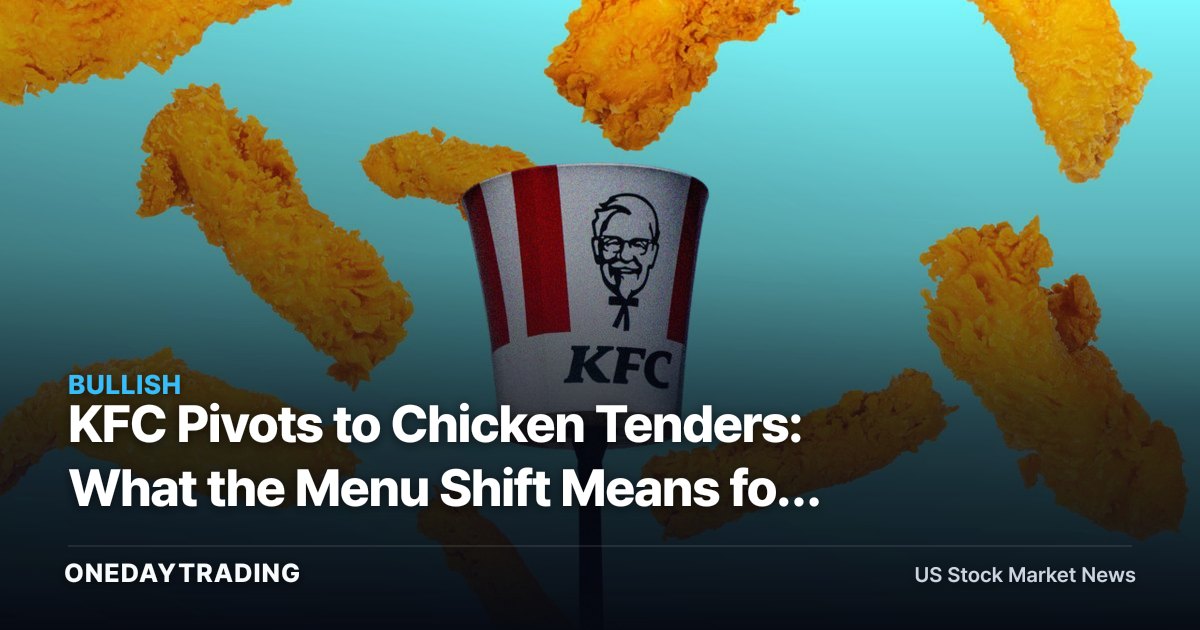
A structural shift in how consumers eat chicken — away from bone-in wings and toward tenders and handheld sandwiches built for eating in the car — is forcing KFC and its parent Yum Brands to rework menus and supply chains. The change has second-order effects for poultry suppliers and rival quick-service chains that already lead in boneless formats.
Why It Matters Now
KFC is described as rushing to catch up, which is the operative signal for investors: a legacy brand built on bone-in, dine-at-home buckets is reorienting toward boneless, on-the-go products. Tenders and chicken sandwiches travel well, suit drive-thru and delivery, and command higher attach rates with fries and sauces — formats that lift average ticket and throughput. For Yum Brands, the risk is that KFC has been a follower rather than a leader here, ceding share to chains that defined the modern chicken-sandwich era.
The demand mix also matters upstream. A move toward tenders and fillets favors boneless, skinless breast meat over wings, shifting which cuts processors can sell at premium prices. Wing-heavy demand historically supported spot wing pricing; a tilt to tenders changes the value of the bird and the economics for vertically integrated poultry producers. Chains that nailed boneless chicken early enjoy supply, marketing and operational advantages KFC must now rebuild.
FAQ
- Why is KFC changing its menu? Consumer preference is moving from bone-in wings to tenders and sandwiches that are easier to eat on the go, and KFC is adapting to keep pace.
- Who benefits from the tender trend? Chains already strong in boneless chicken sandwiches and tenders, plus poultry suppliers weighted to breast-meat cuts.
- Is this bullish for Yum Brands? It can be if KFC executes, but playing catch-up carries execution risk versus established chicken-sandwich leaders.
- Does it hurt wing-focused players? A demand shift away from bone-in wings is a headwind for concepts and cuts tied to wings specifically.
Related Stocks & Sectors
- Yum Brands (YUM) — KFC parent; direct exposure to whether the tender and sandwich pivot defends traffic and same-store sales.
- Tyson Foods (TSN) — major chicken processor; tender demand favors breast-meat volumes and supplier contracts.
- Pilgrim's Pride (PPC) — pure-play poultry producer leveraged to shifts in cut mix and food-service demand.
- Wingstop (WING) — wing-centric model most exposed if consumers structurally favor tenders and sandwiches over bone-in.
- Restaurant Brands (QSR) and McDonald's (MCD) — Popeyes and McDonald's chicken sandwiches compete directly for the same handheld occasion.
What to Watch
- KFC same-store sales and traffic in Yum Brands' next quarterly results, especially U.S. comps.
- New tender and sandwich launches, pricing and limited-time offers, and whether they lift average ticket.
- Chicken cut spreads — breast versus wing pricing — in Tyson and Pilgrim's commentary.
- Drive-thru and delivery mix shifts, which favor handheld products over buckets.
Overall Outlook
The bull case is that KFC monetizes a clear, durable consumer trend and converts its global footprint into tender and sandwich volume, supporting Yum's franchise-fee model and poultry suppliers tied to breast meat. The risk is that KFC arrives late to a crowded field where rivals own the chicken-sandwich narrative, so menu changes may protect share more than expand it. For suppliers, the swing factor is whether tender demand lifts overall chicken volumes or simply reallocates value across cuts.
Market data check: YUM
YUM last traded near $157.85 (+2.06%). Our composite signal — blending price momentum and news flow — reads 🟡 neutral. Price momentum scores 66/100 (firm).
Data as of publication. Price via market feeds; for reference only, not investment advice.
📊 Analysis
Signal Bullish
Why A KFC pivot to high-demand tenders and sandwiches is a potential traffic and ticket catalyst for Yum Brands and breast-meat-weighted poultry suppliers, despite execution risk.
Tickers$YUM$TSN$PPC$WING$QSR$MCD
This article was independently written by OneDayTrading from public reporting. Read the original (MarketWatch)