At a Glance
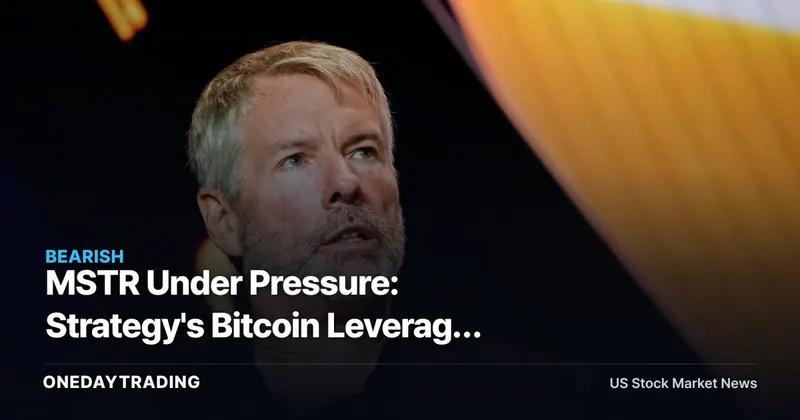
Strategy (MSTR), Michael Saylor's bitcoin-treasury vehicle, is caught in a falling crypto tape with no clean exit. The company turned itself into a leveraged proxy on a single asset, and that design amplifies both directions. With bitcoin continuing to drop, the question shifts from how high the premium can run to how the liabilities behave on the way down.
Why It Matters Now
Strategy is not a software company that happens to own bitcoin anymore; it is a financing machine built to accumulate it. The model works by issuing equity at a premium to the value of the bitcoin per share, then using convertible debt and preferred instruments to add more coins. When the stock trades above its underlying bitcoin value, each raise is accretive. When bitcoin falls and the premium compresses, that flywheel runs in reverse.
The deeper read for investors is reflexivity. MSTR equity moves as a high-beta version of bitcoin, so a decline in the coin pressures the share price, which shrinks the premium that made cheap capital possible, which removes the easiest tool for managing maturities. Saylor has resisted selling bitcoin, leaving issuance and refinancing as the levers — and both get harder precisely when the asset is weak. That is the no-easy-way-out problem in one sentence.
This matters beyond one ticker. MSTR has become the template for corporate bitcoin treasuries, and its stress test signals how the broader cohort of imitators and crypto-linked equities behave when leverage meets a drawdown rather than a rally.
FAQ
- Why can't Strategy just hold through the dip? It can hold the coins, but its debt and preferred obligations sit on a fixed schedule while the asset backing them is volatile, narrowing financial flexibility.
- Is forced selling likely? Not mechanically like a margin call on every position, but a sustained decline pressures the premium-driven funding model that the strategy depends on.
- Why does MSTR fall more than bitcoin? Leverage and the swing in its premium-to-bitcoin value make the equity a higher-beta instrument than the coin itself.
- Does this threaten bitcoin directly? Indirectly — a large, visible holder under stress can affect sentiment and the perceived stability of the corporate-buyer bid.
Related Stocks & Sectors
- MSTR — the subject; a leveraged bitcoin treasury whose funding model weakens as the premium compresses.
- COIN — exchange revenue tracks crypto activity and prices; a sustained drop pressures volumes and the stock.
- MARA, RIOT — miners hold bitcoin on balance sheets and earn in it, so falling prices hit both margins and asset values.
- IBIT — spot-bitcoin ETF exposure moves with the coin and reflects the same demand backdrop.
What to Watch
- The premium of MSTR to its underlying bitcoin value (mNAV) — compression signals the funding flywheel stalling.
- Any new equity raises, convertible issuance or preferred terms, and the rates required to place them.
- Saylor's public stance on whether selling bitcoin stays off the table.
- Bitcoin price levels that have historically marked stress, and how MSTR's beta to the coin behaves through them.
Overall Outlook
The bull case is unchanged in spirit: if bitcoin recovers, the premium reflates, cheap capital returns, and the leveraged structure compounds gains faster than the coin. The risk is symmetric and currently active. A prolonged decline turns the same leverage and premium dynamics into a constraint, with financing flexibility shrinking exactly when it is needed most. For equity holders, the variable that decides the outcome is not Strategy's conviction but the price of the asset it cannot easily sell.
Market data check: MSTR
MSTR last traded near $82.31 (-3.54%). Our composite signal — blending price momentum and news flow — reads 🟡 neutral. Price momentum scores 22/100 (soft).
Data as of publication. Price via market feeds; for reference only, not investment advice.
📊 Analysis
Signal Bearish
Why Falling bitcoin compresses Strategy's premium-driven funding model and pressures its leveraged equity with limited refinancing options.
Tickers$MSTR$COIN$MARA$RIOT$IBIT
This article was independently written by OneDayTrading from public reporting. Read the original (Yahoo Finance)