What Changes
The headline here is not a rate move but the language around one. An easing bias is the part of the statement that tells markets the door is open to a cut. Stripping it out tells traders the Fed wants flexibility and no longer wants to pre-commit to easing. For investors, the read-through is a flatter near-term path for the funds rate and less urgency to price in cuts on the front end of the curve.
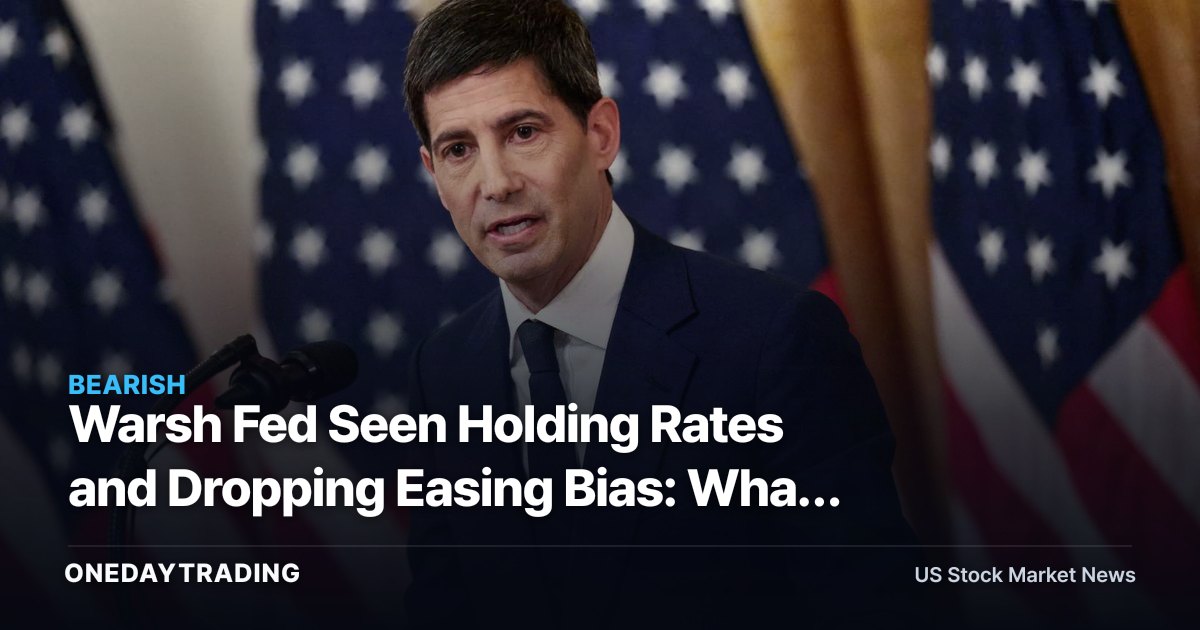
The personnel angle matters too. Kevin Warsh has historically leaned hawkish and skeptical of overly accommodative policy, so a Warsh-led committee removing dovish signaling fits a tighter-for-longer narrative. That reshapes the discount rate every equity model runs on: when the expected path of policy stops drifting lower, long-duration growth names lose a tailwind while spread-earning lenders gain one.
By the Numbers
The concrete data point from the survey is directional rather than numeric: respondents expect no rate change for a while and anticipate the easing bias being removed at this week's meeting. The prior framing had explicitly signaled the next move would likely be a cut, so the shift is from a guided-lower stance to a wait-and-see one. The actionable figure for investors to track is the 2-year and 10-year Treasury yield reaction once the statement lands.
Winners & Losers
- Large banks (JPM, BAC): A higher-for-longer funds rate supports net interest margins; deposits reprice slower than loans, helping spread income if credit stays benign.
- Money-center and rate-sensitive financials: Less pressure to cut keeps short-end yields elevated, a positive for interest earnings.
- Long-duration growth and unprofitable tech: A higher discount rate compresses the present value of distant cash flows; these names are most exposed to a hawkish tone shift.
- Rate-sensitive real estate and small caps: Higher financing costs and refinancing risk weigh on REITs and leveraged smaller companies that had been positioned for relief from cuts.
Risk Check
- Removing the easing bias is a tone change, not a hike; the Fed could re-add dovish language if data softens.
- The survey reflects expectations, not the actual decision; the statement and press conference can surprise either way.
- If inflation cools or the labor market weakens, the higher-for-longer thesis unwinds quickly and rate-sensitive names rebound.
- Bank margin benefits depend on credit quality; a slowdown that lifts loan losses can offset the margin tailwind.
Bottom Line
A Warsh Fed that holds and drops its easing bias leans hawkish at the margin, favoring spread lenders over long-duration growth and rate-sensitive real estate, but the move is about flexibility rather than a hard pivot, so a single soft inflation or jobs print could reopen the case for cuts and reverse the sector rotation.
📊 Analysis
Signal Bearish
Why Dropping the easing bias is a hawkish tone shift toward higher-for-longer rates, a headwind for rate-sensitive and long-duration equities even with no rate change.
Tickers$JPM$BAC$XLF$XLRE$IWM
This article was independently written by OneDayTrading from public reporting. Read the original (CNBC)