Key Takeaways
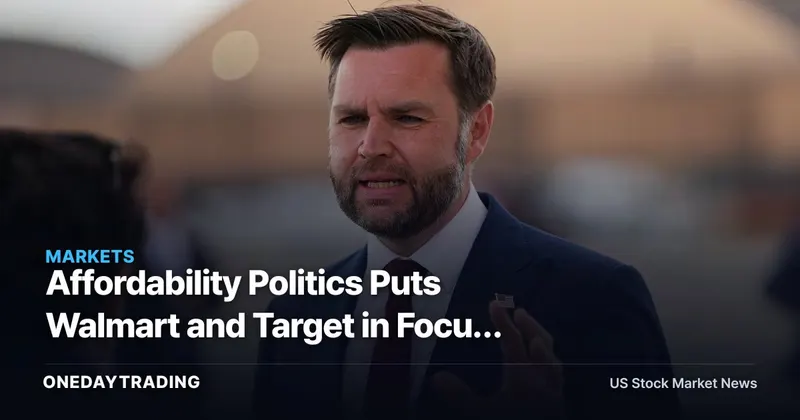
Affordability politics now matters for U.S. retail stocks because CNBC reported that President Donald Trump dismissed affordability as a Democratic framing while Vice President JD Vance said grocery prices are what they are before November elections.
The investor read-through is not partisan; the investor issue is whether shoppers keep prioritizing value retailers, grocery chains and discount formats while policymakers debate living costs rather than easing them.
What Happened
CNBC reported that President Donald Trump characterized affordability as a Democratic political construct, and CNBC reported that Vice President JD Vance responded to grocery costs with a message that prices are fixed by current conditions.
Affordability, in market terms, is the gap between household income, essential expenses and discretionary spending power; grocery inflation pressure hits retail because food purchases happen often and reset consumer psychology faster than durable-goods prices.
The November election risk is that affordability stays the dominant consumer issue, which keeps pressure on elected officials and keeps investors focused on traffic, basket size, promotions and private-label adoption across U.S. consumer stocks.
Background & Context
CNBC did not provide company-level sales figures, margin numbers or price-index data in the supplied report, so the clean market signal is qualitative rather than numerical.
The behavior-to-balance-sheet channel is still clear: shoppers who feel grocery pressure usually trade brand loyalty for price, shift baskets toward essentials and make retailers compete through promotions that can defend revenue while squeezing gross margin.
Market & Stock Impact
- Walmart (WMT): Walmart is the most direct public-market proxy for affordability because Walmart combines grocery scale, everyday-low-price positioning and traffic capture when households become more price sensitive.
- Target (TGT): Target faces a tougher mix because Target depends more on discretionary categories, so an affordability-driven shopper can protect grocery trips while delaying apparel, home and impulse purchases.
- Kroger (KR): Kroger sits near the grocery-price debate because Kroger revenue depends on frequent food purchases, but Kroger margin can tighten if promotions become the main answer to shopper resistance.
- Dollar General (DG): Dollar General can gain traffic from trade-down behavior, but Dollar General also serves lower-income consumers who feel grocery and household-cost pressure earliest.
- Costco (COST): Costco can benefit if consumers pay membership fees to access perceived value, although Costco valuation risk rises when investors overpay for defensiveness.
Investor Checkpoints
- Watch the next quarterly earnings calls from Walmart, Target, Kroger, Dollar General and Costco for traffic, average ticket, grocery mix and promotional intensity.
- Track management commentary on private-label demand, because private-label share is the clearest retail signal that affordability pressure is changing shopper behavior.
- Follow November campaign messaging on grocery costs, because sustained political focus can influence expectations for pricing scrutiny, retail competition and consumer sentiment.
- Separate sales resilience from margin quality, because higher grocery traffic can coexist with lower profitability if discounts fund the volume.
Outlook
The bull case for defensive retail is that affordability concerns send more shoppers toward Walmart, Costco, Kroger and dollar-store formats before November, supporting traffic even if discretionary demand stays uneven.
The risk is that affordability becomes a margin problem rather than a traffic tailwind: if shoppers reject price increases and retailers answer with heavier promotions, revenue can look stable while earnings quality weakens.
FAQ
Why does affordability politics affect retail stocks?
Affordability politics affects retail stocks because grocery prices shape weekly consumer behavior, and CNBC reported that President Donald Trump and Vice President JD Vance addressed affordability before November elections. Retail investors should connect the debate to traffic, basket size and promotional costs.
Which stocks are tied to grocery affordability?
Walmart, Target, Kroger, Dollar General and Costco are tied to grocery affordability because each company has exposure to value-seeking U.S. shoppers. Walmart and Kroger have large grocery businesses, while Target has more discretionary exposure.
What should investors watch before November?
Investors should watch next earnings commentary on traffic, average ticket, promotions and private-label demand before November. If retailers report traffic gains with rising markdowns, affordability pressure is helping sales but testing margins.
Market data check: WMT
WMT last traded near $104.23 (-1.09%). Our composite signal — blending price momentum and news flow — reads 🟡 neutral. Price momentum scores 41/100.
Data as of publication. Price via market feeds; for reference only, not investment advice.
📊 Analysis
Signal Neutral
Why The CNBC item creates a clear consumer-retail watchpoint, but the supplied facts do not include company-specific results, guidance or policy action strong enough for a bullish or bearish sector call.
Tickers$WMT$TGT$KR$DG$COST
This article was independently written by OneDayTrading from public reporting. Read the original (CNBC)