What Changes
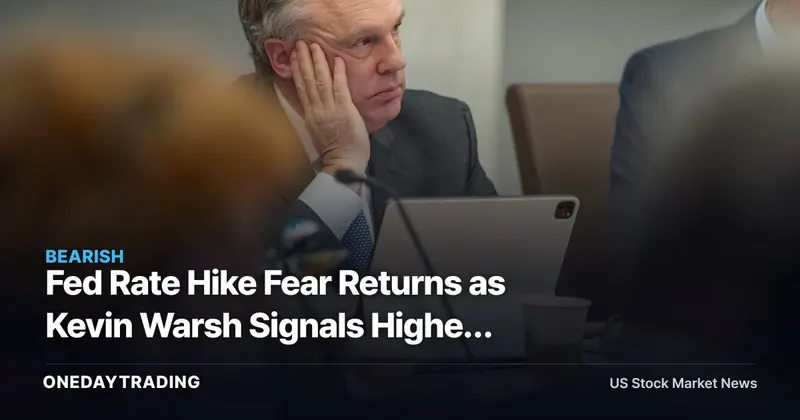
The immediate shift is in probabilities, not policy. Market participants are responding to remarks attributed to Fed Chairman Kevin Warsh that indicate a willingness to let interest rates rise if economic conditions require it. That stance raises the hurdle for investors who had positioned for stable or lower rates.
A Federal Reserve rate hike matters through two channels. First, higher short-term borrowing costs can improve the spread banks earn on loans and securities, although deposit costs and credit losses determine how much of that benefit reaches earnings. Second, the discount rate applied to future cash flows rises, putting pressure on richly valued growth companies whose profits sit further out on the income statement.
The tape has already begun to price a more hawkish Fed through increased anxiety around rates. What it has not established is whether the economy is strong enough, and inflation persistent enough, to turn Warsh’s policy preference into an actual increase. That distinction leaves sector leadership hostage to the data rather than the headline.
By the Numbers
The source provides no specific yield, inflation rate or payroll estimate. It does identify two scheduled evidence points: the upcoming jobs report and upcoming inflation data. Those releases will determine whether rate-hike expectations broaden beyond a single official’s remarks.
A stronger jobs report would suggest demand can withstand tighter financial conditions, while hotter inflation would make a higher policy rate more defensible. A softer labor market or cooling prices would challenge the repricing and restore support for rate-sensitive equities.
Winners & Losers
- JPMorgan Chase (JPM): A higher-rate path can lift asset yields and loan pricing, but the gain depends on deposit repricing and credit quality.
- Bank of America (BAC): Bank of America benefits from wider earning-asset yields if funding costs remain controlled; a weaker economy would reverse that advantage through provisions.
- Invesco QQQ Trust (QQQ): Nasdaq growth exposure faces multiple compression when the discount rate rises, especially where earnings are weighted toward future years.
- Software and internet stocks: These businesses are vulnerable to valuation pressure and more expensive corporate financing even without an immediate drop in revenue.
Risk Check
- Warsh’s remarks are a signal, not a rate decision; the Federal Open Market Committee still needs incoming evidence.
- Higher bank spreads can be offset by rising deposit costs, weaker loan demand or increased credit losses.
- If inflation data cools, markets may unwind the hawkish move quickly, rewarding duration-heavy technology shares.
- A resilient jobs report could support equities through earnings while simultaneously pushing rates higher, creating divergent sector performance.
Bottom Line
Fed rate-hike risk has become a live market variable again, favoring banks only if funding and credit remain orderly while pressuring long-duration growth multiples. The next jobs report and inflation release will decide whether Wall Street is pricing a durable policy shift or merely reacting to Kevin Warsh’s warning.
FAQ
Why is Wall Street nervous about a Fed rate hike?
Wall Street is nervous because Fed Chairman Kevin Warsh appears willing to accept higher interest rates, according to the source’s reporting. That possibility raises financing costs and can reduce the present value of future corporate profits.
What data will determine the next Fed move?
The upcoming jobs report and inflation data are the key inputs identified by Fed watchers. Strong employment or persistent inflation would strengthen the case for higher rates, while softer readings would weaken it.
Which stocks benefit if interest rates rise?
JPMorgan Chase (JPM) and Bank of America (BAC) could benefit from higher asset yields if deposit costs and credit losses stay contained. The same rate increase can pressure Nasdaq-oriented growth stocks because higher discount rates reduce valuation support.
📊 Analysis
Signal Bearish
Why Renewed expectations of a Fed rate hike create valuation pressure for growth stocks, with only conditional support for banks.
This article was independently written by OneDayTrading from public reporting. Read the original (MarketWatch)