At a Glance
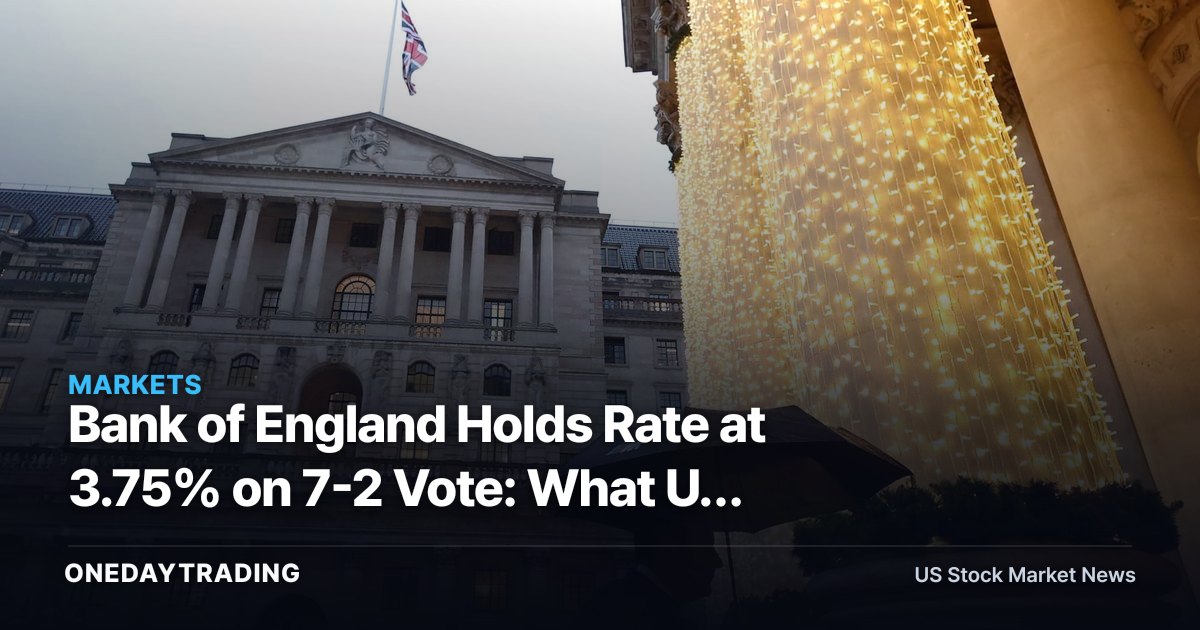
The Bank of England left its policy rate at 3.75%, with the Monetary Policy Committee splitting 7-2 in favor of holding. The two dissenters wanted lower rates, a dovish tilt that matters more for asset prices than the headline hold itself. A parallel easing in Middle East tension, tied to Iran war peace prospects, is pulling some of the geopolitical premium out of oil.
Why It Matters Now
A hold is not a non-event. For rate-sensitive UK financials, keeping the policy rate elevated preserves the net interest margin that banks earn on loans versus deposits, which has been the core profit engine since rates left near-zero. But the 7-2 split signals that the next move is more likely a cut than a hike, and the timing of that pivot directly shapes how long banks can keep harvesting wide margins before deposit competition and lower loan yields compress them.
The Iran de-escalation angle runs through a separate channel: energy. A lower geopolitical risk premium tends to soften crude, which eases input costs for transport, chemicals and consumer-facing firms while pressuring the revenue line at integrated oil majors. For a UK-heavy portfolio, the two threads combine into a risk-on lean, lower energy inflation plus a central bank inching toward easing, even as growth uncertainty keeps the picture two-sided.
FAQ
- Why did the BoE hold instead of cut? A majority judged inflation risk not yet contained enough to ease, while two members already favored a cut.
- Is a hold good or bad for banks? Mixed. It sustains margins now, but the dovish dissent flags future cuts that would eventually narrow them.
- How does Iran peace tie in? Reduced conflict risk lowers the oil premium, helping cost-sensitive sectors and weighing on energy producers.
- What about the pound? A steady rate with cut signals can soften sterling, which lifts the overseas earnings of globally diversified UK names.
Related Stocks & Sectors
- Lloyds (LYG) and NatWest (NWG): the most UK-domestic banks, where the held rate directly supports margin but coming cuts are the key swing factor.
- Barclays (BCS) and HSBC (HSBC): more diversified, so currency moves and global rate paths matter alongside the BoE.
- Energy majors (XOM, CVX): a fading geopolitical premium pressures crude and the top line for producers.
- UK consumer and housing-linked names: lower-for-longer expectations support mortgage demand and discretionary spending.
What to Watch
- The next MPC meeting and whether the 7-2 split widens toward a cut.
- UK CPI prints, the variable that gates how fast the BoE can ease.
- Crude prices as a real-time gauge of the Iran de-escalation holding.
- Bank net interest margin guidance in upcoming results for early signs of margin peak.
Overall Outlook
The bull case is a soft-landing setup: margins still wide, inflation cooling, energy costs easing and a central bank with room to support growth if needed. The risk case is that sticky inflation forces the BoE to stay restrictive longer than the dissenters want, squeezing rate-sensitive borrowers, or that the Iran calm proves fragile and the oil premium snaps back. The 7-2 vote is the tell to track, because the gap between holding and cutting is where UK financial and energy exposure will be repriced.
Market data check: LYG
LYG last traded near $5.58 (+0.45%). Our composite signal — blending price momentum and news flow — reads 🟡 neutral. Price momentum scores 54/100.
Data as of publication. Price via market feeds; for reference only, not investment advice.
📊 Analysis
Signal Neutral
Why A status-quo rate hold supports bank margins now but the dovish 7-2 split and easing oil cut both ways, leaving no clean directional read.
Tickers$LYG$NWG$BCS$HSBC$XOM$CVX
This article was independently written by OneDayTrading from public reporting. Read the original (CNBC Markets)