At a Glance
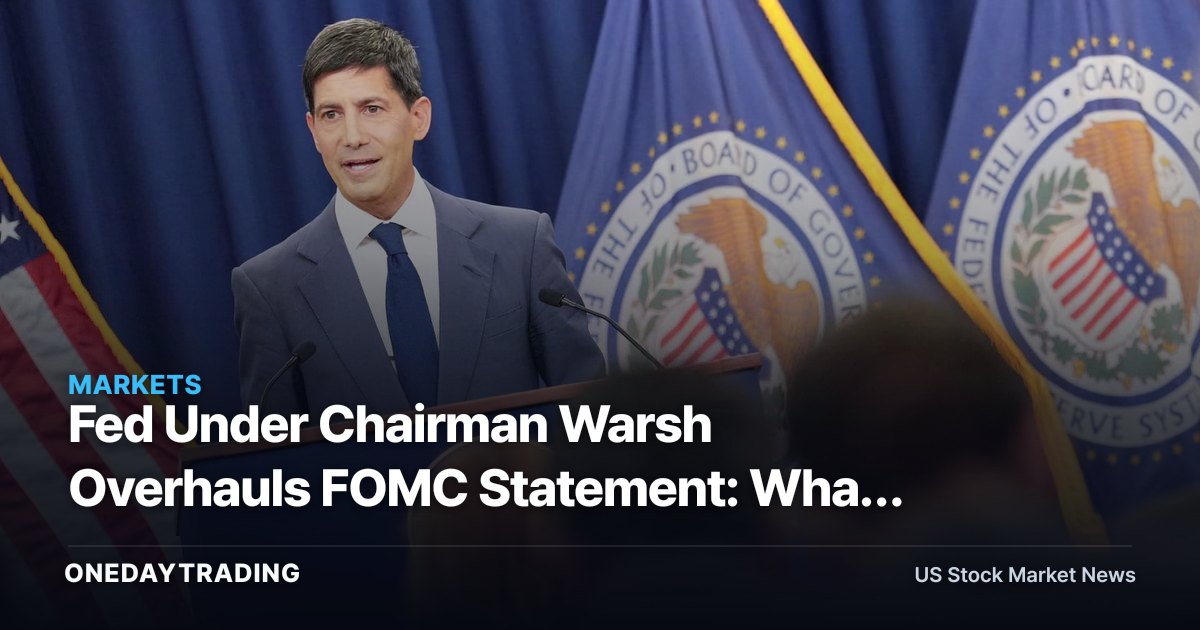
The Federal Reserve under Chairman Kevin Warsh issued a Wednesday FOMC statement that, per CNBC's side-by-side comparison, departs sharply from the language used after the prior April meeting. For investors, the signal is not any single line of text but the willingness of a new chair to rewrite the central bank's communication template — a change in how policy intent is telegraphed, which directly feeds the rate expectations embedded in every equity and bond price.
Why It Matters Now
FOMC statements are dissected word by word precisely because the committee rarely changes them much between meetings. When the wording shifts only at the margin, traders treat continuity as the message. A drastic rewrite forces the market to re-price the reaction function — how the Fed weighs inflation versus employment, and what would trigger the next move. That uncertainty itself raises the term premium investors demand, regardless of the eventual direction of rates.
The channel to stocks runs through the discount rate and the yield curve. Banks earn on the spread between funding and lending, so a steeper or higher curve generally helps net interest margins, while long-duration growth and unprofitable tech are most sensitive to shifts in the long end. A new chair recalibrating the guidance also reopens the debate over Fed independence and credibility, a variable that can move the dollar and Treasury demand before any rate actually changes.
FAQ
- What actually changed? CNBC documents that Wednesday's statement was substantially altered relative to the April statement; the comparison is in the wording the committee uses to frame its policy stance.
- Does a rewrite mean rates are moving? Not necessarily — language can shift before any action. The risk is that markets infer a direction the Fed did not intend.
- Why does the chair matter so much? The chair shapes both the statement and the press-conference framing, so a new communication style resets how guidance is interpreted.
- Who is most exposed? Rate-sensitive sectors: banks via margins, high-multiple tech via duration, and homebuilders and REITs via mortgage and financing costs.
Related Stocks & Sectors
- Banks (JPM, BAC): Net interest margin and loan demand hinge on the rate path and curve shape implied by the new guidance.
- Megacap growth (Nasdaq names): Long-duration cash flows are discounted more harshly if the long end of the curve reprices higher.
- Treasuries and bond proxies (TLT): A shift in the perceived reaction function moves the term premium and the 10-year yield directly.
- Homebuilders and REITs: Financing-cost sensitivity makes them an early read on how markets translate the statement into mortgage rates.
What to Watch
- The 10-year Treasury yield in the sessions after the statement, as the cleanest gauge of how markets read the rewrite.
- The next FOMC meeting and dot plot for whether the language shift becomes a policy shift.
- Fed speakers and the chair's commentary for confirmation or walk-back of the new framing.
- Bank earnings guidance on net interest income for the real-economy impact of the rate path.
Overall Outlook
The bull case is straightforward: clearer, more credible guidance can compress uncertainty and stabilize the curve, a constructive backdrop for financials and broad equities. The risk runs the other way — a rewrite that markets cannot cleanly decode raises the term premium, pressures high-multiple stocks, and revives questions about how independent and predictable policy will be. With no concrete rate figures disclosed in the comparison itself, direction is genuinely open, and the yield curve will arbitrate before the equity market does.
📊 Analysis
Signal Neutral
Why The source documents a major rewrite of FOMC language but discloses no direction for rates, so the equity impact is two-sided and not yet decodable.
This article was independently written by OneDayTrading from public reporting. Read the original (CNBC)