Summary
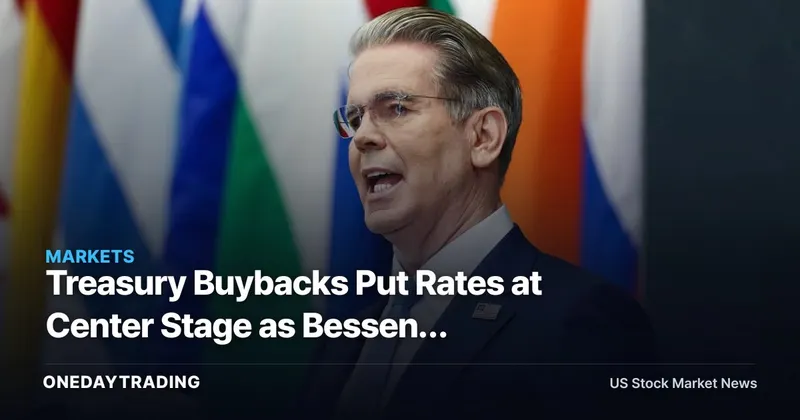
Treasury buybacks moved from plumbing issue to market signal after U.S. Treasury Secretary Scott Bessent said the Treasury could take additional bond-market steps and make buybacks larger than first announced, per the MarketWatch source supplied on Aug. 20, 2026.
The investor read-through is not that Washington can repeal higher rates; the read-through is that rising yields have become politically sensitive enough to pull Treasury market structure into the equity multiple debate.
The Full Story
Bessent’s message matters because the Treasury market sets the discount rate for U.S. equities, mortgages, corporate credit and bank balance sheets. If Treasury intervention eases liquidity pressure at the long end, rate-sensitive stocks get breathing room; if investors read bigger buybacks as anxiety rather than control, term premium can stay elevated.
Per MarketWatch, the rise in interest rates hit a raw nerve at the White House, and Bessent doubled down on the Treasury Department’s intervention in the bond market. That phrasing is the tell: the issue is no longer only auction mechanics, but the transmission from yields to household financing costs and equity valuations.
The tape already prices some official discomfort with higher rates. The part not priced cleanly is whether larger buybacks improve market functioning or invite questions about why the Treasury feels compelled to act again.
Structural Background
Treasury buybacks are repurchases of outstanding U.S. government debt by the Treasury, typically used to support market liquidity and manage the maturity profile of debt rather than to run Federal Reserve-style monetary policy.
For equity investors, the key channel is rates to multiples. Higher Treasury yields pressure long-duration growth shares, homebuilders and utilities by raising discount rates, while banks can benefit from higher asset yields only if funding costs and credit losses do not rise faster.
Stock & Sector Ripple
- Banks JPMorgan Chase and Bank of America: Higher yields can lift loan and securities income, but a disorderly rate rise can also pressure deposits, securities marks and credit quality.
- Homebuilders Lennar and Toll Brothers: Mortgage-sensitive demand is exposed if long-end yields stay high despite Treasury buybacks.
- Utilities: Bond-proxy equities suffer when Treasury yields compete for income buyers and raise refinancing costs.
- Nasdaq growth shares: Software and AI-linked multiples depend on whether long rates stabilize or reprice higher.
Bull vs Bear Scenarios
The bull case is narrow but real: larger Treasury buybacks improve bond-market liquidity, cap volatility in yields and support rate-sensitive equity sectors without requiring a change in Fed policy. That would help multiples where the earnings story is already intact.
The bear case is that markets treat the intervention as a sign that higher rates are biting harder than officials expected. If yields keep rising after Bessent’s comments, the message shifts from policy confidence to policy limitation.
Investor Action Points
- Track the 10-year Treasury yield because the equity impact runs through discount rates, mortgage rates and credit spreads.
- Watch any Treasury update on buyback size because MarketWatch reported Bessent said buybacks may exceed the initial announcement.
- Compare bank net interest income commentary with funding-cost trends in the next earnings cycle.
- For homebuilders, watch order trends and cancellation commentary as the cleanest test of rate pressure.
FAQ
Why are Treasury buybacks important for stocks?
Treasury buybacks matter for stocks because U.S. Treasury yields anchor equity discount rates, mortgage pricing and corporate borrowing costs. If buybacks steady the bond market, rate-sensitive sectors can trade better; if yields keep rising, equity multiples remain under pressure.
What did Scott Bessent say about Treasury buybacks?
U.S. Treasury Secretary Scott Bessent said the Treasury could make additional bond-market moves and that buybacks may be larger than initially announced, per the MarketWatch source supplied on Aug. 20, 2026. The statement put Treasury market intervention back into the rate-risk debate.
Which stocks are most exposed to higher interest rates?
JPMorgan Chase, Bank of America, Lennar and Toll Brothers are exposed through different rate channels. Banks face the balance between asset yields, deposit costs and credit risk, while homebuilders face the demand shock from higher mortgage rates.
📊 Analysis
Signal Neutral
Why Treasury buyback expansion could support bond-market liquidity, but the same signal reflects official concern over rising rates and leaves sector impact split across banks, homebuilders and growth equities.
This article was independently written by OneDayTrading from public reporting. Read the original (MarketWatch)