Key Takeaways
A behavioral shift among young Chinese consumers — away from status symbols and toward inexpensive goods that deliver an emotional payoff, from collectible toy elves to novelty robots — is less a demand boom than a reallocation of a cautious wallet. The read-through favors value-focused platforms and affordable-indulgence brands while pressuring big-ticket and luxury exposure.
What Happened
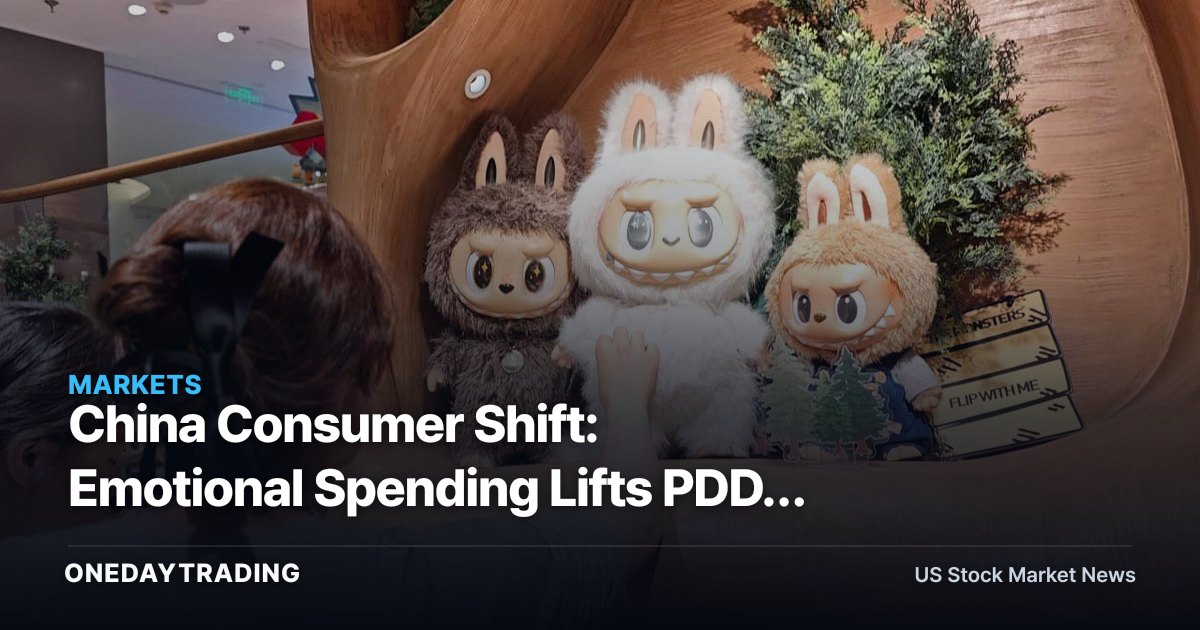
Reporting highlights that China's latest consumption spark is not coming from aspirational luxury or premium upgrades. Instead, spending power is flowing into low-cost categories that make buyers feel something — designer collectible toys, plush characters, and gadget novelties such as consumer robots.
The signal matters because it inverts the old China growth narrative, in which a rising middle class steadily traded up into premium brands. When discretionary budgets concentrate in small, emotionally driven purchases, the winners are platforms and labels positioned at the affordable, high-frequency end of the market rather than the premium tier.
Background and Context
The pattern fits a broader stretch of soft Chinese consumer confidence, elevated youth unemployment, and a weak property market that has dented household balance sheets. In that environment, the so-called emotional economy — small treats that substitute for larger aspirational spending — tends to expand precisely because big-ticket commitments feel risky. It is a symptom of caution as much as a category of growth.
Market and Stock Impact
- PDD Holdings (PDD): Its Pinduoduo platform is built for value-seeking, high-frequency buying, the exact behavior the trend describes; trading down to cheap emotional goods plays to its core merchant and price positioning.
- Alibaba (BABA): Marketplace mix shifts toward lower-ticket impulse items can support order volume but pressure average order value and take-rate quality, making the revenue impact ambiguous rather than clearly positive.
- JD.com (JD): More exposed to electronics and appliances, JD skews toward the big-ticket categories consumers are deferring, leaving it more vulnerable to the same shift.
- Yum China (YUMC): Affordable indulgence — a coffee or a value meal as a small emotional reward — aligns with the spend-to-feel-something dynamic, supporting traffic at its KFC and Pizza Hut footprint.
- Luxury proxies (LVMUY): Brands reliant on Chinese status consumption face a structural headwind if aspirational trading-up stays subdued.
Investor Checkpoints
- Watch quarterly average order value and take rate at PDD and BABA — volume can rise while monetization quality slips.
- Track China retail sales and consumer-confidence prints for confirmation that the shift is reallocation, not net spending growth.
- Monitor luxury houses' next China comparable-sales commentary as a tell on whether status demand is stabilizing or eroding.
- Follow margin trends in low-ticket categories, where fulfillment and promotion costs can outpace revenue.
Outlook
The bull case is that nimble, value-oriented platforms and affordable-treat brands capture an outsized share of a defensive consumer wallet, supporting engagement even in a soft macro. The risk is that emotional micro-spending is a coping response to weak confidence rather than a durable engine — it can lift unit volumes while compressing the higher-margin premium demand that drove past China consumer earnings. The deciding variable is whether household confidence and incomes recover enough to revive trading-up, or whether small indulgences remain a substitute for it.
Market data check: PDD
PDD last traded near $78.07 (-1.87%). Our composite signal — blending price momentum and news flow — reads 🟡 neutral. Price momentum scores 35/100 (soft).
Data as of publication. Price via market feeds; for reference only, not investment advice.
📊 Analysis
Signal Neutral
Why The trend reallocates a cautious consumer wallet rather than expanding it — bullish for value and affordable-indulgence names but bearish for big-ticket and luxury exposure, netting to no clear direction.
Tickers$PDD$BABA$JD$YUMC$LVMUY
This article was independently written by OneDayTrading from public reporting. Read the original (MarketWatch)