What Changes
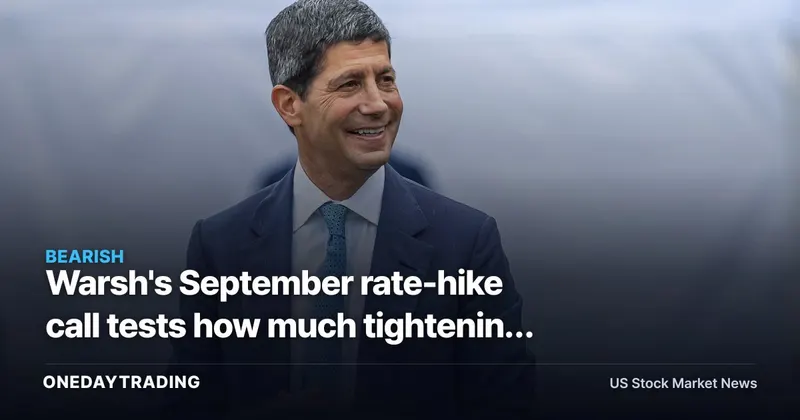
The market is not paying for a single hawkish comment. It is testing whether Warsh's September rate-hike stance is a one-off signal or the start of a tighter regime. A rate hike is the Fed raising its policy rate, which lifts short-term funding costs and usually compresses valuation multiples tied to distant cash flow.
That is why the read-through splits fast. JPMorgan Chase and Bank of America can see some net interest income support if front-end yields rise faster than deposit costs. REITs, small caps and rate-sensitive software do the opposite math: higher discount rates hit refinancing costs and present value before growth can reassert itself.
By the Numbers
The report's key timing mark is September, and that matters because the market has to reprice before the September FOMC. The cleanest market checkpoint is the 2-year Treasury: if it moves up while the curve stays flat, investors are pricing tighter financial conditions rather than a healthy steepening.
Markets can absorb rhetoric; they reprice on confirmation from inflation data and the Fed. If the next CPI print softens, the September hike case loses force. If inflation stays sticky, the front end can keep tightening even before any vote lands.
Winners & Losers
- XLF and KRE can benefit if higher short rates lift bank spreads, but only while credit stays controlled.
- JPM and BAC get the most direct NIM read-through, though faster deposit repricing can cap the upside.
- VNQ faces pressure from higher cap rates and refinancing costs.
- IWM is exposed because small caps lean more on external funding and less on deep balance-sheet flexibility.
- SPY feels the multiple risk if September starts looking like a regime shift instead of a headline scare.
Risk Check
- The market may be reacting to commentary, not policy.
- A softer CPI print could unwind the hawkish repricing quickly.
- If the curve fails to steepen, banks lose the cleanest benefit.
- If September passes without a hike, crowded rate-sensitive trades can reverse.
Bottom Line
Warsh's September endorsement matters because it shifts the burden of proof onto the doves: the market now has to decide whether to price a higher-rate path into bonds alone or across equities as well. The upside case is a cleaner bank trade and a steeper curve; the risk is a false hawkish scare that leaves rate-sensitive stocks cheap for the wrong reason.
FAQ
Why are markets pricing a September rate hike?
The market is reacting to a hawkish signal, not a confirmed move. When investors believe the Fed could raise the policy rate in September, they reprice the front end first and then push that move through equity valuations.
What stocks usually suffer when rate-hike odds rise?
REITs, small caps and other duration-heavy names usually feel the most pressure. Their cash flows are more sensitive to discount rates and refinancing costs than the cash-rich parts of the market.
What should investors watch next?
The next CPI print, the September FOMC and the 2-year Treasury are the cleanest checkpoints. If those three confirm tighter conditions, the market will treat Warsh's view as a live macro risk rather than a side note.
📊 Analysis
Signal Bearish
Why A September hike read-through is hawkish for duration and rate-sensitive equities, even if banks get only partial curve support.
Tickers$XLF$KRE$JPM$BAC$VNQ$IWM
This article was independently written by OneDayTrading from public reporting. Read the original (CNBC)