What Changes
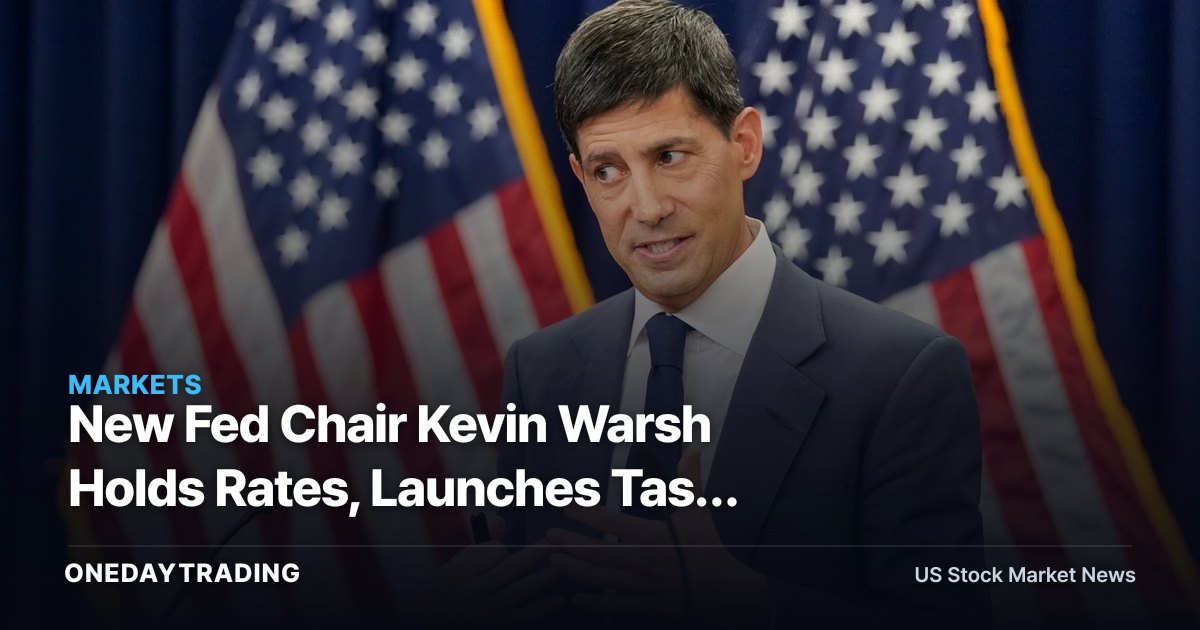
The headline decision — no change to rates — is the least important part of the story. A status-quo hold removes any immediate shock to equity and bond pricing, but it also tells you little about direction. The substance is governance: by routing his agenda through task forces rather than a single sweeping announcement, Warsh is signaling a slower, institutional rebuild of the Fed rather than an abrupt pivot.
That distinction is what markets should price. Task forces typically touch the plumbing investors rarely watch until it moves prices: bank supervision and capital rules, the size and composition of the balance sheet, the framework that governs how the Fed sets its inflation target, and the cadence of forward guidance. Warsh has long been associated with a lighter-touch regulatory philosophy and skepticism of an oversized Fed balance sheet, so the composition and mandate of these groups become the leading indicator for policy two to four quarters out.
The practical effect is a wider band of outcomes. A Fed that revisits capital and liquidity requirements changes the earnings math for large banks; a Fed that rethinks balance-sheet runoff changes the supply backdrop for Treasuries and mortgage-backed securities.
By the Numbers
The one hard fact from this meeting is the rate decision itself: unchanged. With no move and no fresh dot-plot surprise disclosed, the market reaction function shifts from the policy rate to personnel and process — who sits on each task force and what mandate they carry. Until those outputs arrive, traders are left pricing intent rather than action.
Winners & Losers
- Large-cap banks (JPM, BAC, GS, MS) — a regulatory review skewed toward lighter capital and liquidity rules could free up balance-sheet capacity, supporting buybacks and lending margins; this is the clearest policy channel to watch.
- Regional banks (KRE-type names) — most leveraged to any easing of post-stress capital and liquidity requirements, but also most exposed if the review tightens instead.
- Rate-sensitive growth and housing — a stable policy rate keeps financing costs from spiking, a modest positive for duration-heavy equities and homebuilders.
- Treasury and MBS holders — any shift in balance-sheet strategy directly alters bond supply and term premium, cutting both ways depending on the task force's conclusions.
Risk Check
- Intent is not policy — task forces can study for quarters and produce diluted or delayed recommendations.
- A reshaped Fed framework could prove more hawkish than the deregulation narrative assumes, especially on inflation targeting.
- Independence questions around a leadership-driven overhaul could lift the term premium and pressure long-duration assets.
- Bank-friendly rule changes face a long comment-and-implementation runway before they reach earnings.
Bottom Line
Holding rates buys calm, but the task-force structure is the variable that will define this Fed. The setup tilts constructive for banks if regulatory review eases capital rules, yet the same process could disappoint on timing or surprise on framework, so the actionable move is to track each task force's membership and first recommendations and the next set of Fed communications rather than the headline rate.
📊 Analysis
Signal Neutral
Why Rates were left unchanged and the structural task-force agenda creates genuine two-sided uncertainty rather than a clear directional catalyst.
This article was independently written by OneDayTrading from public reporting. Read the original (CNBC)