At a Glance
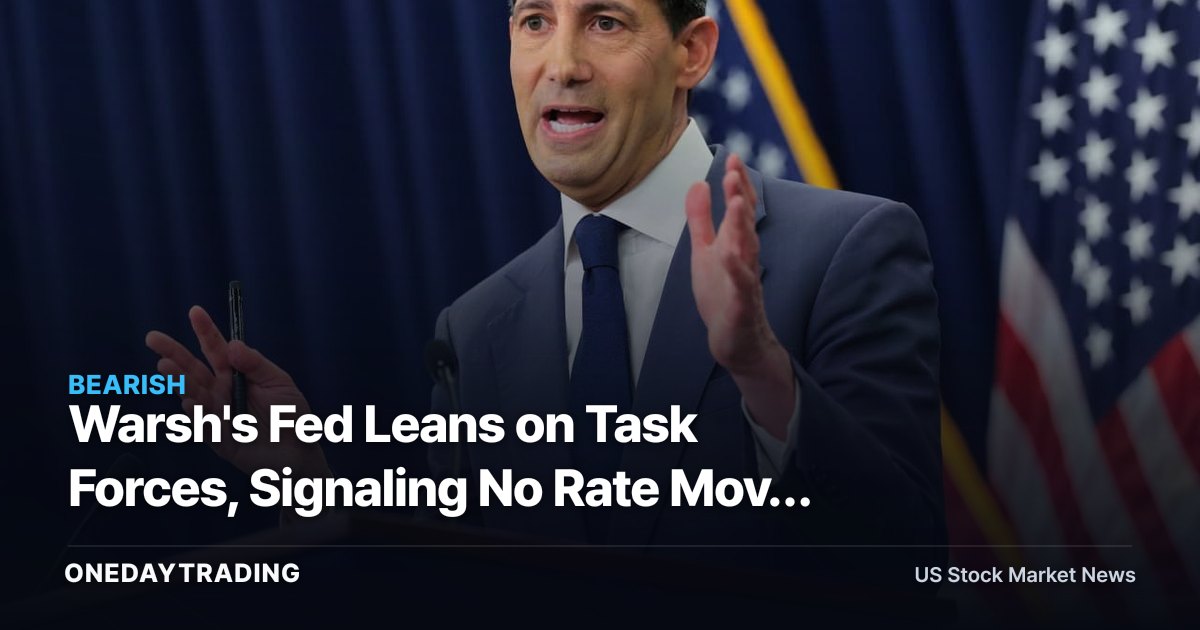
In his debut press conference Wednesday as Federal Reserve chair, Kevin Warsh repeatedly deflected policy questions by pointing to internal task forces reviewing the issues. The practical effect is procedural cover to leave rates unchanged and push any decision toward December, extending the higher-for-longer backdrop that markets have been pricing.
Why It Matters Now
When a central bank leans on the phrase a task force is looking into it, it is buying optionality. For investors, the message is less about a specific rate level and more about the removal of a near-term catalyst: if Warsh wants to wait until December to act, the autumn meetings become low-information events, and the burden of proof shifts to incoming inflation and labor data rather than Fed signaling.
That dynamic tends to reward balance-sheet strength over duration. Money-center banks such as JPMorgan and Bank of America keep collecting wider net interest margins for longer when the policy rate stays elevated, while long-duration growth names and rate-sensitive sectors lose the discount-rate relief that a clear cutting path would provide. A Fed that refuses to pre-commit also keeps the dollar firm and Treasury yields biased upward, both of which pressure equity multiples.
The counterweight is that ambiguity is not the same as hawkishness. Warsh has not raised rates or ruled out a December move; he has simply declined to telegraph one. If the task-force framing is a style choice rather than a policy stance, the market reaction could fade once data confirms the trajectory.
FAQ
- What changed? The new Fed chair signaled patience by routing questions to task forces, implying no rate change before the December meeting.
- Is this hawkish? Not explicitly. It preserves flexibility, but delaying cuts functionally extends higher-for-longer conditions.
- Who benefits? Banks and cash-rich balance sheets gain from sustained net interest income; the dollar stays supported.
- Who is pressured? Long-duration tech, real estate, and small caps that need lower discount rates and cheaper financing.
Related Stocks & Sectors
- JPMorgan (JPM), Bank of America (BAC): elevated policy rates sustain net interest margins and deposit spreads.
- Goldman Sachs (GS): a delayed easing cycle keeps trading and rates-desk volatility elevated.
- Real estate and homebuilders: higher-for-longer mortgage and financing costs cap demand.
- High-multiple software and growth: no discount-rate relief weighs on valuations most exposed to long-dated cash flows.
What to Watch
- The next CPI and payrolls prints, which now carry more weight than Fed guidance.
- The 10-year Treasury yield as a real-time gauge of policy expectations.
- The December FOMC meeting as the first realistic window for a move.
- Whether bank earnings confirm margin durability into year-end.
Overall Outlook
The bull case for financials rests on a Fed that keeps rates steady while the economy holds, letting spread income compound. The risk is that policy fog cuts both ways: if growth or labor data weakens before December, the same patience that helped banks could leave the Fed behind the curve, and rate-sensitive assets would reprice quickly on any dovish pivot.
📊 Analysis
Signal Bearish
Why Deferring any rate decision to December extends higher-for-longer conditions, pressuring rate-sensitive equities while modestly favoring banks.
This article was independently written by OneDayTrading from public reporting. Read the original (MarketWatch)