What Changes
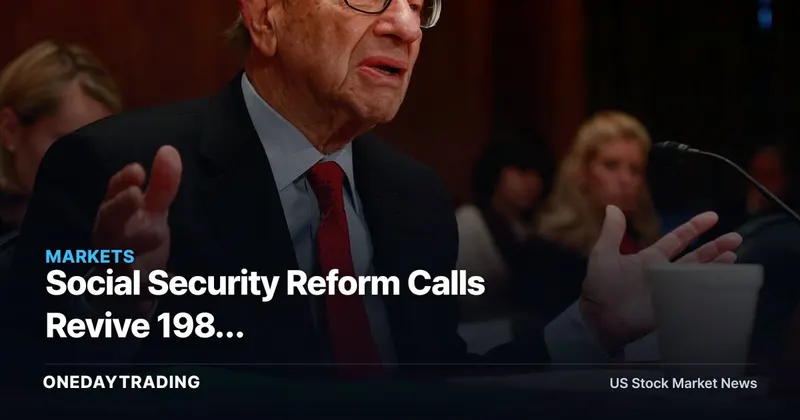
The call to recreate a Greenspan-style commission signals that Washington's preferred path to fixing Social Security is a negotiated package rather than a single sweeping law. For markets, the relevance is structural, not immediate. The 1983 fix combined gradual changes to the retirement age, the taxation of benefits, and payroll contributions. A similar template today would phase in over years, giving affected industries a long runway to position.
The clearest channel runs through private retirement income. If future public benefits are perceived as less generous or less certain, the demand for annuities, deferred-income products and managed-payout funds tends to firm. That is a direct revenue tailwind for life insurers whose books are built around longevity and spread income, and for asset managers selling target-date and decumulation strategies.
A second channel is fiscal. Social Security's trust fund holds special-issue Treasury securities, so any reform that alters the program's draw on federal cash flows feeds into the broader debate over issuance and long-term yields.
By the Numbers
The anchor fact is historical: the Greenspan Commission delivered its bipartisan overhaul in 1983, a precedent now cited as the model. The source does not quantify the current shortfall, so investors should treat any specific solvency figures as requiring confirmation from official trustee data rather than commentary.
Winners & Losers
- MetLife (MET), Prudential (PRU) — core annuity and group-benefits franchises gain if households self-insure more retirement income.
- AIG, Corebridge — life and retirement units are leveraged to rising demand for guaranteed-income products.
- Asset managers — decumulation and target-date flows benefit as the private-savings burden grows.
- Treasury-sensitive financials — banks and bond portfolios are exposed to how reform reshapes long-end issuance and yields.
Risk Check
- This is commentary advocating a process, not legislation; no bill, timeline or vote exists yet.
- Reform packages historically phase in over many years, so near-term earnings impact is minimal.
- Benefit changes are politically fraught and can stall indefinitely, removing any catalyst.
- Insurer upside depends on rate levels and spreads, which can move against guaranteed-income economics.
Bottom Line
A revived Greenspan-style commission would be a slow-burn positive for private retirement-income providers and a variable for the rates market, but with no concrete legislation on the table, the trade here is a thesis to track, not a catalyst to chase. Watch for any formal bipartisan panel announcement and the next Social Security trustees report for the metrics that would turn this from talking point into policy.
📊 Analysis
Signal Neutral
Why The piece advocates a reform process with no legislation, timeline or quantified action, so the directional market impact is genuinely undefined.
This article was independently written by OneDayTrading from public reporting. Read the original (MarketWatch)