What Changes
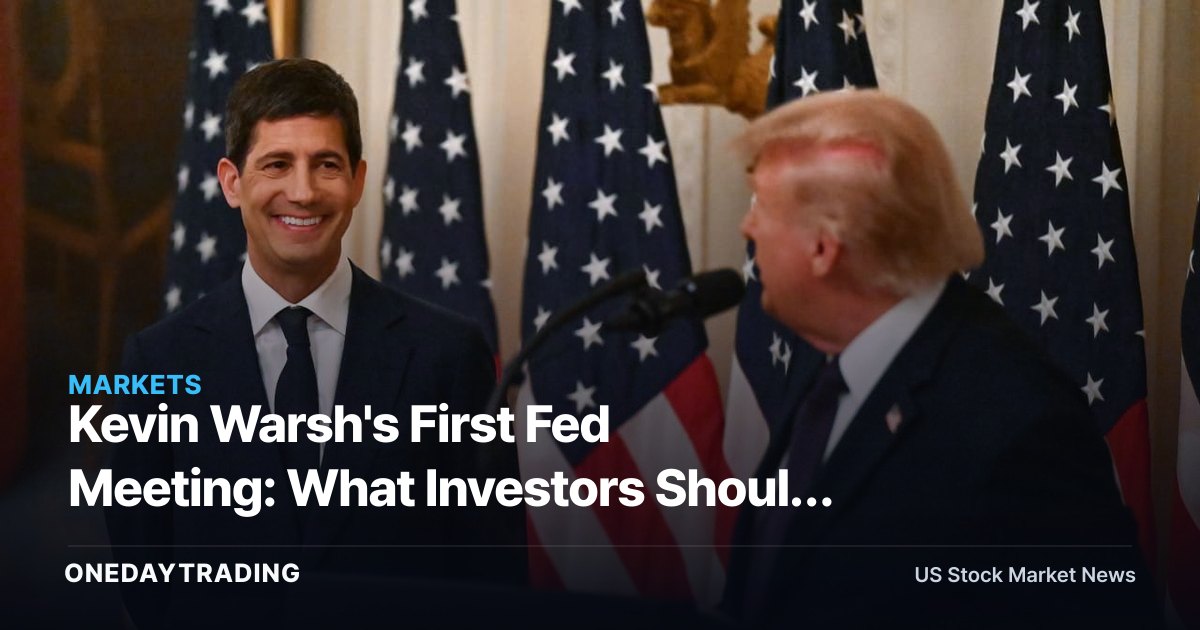
A leadership transition at the Federal Reserve resets the playbook investors have relied on for years. Markets are conditioned to parse the body language, phrasing and emphasis of a familiar chair. With Kevin Warsh stepping into the role, that institutional memory is gone, and traders must rebuild their read of the central bank from scratch.
The core tension is that economists honestly cannot agree on what Warsh represents. His debut press conference therefore carries outsized signaling weight. Investors will scrutinize whether he leans toward fighting inflation, supporting growth, or simply preserving optionality, because that first impression can anchor expectations for months of policy ahead.
For a captive audience of bond desks, equity strategists and retail investors alike, the meeting is less about a single rate decision and more about establishing a new communication style and reaction function.
By the Numbers
This is Warsh's first meeting as Fed chair, and the immediate catalyst is one press conference. The asymmetry is clear: a single appearance now defines the baseline for interpreting future statements, dot plots and guidance. Until that framework is established, implied volatility around rate-sensitive assets is likely to stay elevated.
Winners & Losers
- Banks (JPM, BAC): Highly sensitive to the rate path and yield-curve shape that Warsh's tone will influence.
- Broad equities (SPY, QQQ): Valuations hinge on the perceived future cost of money set by Fed guidance.
- Treasuries / 10-year yield (^TNX): The clearest first-order market to react to any hawkish or dovish surprise.
- Rate-sensitive growth and tech: Faces the sharpest repricing if the new chair signals a tighter-for-longer bias.
Risk Check
- A hawkish surprise could lift yields and pressure equity multiples.
- A dovish tone may fuel a relief rally but reignite inflation worries.
- Communication missteps from an untested chair could amplify volatility.
- Markets may overreact to first impressions that later prove misleading.
Bottom Line
Warsh's debut offers a clean reset that could calm markets if he projects clarity and credibility, but the genuine uncertainty over his stance means investors should brace for outsized swings in rates and equities until his policy framework comes into focus.
📊 Analysis
Signal Neutral
Why The story centers on genuine uncertainty over a new Fed chair's stance, with no clear directional catalyst until his press conference reveals a tone.
This article was independently written by OneDayTrading from public reporting. Read the original (MarketWatch)