What Changes
The S&P 500 does not need yields to collapse to hold its ground; the S&P 500 needs investors to believe the next move is not another leg higher. CNBC reported that prediction market traders expect yields to reach new highs in 2026, which turns every rich multiple in software, AI infrastructure, and housing into a duration bet.
The mechanism is simple. Higher Treasury yields raise the discount rate applied to future earnings, and the market penalizes companies whose cash flows sit farthest out. That is why Microsoft, Nvidia, homebuilders, and real estate proxies can trade on the same macro headline even when their operating stories differ.
For banks, the signal is less one-sided. JPMorgan Chase and Bank of America can benefit when higher rates support asset yields, but the benefit narrows if funding costs rise, loan demand softens, or credit costs follow mortgage and corporate borrowing rates higher.
By the Numbers
CNBC reported that prediction market speculators see yields hitting new highs in 2026 and ending 2026 above where yields are currently trading. The source item did not provide a specific yield level, intervention size, or market-implied probability, so the investable fact is direction, not magnitude.
That distinction matters. A market can absorb elevated yields when earnings revisions rise faster than discount rates. A market struggles when elevated yields combine with flat guidance, tighter credit, and weaker housing affordability.
Winners & Losers
- JPMorgan Chase and Bank of America: Higher yields can support bank revenue through asset repricing, but deposit costs and credit quality decide whether that flows to earnings.
- Lennar and NVR: Higher 2026 yields would keep mortgage affordability tight, which pressures traffic, incentives, and order conversion.
- Microsoft and Nvidia: Long-duration AI and cloud leaders remain exposed to multiple compression when Treasury yields reset higher.
- Real estate and utilities: Rate-sensitive income sectors lose relative appeal when investors can demand more from Treasurys.
Risk Check
- CNBC did not report a specific yield target, so traders should not convert the prediction-market direction into a precise rate call.
- If inflation data cools and the Fed validates easing expectations, the same yield-sensitive stocks can rebound quickly.
- If Treasury supply concerns dominate Fed expectations, policy messaging from Bessent may not be enough to pull yields lower.
- If earnings growth accelerates, equity multiples can tolerate elevated yields longer than rate-only models imply.
Bottom Line
The bearish equity read is not that Bessent cannot influence bonds; the bearish read is that traders are not yet paying for a durable decline in yields. If 2026 yield expectations keep moving higher, banks get a revenue offset, while homebuilders, utilities, real estate, and expensive growth stocks face the cleaner pressure point.
FAQ
Why are traders doubtful Bessent can push bond yields lower?
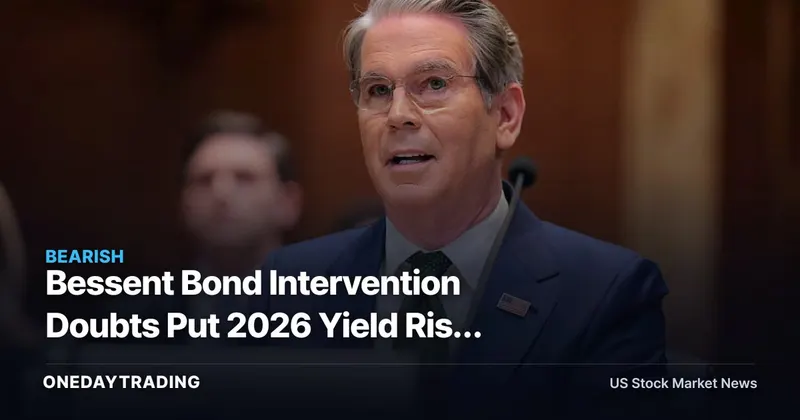
CNBC reported that prediction market traders remain doubtful that Bessent bond interventions will push yields lower. CNBC also reported that speculators still expect yields to hit new highs in 2026 and end 2026 above current levels.
How do higher Treasury yields affect U.S. stocks?
Higher Treasury yields affect U.S. stocks by raising discount rates and making future earnings less valuable today. Higher Treasury yields also lift mortgage rates and borrowing costs, which links the bond market to homebuilders, banks, technology, and real estate.
Which stocks are most exposed if 2026 yields rise?
Microsoft and Nvidia are exposed because high-growth technology valuations rely heavily on future cash flows. Lennar and NVR are exposed because higher yields can keep mortgage affordability tight, while JPMorgan Chase and Bank of America face a mixed effect through asset yields, funding costs, and credit risk.
📊 Analysis
Signal Bearish
Why Prediction-market expectations for higher 2026 yields are a negative catalyst for equity multiples and rate-sensitive sectors, even if banks receive a partial revenue offset.
Tickers$JPM$BAC$LEN$NVR$MSFT$NVDA
This article was independently written by OneDayTrading from public reporting. Read the original (CNBC)