Key Takeaways
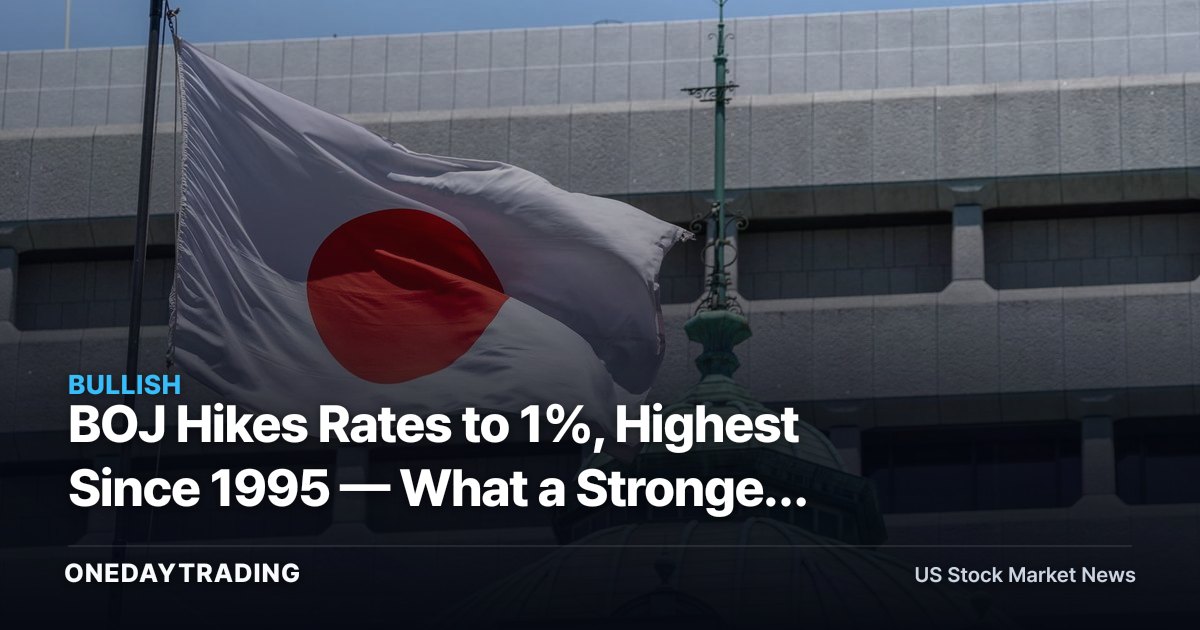
The Bank of Japan lifted its benchmark rate to 1%, the highest level since 1995, in its first move since December when it went to 0.75%. The shift from decades of near-zero policy is a structural tailwind for Japanese lenders and a headwind for exporters that benefit from a weak yen.
What Happened
The BOJ raised its policy rate to 1%, citing persistent inflation and a weak currency. This is the second consecutive step in a tightening path, following the December increase to 0.75% — itself described as the highest in over 30 years.
The central message for global investors is that Japan is normalizing policy at a time when much of the developed world is debating rate cuts. A widening focus on Japanese real rates tends to support the yen, which directly reshapes the earnings math for companies on both sides of the Pacific.
Background and Context
For most of the past three decades, Japan anchored rates near zero, fueling the global yen carry trade in which investors borrowed cheaply in yen to buy higher-yielding assets elsewhere. As the BOJ moves rates toward 1%, that funding cost rises, and the incentive to hold the yen improves — a dynamic that can ripple through global equity and bond positioning.
Market and Stock Impact
- MUFG, SMFG, Mizuho (US ADRs): Higher domestic rates widen net interest margins on the megabanks huge deposit bases, the most direct earnings beneficiary of policy normalization after years of margin compression.
- Toyota (TM): A firmer yen lowers the translated value of overseas sales and erodes price competitiveness for an automaker that earns much of its profit abroad.
- Sony (SONY): As a global electronics and entertainment exporter, repatriated dollar and euro revenue converts into fewer yen, pressuring reported operating profit.
- Japan equity ETFs and yen-hedged funds: A stronger yen can boost unhedged Japan exposure in dollar terms while reducing the relative appeal of yen-hedged strategies.
Investor Checkpoints
- Watch the next BOJ meeting and Governor commentary for whether 1% is a pause or a waypoint toward further hikes.
- Track USD/JPY: a sustained move toward yen strength signals carry-trade unwinding that can hit risk assets globally.
- Monitor Japanese megabank guidance for net interest income, the cleanest read on how much higher rates flow to profit.
- Follow Japan CPI prints — the inflation backdrop the BOJ is responding to drives the pace from here.
Outlook
The bull case is straightforward: rising rates restore lending profitability for Japanese banks after a generation of zero-rate erosion, and a credible normalization can attract capital into Japanese financials. The risk sits on the other side — a faster-than-expected yen rally would squeeze exporter margins and could force a disorderly unwind of yen-funded positions in US and emerging markets. Much depends on whether inflation proves sticky enough to justify a path beyond 1%, or whether the BOJ signals that it is done for now.
Market data check: MUFG
MUFG last traded near $20.18 (+0.10%). Our composite signal — blending price momentum and news flow — reads 🟡 neutral. Price momentum scores 51/100.
Data as of publication. Price via market feeds; for reference only, not investment advice.
📊 Analysis
Signal Bullish
Why Rate normalization toward 1% expands net interest margins for Japanese megabanks, a direct earnings tailwind, even as it pressures yen-sensitive exporters.
Tickers$MUFG$SMFG$MFG$TM$SONY
This article was independently written by OneDayTrading from public reporting. Read the original (CNBC)