Summary
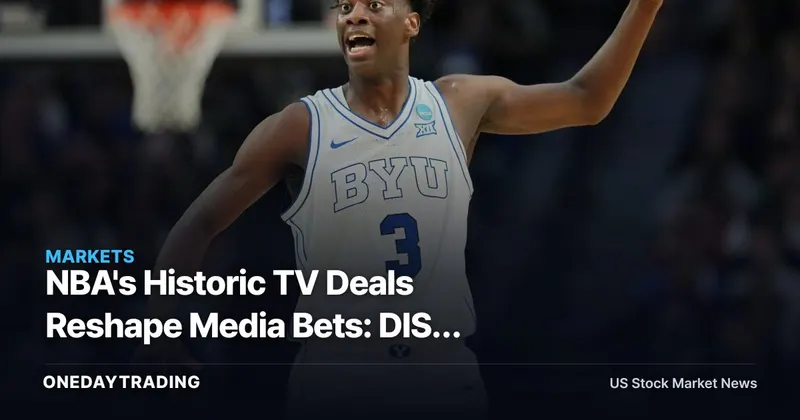
The No. 1 overall NBA draft pick is set to earn nearly 70 million dollars on his rookie-scale contract, and sliding just a few draft slots can shave roughly 30 million dollars off a player's earnings. That escalation is downstream of the league's historic national TV deals, which makes this less a sports story than a referendum on who is paying for premium live content and why.
The Full Story
Rookie-scale salaries are pegged to the NBA salary cap, and the cap rises in step with basketball-related income, the largest single driver of which is national media-rights money. When the league signs richer broadcast and streaming agreements, the cap inflates, and every contract slot, from the top pick down, repriced higher. The gap between draft positions widening to tens of millions is the visible symptom of media dollars flooding in.
For equity investors, the read-through is about the buyers of those rights rather than the players. Live sports has become the scarce asset that holds linear TV bundles together and gives streaming platforms appointment viewing that pure on-demand libraries cannot replicate. The willingness to pay up for the NBA tells you how strategically important sports inventory has become to media business models.
Structural Background
Sports rights are one of the few content categories that are DVR-proof and advertiser-friendly, delivering large simultaneous audiences in an otherwise fragmented attention market. As cord-cutting erodes the traditional pay-TV ecosystem, securing marquee leagues is both a defensive moat for legacy networks and an offensive subscriber-acquisition tool for streamers. That dual role is why bidding for the NBA escalated.
Stock and Sector Ripple
- Disney (DIS): ESPN is the league's long-standing flagship partner, so NBA inventory underpins the value of its forthcoming direct-to-consumer sports product and its leverage in carriage negotiations.
- Comcast (CMCSA): NBC and the Peacock streaming platform gain tentpole live content that drives engagement and reduces churn, though the rights cost pressures near-term margins.
- Amazon (AMZN): Prime Video adds another major league to its sports slate, deepening the Prime membership flywheel and advertising inventory at scale.
- Warner Bros. Discovery (WBD): Losing a marquee NBA package removes a signature live draw from its networks, raising questions about programming differentiation.
Bull vs Bear Scenarios
Bulls argue live sports is the anchor that justifies streaming price hikes and keeps advertisers engaged, so the spend converts into pricing power and lower churn over time. Bears counter that rights inflation outpaces the revenue it generates, squeezing free cash flow while a declining linear base shrinks the audience these deals are meant to monetize. The key variable is whether sports can be monetized profitably on streaming economics rather than legacy affiliate fees.
Investor Action Points
- Track DIS and CMCSA streaming segment results for subscriber adds and per-user advertising trends tied to live sports.
- Watch AMZN's commentary on Prime Video ad revenue and engagement as sports inventory expands.
- For WBD, monitor how the network repositions programming after losing NBA rights, and the impact on affiliate negotiations.
- Use upcoming quarterly earnings and segment margin guidance as the checkpoint for whether rights costs are accretive or dilutive.
Market data check: DIS
DIS last traded near $103.82 (+1.34%). Our composite signal — blending price momentum and news flow — reads 🟡 neutral. Price momentum scores 61/100 (firm).
Data as of publication. Price via market feeds; for reference only, not investment advice.
📊 Analysis
Signal Neutral
Why Rising NBA media-rights spending is a structural tailwind for live-sports streaming engagement but a cost headwind on margins, with winners (AMZN, CMCSA) and a loser (WBD) offsetting each other across the media sector.
Tickers$DIS$CMCSA$AMZN$WBD
This article was independently written by OneDayTrading from public reporting. Read the original (MarketWatch)