Summary
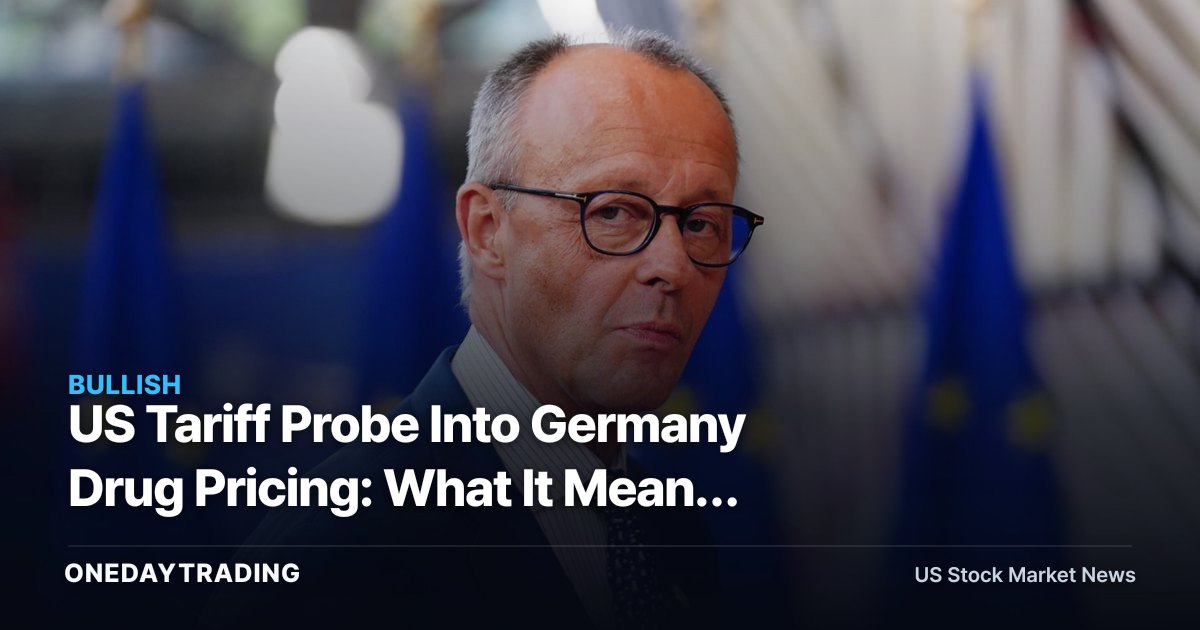
The US Trade Representative has opened a tariff investigation into Germany's proposal to curb spending on medicines, with USTR chief Jamieson Greer calling the move a serious step backwards. For investors, the read-through is that Washington is now using trade tools to defend US drugmakers' pricing power in Europe's largest pharmaceutical market, a potential tailwind for branded-drug exporters but a fresh source of transatlantic trade friction.
The Full Story
Germany is the biggest drug market in the European Union, and its statutory health insurance system is a major buyer of patented therapies. A German push to reduce medicine outlays would directly compress the prices and reimbursement that US-headquartered companies can capture on the same molecules they sell at far higher list prices at home.
By framing cost containment as a trade grievance rather than a domestic health-policy matter, the USTR signals it may treat European price controls as an unfair barrier to US commerce. That elevates an issue companies usually manage quietly through reimbursement negotiations into a government-to-government dispute that could end in tariffs on German imports.
Structural Background
US pharma has long argued that Americans subsidize global drug innovation because European single-payer systems negotiate prices down. The administration has separately threatened sector-specific pharmaceutical tariffs and pushed most-favored-nation pricing ideas. This probe extends that pressure outward, aiming to stop foreign price cuts from eroding the revenue that funds high US margins.
Stock & Sector Ripple
- Large-cap branded pharma (PFE, MRK, BMY, ABBV): meaningful European revenue exposure; diplomatic pressure to keep German reimbursement intact protects international list prices and margins.
- Eli Lilly (LLY): fast-growing GLP-1 and oncology franchises rely on premium pricing abroad, so resistance to German cuts supports its international growth runway.
- Johnson & Johnson (JNJ): diversified pharma plus medtech exposure to Germany makes it sensitive to both pricing policy and any retaliatory tariff escalation.
- German and EU exporters broadly: if tariffs land, German industrial and chemical names face collateral retaliation risk, widening the dispute beyond healthcare.
Bull vs Bear Scenarios
Bull case: the threat alone deters Germany from deep cuts, preserving European pricing and removing an overhang on US pharma earnings without any tariff actually taking effect.
Bear case: an investigation is not an outcome. Probes can drag for months, Germany may not blink, and the EU could retaliate against US goods. Tariffs on pharmaceutical trade could also disrupt supply chains and raise input costs, hurting the very companies they aim to help.
Investor Action Points
- Track the USTR docket for the probe's scope and any timeline or hearing dates that signal whether tariffs are imminent.
- Watch German legislative progress on the medicine-spending proposal; a softened or withdrawn plan is the bullish trigger for branded pharma.
- Check European revenue and pricing commentary in the next quarterly results from PFE, MRK and LLY for guidance impact.
- Monitor for EU retaliation signals that would shift this from a pharma-specific story to a broader transatlantic trade risk.
Market data check: PFE
PFE last traded near $25.21 (-2.74%). Our composite signal — blending price momentum and news flow — reads 🟡 neutral. Price momentum scores 28/100 (soft).
Data as of publication. Price via market feeds; for reference only, not investment advice.
📊 Analysis
Signal Bullish
Why US trade pressure to block German drug-price cuts defends the European pricing and margins of US branded-pharma exporters, though it carries trade-escalation risk.
Tickers$PFE$MRK$LLY$JNJ$BMY$ABBV
This article was independently written by OneDayTrading from public reporting. Read the original (CNBC)