Key Takeaways
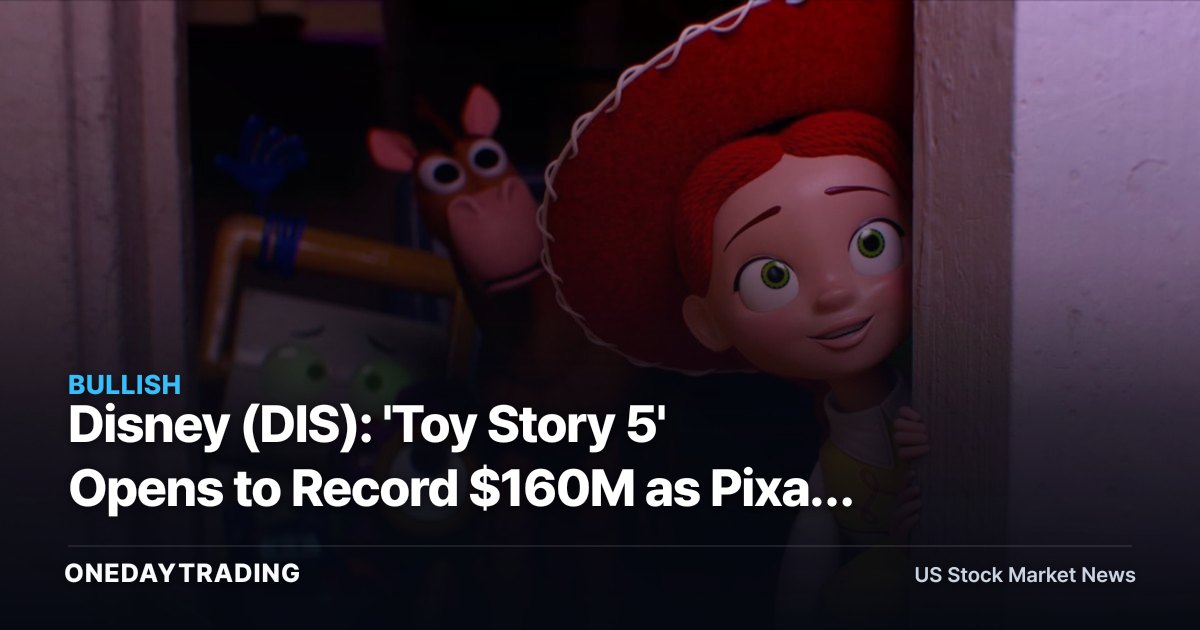
Disney and Pixar's Toy Story 5 opened to $160 million domestically, the largest debut in the franchise's history. For investors, the read-through is less about a single box-office weekend and more about Disney's proven ability to monetize legacy franchises across theaters, streaming, and consumer products. The result strengthens the bull case for studio-driven content economics at a time when theatrical demand has been uneven.
What Happened
The fifth installment of the Toy Story series delivered a $160 million opening weekend in the domestic market, topping every prior film in the franchise. That figure matters because animation has historically had strong legs in subsequent weekends and during holiday windows, when family audiences return repeatedly rather than front-loading into opening night.
For Disney, a record animated debut validates the strategy of leaning on tested intellectual property. Toy Story is a multi-decade brand with built-in awareness, which lowers marketing risk and improves the odds of profitability versus original titles that must build recognition from scratch.
Background and Context
Disney's studio segment has faced scrutiny over inconsistent theatrical returns, making a clean, franchise-record opening a useful data point for the company's content thesis. A high-grossing animated film also feeds downstream revenue: streaming engagement on Disney+, merchandise and toys, and park attractions that reinforce the brand flywheel unique to Disney's integrated model.
Market and Stock Impact
- Walt Disney (DIS): Direct beneficiary. A franchise-record open supports studio segment revenue and, more importantly, the long-tail monetization through Disney+ streaming, consumer products, and theme-park tie-ins that competitors cannot replicate at the same scale.
- Cinema operators (theater chains): A large family-film opening drives concession-heavy footfall, which carries higher margins than ticket revenue alone and helps the broader exhibition recovery.
- Netflix (NFLX): Indirect competitive signal. Strong theatrical pull for premium animation underscores why Disney's library and franchise depth remain a differentiator in the streaming content race.
- Comcast (CMCSA): As owner of rival animation studios, a Disney franchise record raises the competitive bar for family content market share.
Investor Checkpoints
- Second-weekend hold and total domestic plus international gross — animation legs determine ultimate profitability, not the opening alone.
- Disney's next quarterly results and any commentary on studio segment operating income and the content slate.
- Disney+ engagement and subscriber trends once the film enters the streaming window.
- Consumer-products and parks commentary, where Toy Story merchandising typically lifts results.
Outlook
The bull case is straightforward: a record $160 million open demonstrates that Disney's franchise engine still converts brand equity into multi-channel revenue. The counterweight is that one strong title does not resolve broader questions about the studio's hit consistency, marketing and production cost structure, or how much theatrical strength ultimately flows to the bottom line after a heavy promotional spend. The decisive evidence will be the film's full run and whether it translates into measurable streaming and consumer-products gains in the coming quarters.
Market data check: DIS
DIS last traded near $103.89 (+3.00%). Our composite signal — blending price momentum and news flow — reads 🟡 neutral. Price momentum scores 74/100 (firm).
Data as of publication. Price via market feeds; for reference only, not investment advice.
📊 Analysis
Signal Bullish
Why A franchise-record $160M opening strengthens Disney's studio revenue and multi-channel franchise monetization, a positive catalyst for DIS.
This article was independently written by OneDayTrading from public reporting. Read the original (CNBC)