At a Glance
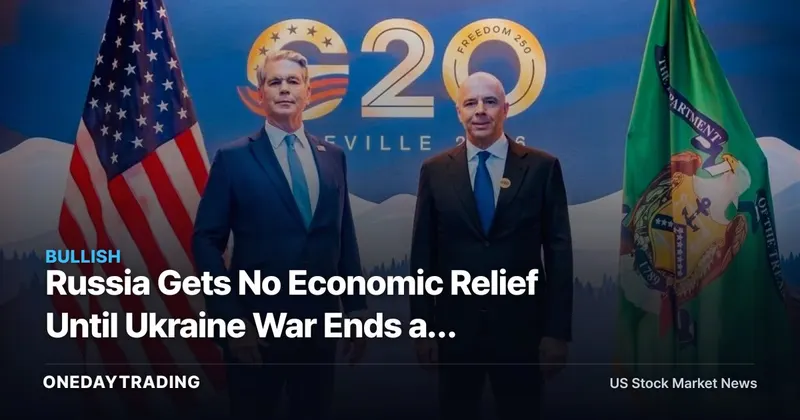
Russia is not getting an economic off-ramp yet: Scott Bessent reportedly told Moscow there will be no relief until the Ukraine war ends, and Europe used the G20 to signal isolation rather than normalization. For investors, that keeps the geopolitical risk premium alive in energy and defense while delaying any rerating of Russia-sensitive assets.
The market message is less about diplomacy than pricing. Washington may be willing to reopen talks, but it is not offering sanctions relief, so traders should treat the headline as a constraint on upside for risk assets tied to peace hopes.
Why It Matters Now
This is a policy signal, not a peace deal. The distinction matters because markets can price dialogue quickly, but they need a credible path to economic normalization before they unwind the war premium in oil, shipping and defense.
Europe's stance at the G20 matters just as much as Washington's. If Europe keeps Moscow isolated while the war continues, the trade stays anchored around prolonged sanctions, tighter commodity supply assumptions and steady demand for defense procurement.
Key Debates
- Is the U.S. opening talks as leverage, or as the first step toward eventual relief?
- Does Europe staying aligned at the G20 make sanctions more durable than the market expected?
- How much of the war premium is already embedded in energy and defense names?
- Would any easing of rhetoric matter if policy relief still waits for an end to the war?
Related Stocks & Sectors
- Exxon Mobil and Chevron: geopolitical supply risk tends to support integrated oil names when Russia stays boxed in.
- Lockheed Martin and Northrop Grumman: a longer conflict keeps replenishment, procurement and readiness budgets in focus.
- RTX: defense and aerospace exposure can benefit from sustained security spending, though valuation can compress if the headline risk fades.
- Energy and Defense sectors: both trade on the same premise here, which is that relief is being delayed, not promised.
What to Watch
- Any fresh U.S. or European statement that turns talk into a real sanctions framework.
- Oil prices after the next round of Russia headlines.
- Defense-order commentary and budget language from major contractors.
- Whether the G20 posture hardens into a broader policy line or fades into another headline cycle.
Overall Outlook
The bullish case is straightforward: no relief means no quick unwind in the geopolitical premium, which supports energy and defense leadership. The risk is just as clear: if markets decide the meeting was only theater and not policy, the trade can fade fast until a real sanctions or ceasefire trigger appears.
FAQ
What does no economic relief until the Ukraine war ends mean for markets?
It means investors should not price a fast normalization in sanctions-sensitive assets. The Russia risk premium in energy, defense and parts of European trade stays in place until policy changes, not until rhetoric softens.
Why do defense stocks react to Russia diplomacy?
Defense names trade on expected procurement, readiness spending and replacement demand. When the war looks prolonged and Europe stays aligned with Washington, companies like Lockheed Martin, Northrop Grumman and RTX tend to keep that support.
Which oil stocks are most exposed to Russia sanctions headlines?
Integrated producers such as Exxon Mobil and Chevron usually move first because they are clean U.S.-listed proxies for geopolitical supply risk. If the market starts to believe relief is coming, that premium can compress quickly.
📊 Analysis
Signal Bullish
Why The report keeps sanctions and war-risk pricing intact, which supports energy and defense stocks while delaying any relief-driven compression in those premiums.
Tickers$XOM$CVX$LMT$NOC$RTX
This article was independently written by OneDayTrading from public reporting. Read the original (CNBC)