Key Takeaways
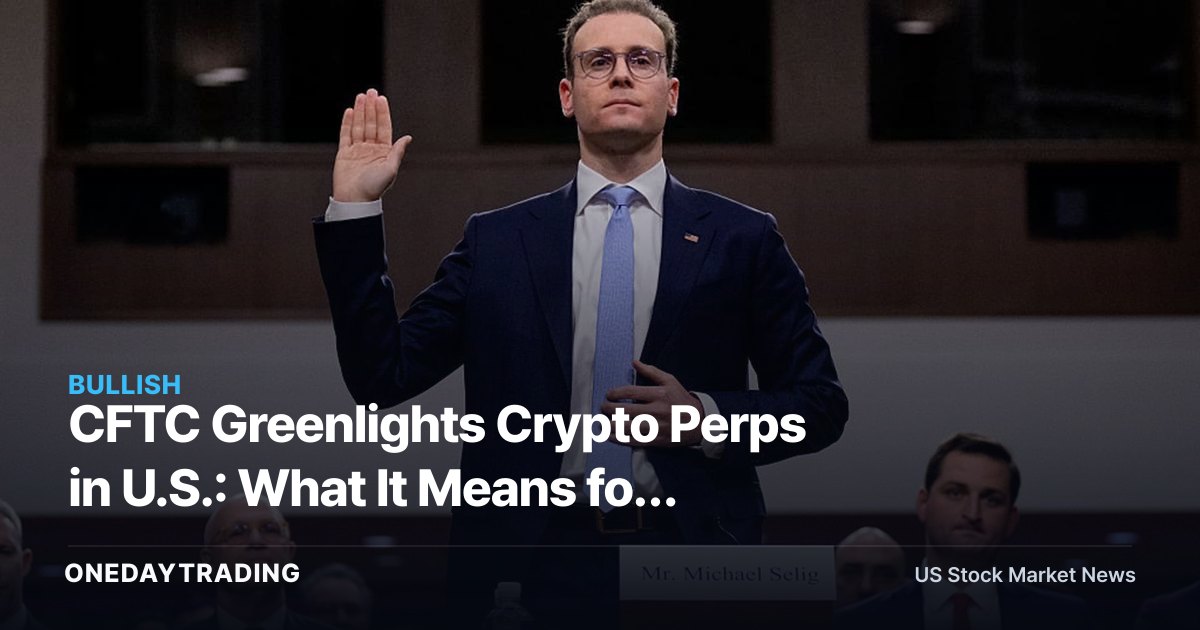
CFTC chair Michael Selig is defending the agency decision to allow perpetual futures, or perps, to trade onshore in the U.S. His core argument is that the new asset class should be built domestically rather than ceded to offshore venues. For investors, this is a regulatory door opening on one of the highest-volume products in global crypto, and the U.S.-listed exchanges positioned to host it stand to gain a fresh, fee-rich revenue line.
What Happened
Selig publicly backed the CFTC move to approve perps in the United States, framing pushback from established players as predictable. His framing was that incumbents will always fear the future, but that developing the product domestically beats leaving it solely to offshore markets where U.S. oversight does not reach.
Perpetual futures are derivatives with no expiry date, settled continuously through a funding-rate mechanism. They dominate crypto trading volume globally but have historically lived on offshore platforms outside direct U.S. supervision. Bringing them onshore under CFTC purview gives regulated American venues a legal path to list a product that retail and institutional traders already use heavily elsewhere.
Background and Context
The CFTC regulates U.S. derivatives markets, and a chair-level defense signals the agency intends to hold its ground against industry resistance. The strategic logic is jurisdictional: if Americans trade perps regardless, regulators would rather capture that flow, its data, and its consumer protections at home than watch it migrate to venues they cannot police.
Market and Stock Impact
- Coinbase (COIN) is the most direct beneficiary. A regulated U.S. perps market lets it monetize high-frequency derivatives flow domestically rather than only through its international arm, expanding transaction revenue beyond spot trading where fee compression has been a persistent headwind.
- CME Group (CME) already runs regulated crypto futures and options. Onshore perps could either extend its institutional franchise or pressure its dated-contract volumes if traders prefer never-expiring instruments.
- Robinhood (HOOD) gains a potential new product for its active retail base, where derivatives carry richer economics than commission-free equity trades.
- Circle (CRCL) sits upstream as a stablecoin issuer; perps are typically margined and settled in stablecoins, so rising onshore derivatives activity can lift demand for regulated dollar tokens.
Investor Checkpoints
- Watch for formal CFTC rule text and the first approved venues and listing dates.
- Track COIN transaction-revenue mix in upcoming quarterly results for any derivatives contribution.
- Monitor whether incumbent objections escalate into legal or legislative challenges that could delay rollout.
- Follow CME crypto volume trends to gauge cannibalization versus expansion.
Outlook
The bull case is straightforward: a multibillion-dollar product line moving onshore hands regulated exchanges scalable, high-margin volume the offshore market proved exists. The risk is equally concrete. Approval does not guarantee adoption, the timeline and final guardrails remain unsettled, leverage products invite tighter scrutiny after any volatility event, and incumbent resistance Selig acknowledged could slow implementation. Revenue impact will hinge on listing breadth and how aggressively each venue can convert existing offshore flow into domestic, fee-paying activity.
Market data check: COIN
COIN last traded near $169.12 (+5.85%). Our composite signal — blending price momentum and news flow — reads 🟡 neutral. Price momentum scores 95/100 (firm).
Data as of publication. Price via market feeds; for reference only, not investment advice.
📊 Analysis
Signal Bullish
Why Onshore approval of high-volume perpetual futures opens a new fee-rich revenue line for regulated U.S. crypto exchanges led by Coinbase.
Tickers$COIN$CME$HOOD$CRCL
This article was independently written by OneDayTrading from public reporting. Read the original (CNBC)