At a Glance
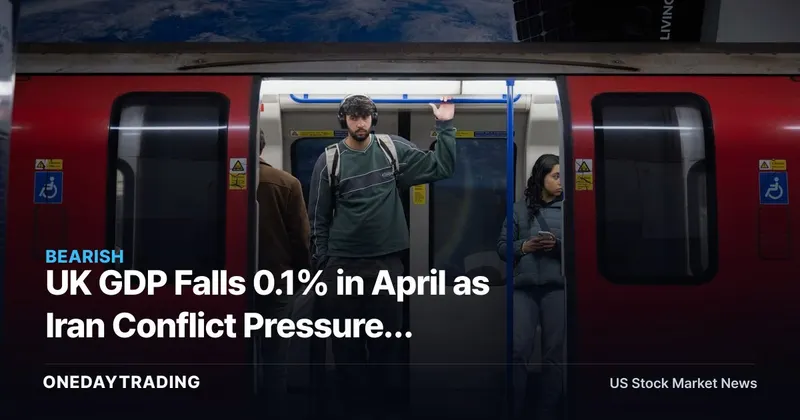
The UK economy shrank by 0.1% in April, missing hopes for continued expansion as services output declined. Companies pointed to pressure stemming from the Middle East conflict involving Iran as a drag on activity. The data revives concerns about the durability of Britain's recovery and the path of Bank of England policy.
Why It Matters Now
The UK is a heavily services-driven economy, so a decline in services activity carries outsized weight in the monthly GDP print. A contraction after recent stabilization suggests momentum is fragile, and businesses citing geopolitical strain indicates that external shocks, not just domestic demand, are weighing on output.
For markets, soft growth strengthens the case for the Bank of England to keep cutting rates, which can pressure the pound while supporting rate-sensitive equities. At the same time, conflict-driven disruption raises the specter of higher energy and shipping costs, complicating the inflation picture and the central bank's room to ease.
FAQ
- How much did the UK economy shrink? GDP fell 0.1% in April, with services activity declining over the month.
- Why is the Iran conflict relevant? Companies cited pressure from the Middle East conflict as a factor weighing on growth, reflecting trade, shipping and confidence effects.
- Does this affect interest rates? Weaker growth typically supports the case for further Bank of England rate cuts, though geopolitical cost pressures could limit easing.
- Is this a recession signal? A single 0.1% monthly drop is not a recession, but it signals stalling momentum worth monitoring.
Related Stocks & Sectors
- UK-exposed banks (HSBC, BCS): Slower growth and a dovish rate path can compress net interest margins.
- Energy (XOM, CVX): Middle East conflict risk can lift oil prices and benefit major producers.
- Consumer and retail names with UK revenue: Softer services demand pressures discretionary spending.
- Defense (LMT, RTX): Heightened regional conflict tends to support defense demand.
What to Watch
- The next monthly GDP and services PMI readings for confirmation of the slowdown.
- Bank of England commentary and rate-cut signaling.
- Oil prices and shipping costs tied to Middle East tensions.
- Sterling moves against the dollar as a growth and rate barometer.
Overall Outlook
The bull case rests on this being a one-off, geopolitically driven dip that supports easier policy and a soft landing for UK assets. The bear case is that services weakness becomes a trend while conflict-driven energy and cost pressures box in the central bank, leaving growth stuck and the pound vulnerable. The April print is a caution flag, not yet a turning point.
📊 Analysis
Signal Bearish
Why An unexpected GDP contraction with declining services and cited conflict pressure signals weakening UK growth momentum, a negative for UK-exposed equities and sterling.
Tickers$HSBC$BCS$XOM$CVX$LMT
This article was independently written by OneDayTrading from public reporting. Read the original (CNBC Markets)