At a Glance
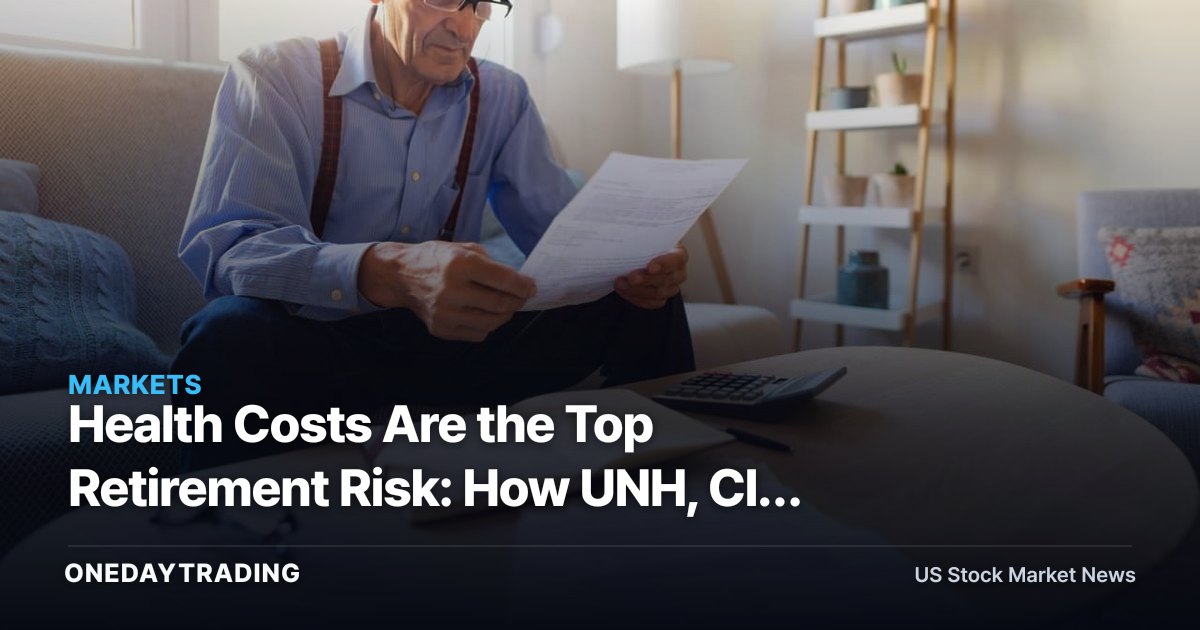
A new framing of retirement risk argues that the danger most savers ignore is not a market drawdown but a health-related financial shock — the kind that arrives with no warning and no recovery curve. For investors, this reframes the story from portfolio volatility toward the structural demand for managed care, long-term care coverage, and income products that hedge longevity.
Why It Matters Now
Markets recover; medical bills compound. A bear market eventually mean-reverts, but an uninsured chronic illness, a nursing-home stay, or years of out-of-pocket drug costs draws down principal permanently and at the worst possible time — late in life, when there is no labor income to replace it. That asymmetry is why health is being labeled the No. 1 retirement threat rather than equity risk.
The investable read-through runs through three channels. First, managed-care insurers capture the spending that retirees fear, with Medicare Advantage as the core growth engine as the population ages. Second, long-term care and annuity providers monetize exactly the gap households cannot self-fund. Third, asset managers and advisory platforms benefit as planning shifts from pure return-chasing toward insured, liability-matched retirement income.
The counterweight is policy. Government programs are the single largest payer for senior health, so reimbursement rates, drug-pricing rules, and Medicare Advantage benchmarks set the ceiling on insurer margins — a regulatory channel that can turn a demographic tailwind into a margin headwind overnight.
FAQ
- Why is health called a bigger risk than a crash? A crash is temporary and recoverable; a major health event permanently impairs capital and recurs annually, with no income to offset it.
- Which business models benefit from this anxiety? Managed care, long-term care insurance, annuities, and advisory platforms that sell guaranteed-income and insurance solutions.
- What is the main risk to that thesis? Heavy exposure to government reimbursement means policy and drug-pricing decisions can cap profitability regardless of demand.
- Is this a trade or a theme? It is a multi-decade demographic theme, not an event-driven catalyst — position sizing should reflect that.
Related Stocks & Sectors
- UnitedHealth (UNH) — largest managed-care player; Medicare Advantage and Optum services sit directly in the path of rising senior health spending.
- Cigna (CI) and Humana (HUM) — pharmacy-benefit and Medicare-focused books leveraged to chronic-care and drug-cost trends.
- Elevance Health (ELV) — broad commercial and government health exposure tied to the same demographic curve.
- Asset managers and insurers (annuities/LTC) — beneficiaries of the shift toward insured retirement income.
What to Watch
- Medicare Advantage enrollment trends and the annual rate-notice benchmarks that set insurer margins.
- Medical loss ratios in upcoming managed-care earnings — the cleanest signal of cost inflation eating into profit.
- Drug-pricing and reimbursement policy moves, the main external risk to the bull case.
- Flows into annuity and long-term care products as a proxy for how households are pricing this risk.
Overall Outlook
The bull case is demographic and durable: an aging population guarantees rising demand for the products that insure against health-driven retirement loss, supporting managed care, longevity insurance, and advisory franchises. The risk case is equally concrete — these same companies depend on government payers, so a reimbursement squeeze or a drug-pricing shift can compress margins even as volumes grow. The theme rewards patience and balance, not a single dramatic catalyst.
Market data check: UNH
UNH last traded near $411.04 (+1.19%). Our composite signal — blending price momentum and news flow — reads 🟡 neutral. Price momentum scores 60/100 (firm).
Data as of publication. Price via market feeds; for reference only, not investment advice.
📊 Analysis
Signal Neutral
Why The piece is advisory framing of a structural retirement risk rather than a directional catalyst, though it leans constructive for managed-care and longevity-insurance demand over time.
This article was independently written by OneDayTrading from public reporting. Read the original (MarketWatch)