What Changes
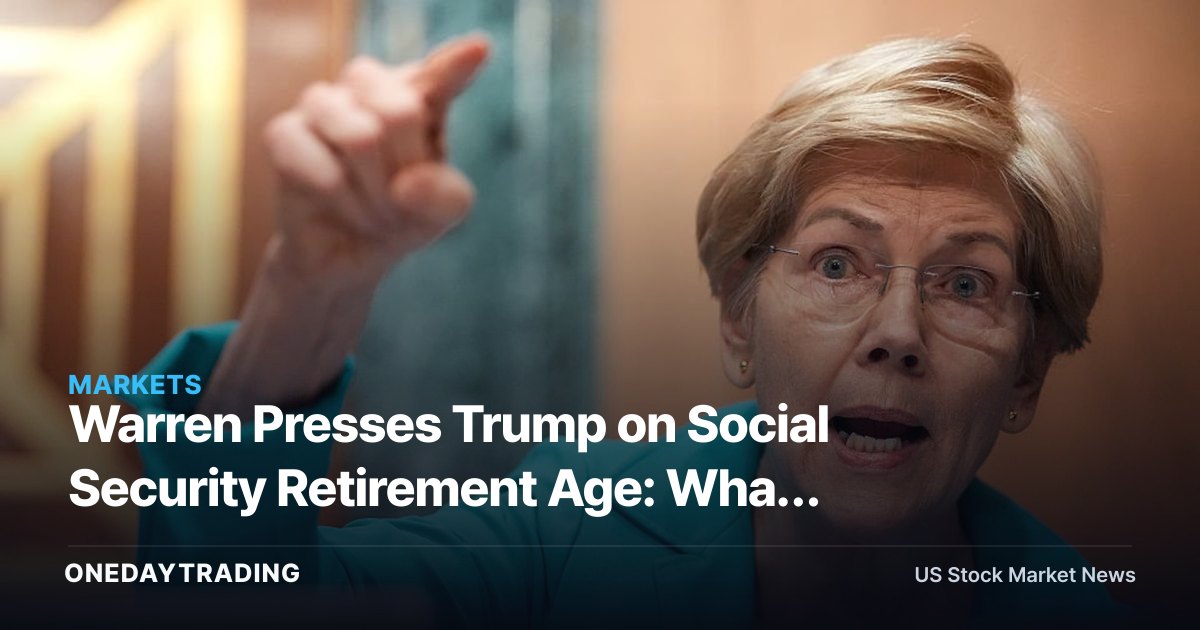
The substance here is a question, not an answer. Warren is pressing the administration to put its Social Security intentions on the record, and the politically sensitive item she names is the retirement age. For investors, the value is in what the exchange flags rather than what it decides: Social Security solvency is back on the agenda as a Washington talking point, which tends to precede, by months or years, the kind of structural reform that reshapes household savings behavior.
The transmission channel to markets is indirect but real. If the eventual policy path raises the age at which Americans collect full benefits, or restrains benefit growth, the gap is filled by private retirement vehicles — 401(k) flows, IRAs, annuities and managed assets. Firms that manufacture guaranteed-income products and gather long-duration assets are the structural beneficiaries of any narrative that erodes confidence in the public safety net. The catch: this is a slow, multi-year channel, and a single letter does not move product flows.
By the Numbers
The source provides no figures — and that absence is itself the analytical point. Warren's letter seeks specifics the administration has not published: there is no stated target retirement age, no benefit-formula change, and no implementation date on the table. Investors pricing in reform are pricing a hypothesis, not a disclosed plan, which keeps this firmly in the watch-and-position category rather than the trade-it-now category.
Winners & Losers
- Annuity and life insurers (MET, PRU): a credible threat to public benefits strengthens the pitch for private guaranteed income, supporting long-term product demand and float.
- Asset managers (BLK): more self-funded retirement means higher long-duration AUM and recurring fee revenue, the core of the gatherer model.
- Brokerages with retirement franchises (SCHW): IRA and rollover flows scale with private retirement reliance.
- Consumer discretionary (broad): a later retirement age or smaller benefits can pressure older-cohort discretionary spending, a slow headwind for retail-heavy names.
Risk Check
- This is a letter, not legislation — reform may stall entirely, making any positioning premature.
- Social Security changes are historically a political third rail; election cycles often kill them before they reach a vote.
- The insurer and asset-manager thesis is multi-year and already partly understood by the market, limiting fresh upside.
- Headline risk cuts both ways: aggressive reform talk can spook older consumers and weigh on retail spending before any benefit ever changes.
Bottom Line
The investable signal is directional positioning, not action: a reopened Social Security debate quietly favors private retirement-product franchises while introducing a slow-burn spending risk for older-consumer names — but with no plan, no numbers and no date, this remains a thesis to track through the next budget and reform headlines, not one to underwrite today.
Market data check: MET
MET last traded near $108.6 (+0.09%). Our composite signal — blending price momentum and news flow — reads 🟡 neutral. Price momentum scores 51/100.
Data as of publication. Price via market feeds; for reference only, not investment advice.
📊 Analysis
Signal Neutral
Why It is a senator's letter asking questions with no actual policy, numbers, or timeline, so there is no concrete directional catalyst yet.
This article was independently written by OneDayTrading from public reporting. Read the original (CNBC)