What Changes
Congress is considering a timing shift with a real household benefit but an unresolved systemwide cost. Working retirees affected by the rule could keep more of their Social Security payments now. The proposal does not, however, address the broader funding problem that could determine how much beneficiaries receive later.
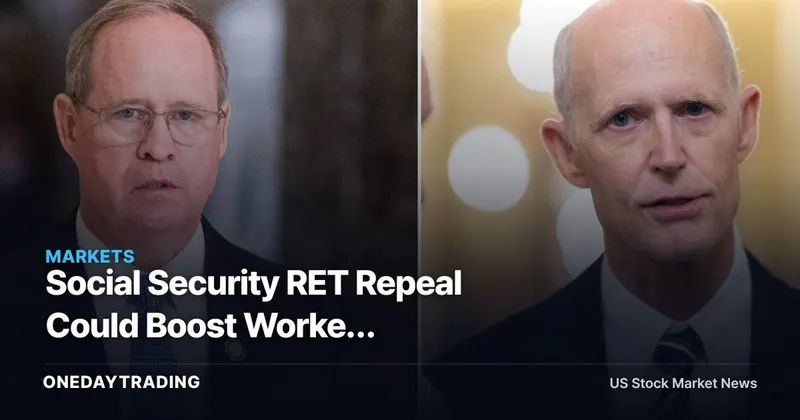
The Retirement Earnings Test, or RET, is a Social Security rule that temporarily withholds part of a beneficiary’s payments when the person earns more than an annual limit before reaching normal retirement age. Rep. Greg Murphy, a North Carolina Republican, and Sen. Rick Scott, a Florida Republican, introduced the Senior Citizens’ Freedom to Work Act in April 2026 to repeal that rule.
The economic mechanism starts with the worker. Eliminating the earnings test would remove the immediate reduction in payments that some beneficiaries experience when they combine wages with Social Security. Critics including Rachel Greszler, a visiting fellow at the Economic Policy Innovation Center, argue that the existing structure discourages older Americans from remaining employed.
The affected population is not trivial. Research from the Center for Retirement Research at Boston College found that 43% of Social Security beneficiaries combined work earnings with benefits at some point between 1992 and 2022. That figure does not show how many exceeded the earnings limits, but it establishes that working while collecting Social Security is a common household strategy rather than an isolated exception.
By the Numbers
For a beneficiary reaching normal retirement age in 2027 or later, the 2026 earnings threshold is $24,480. The Social Security Administration withholds $1 of benefits for every $2 earned above that limit. Repeal would remove that current-payment reduction for the workers covered by the proposed legislation.
The calculation changes during the year a beneficiary reaches normal retirement age. For people reaching that age in 2026, the threshold rises to $65,160 and the withholding rate falls to $1 for every $3 earned above the limit. Once beneficiaries are above normal retirement age, the source reports that neither an earnings ceiling nor withholding applies, even when annual pay reaches six or seven figures.
Those distinctions determine who benefits directly. Workers below normal retirement age who earn more than the applicable threshold have the clearest near-term exposure. Beneficiaries who earn less than the limit, do not work or have already passed normal retirement age would not receive the same direct cash-flow benefit from repeal.
Winners & Losers
- Working beneficiaries above the applicable earnings threshold could gain: repeal would let them retain benefits currently subject to withholding, increasing the Social Security cash received alongside wages.
- Older Americans considering additional work could face a simpler incentive: removing the withholding formula would eliminate one reason to limit earnings before normal retirement age. The source does not establish how many people would change their employment decisions.
- Workers already above normal retirement age would see little direct change: current rules impose no earnings limit or withholding after that point, so repeal would remove a restriction that no longer applies to them.
- Future and current beneficiaries could remain exposed to systemwide risk: any additional strain would matter beyond the group receiving payments earlier because the source cites the possibility of a 24% reduction in all benefits as early as 2032.
Risk Check
- The bill is a proposal, not an enacted benefit change: Murphy and Scott introduced the Senior Citizens’ Freedom to Work Act in April 2026, but the source does not report approval by Congress or enactment into law.
- The fiscal effect has not been measured in the supplied reporting: no official estimate shows how much repeal would accelerate benefit payments, affect the trust fund or generate offsetting revenue through additional employment.
- Near-term relief could coexist with weaker long-term benefits: the source illustrates that a 62-year-old worker might keep more payments immediately yet face a broad benefit reduction six years later if the cited 2032 risk materializes.
- The labor response is pivotal: repeal carries a stronger economic rationale if it encourages older Americans to work or earn more. If behavior changes little, beneficiaries would still receive cash earlier without the employment response emphasized by the proposal’s supporters.
Bottom Line
The Senior Citizens’ Freedom to Work Act would remove a clear financial constraint for certain working beneficiaries, but it would not finance Social Security or resolve the program’s longer-term imbalance. The near-term upside is specific: workers below normal retirement age and above the 2026 earnings limits could retain payments that the SSA currently withholds. The risk is broader but less precisely measured: experts cited in the source say repeal could worsen existing strain, while no official fiscal estimate is provided.
That balance makes the next evidence more important than the political slogans surrounding the bill. Investors and retirement households should track whether Congress advances the proposal, whether lawmakers publish an estimate of its trust-fund impact and whether supporting analysis quantifies a labor-force response. Until those checkpoints arrive, the confirmed benefit is earlier cash for a defined group; the unresolved variable is whether that relief meaningfully changes work behavior or merely brings additional program outflows forward.
FAQ
What is the 2026 Social Security earnings limit?
The limit is $24,480 for beneficiaries who will reach normal retirement age in 2027 or later, with $1 in benefits withheld for every $2 earned above it. For people reaching normal retirement age in 2026, the limit is $65,160 and the withholding rate is $1 for every $3 above the threshold.
Would repealing the Retirement Earnings Test increase every retiree’s payments?
No. The direct effect would be concentrated among beneficiaries who are below normal retirement age, continue working and earn more than the relevant annual threshold. People above normal retirement age already face no earnings limit or withholding under the rule described by Yahoo Finance.
Has Congress repealed the Social Security Retirement Earnings Test?
No repeal is reported in the source. Murphy and Scott introduced the Senior Citizens’ Freedom to Work Act in April 2026, but introducing legislation does not change existing Social Security rules.
📊 Analysis
Signal Neutral
Why Repeal could raise near-term payments and reduce a work disincentive, but its fiscal cost and effect on Social Security’s long-term strain are not quantified.
This article was independently written by OneDayTrading from public reporting. Read the original (Yahoo Finance)