Key Takeaways
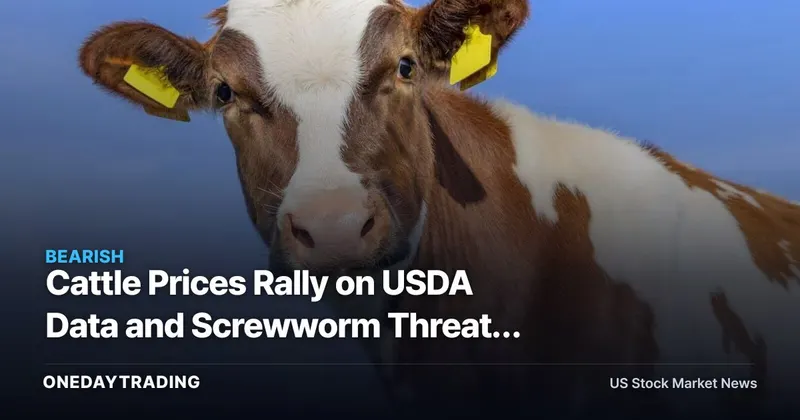
A bullish run in cattle futures, supported by USDA supply data and the renewed New World screwworm threat, is a margin headwind for downstream protein companies rather than a clean positive for equity investors. The cattle market itself is rising, but the listed beneficiaries are few and the listed victims are obvious: beef processors and beef-heavy restaurant menus.
What Happened
Cattle prices have stayed firmly in bull-market mode, with buyers in control across the live cattle and feeder cattle complex. Two forces are reinforcing the trend at the same time. First, USDA supply data continues to point to tight cattle availability, which removes the natural ceiling that abundant inventory would normally place on prices.
Second, the New World screwworm has re-emerged as a supply risk. The parasite directly threatens herd health and triggers cross-border animal-movement restrictions, choking off cattle that would otherwise flow into the U.S. feeding and slaughter pipeline. Fewer animals reaching feedlots and packing plants keeps the cash market firm and pushes futures higher.
Background and Context
High cattle prices are not symmetric for the equity market. The U.S. has very few pure-play listed cattle producers, so rising prices mostly raise the cost of goods for the companies investors can actually buy. Meat packers buy cattle at the top of the chain and sell beef at the bottom; when the input rises faster than wholesale beef, the spread that drives packer profit compresses.
Market and Stock Impact
- Tyson Foods (TSN) is the most exposed name. Its beef segment buys live cattle and is structurally squeezed when cattle costs climb faster than boxed-beef prices, pressuring packer margins even when revenue holds up.
- McDonald (MCD) and other beef-centric chains face higher input costs on a core menu item; they can pass some of it through with price increases, but that risks traffic among value-sensitive diners.
- Sysco (SYY) and food distributors see beef cost inflation flow through to restaurant and foodservice customers, a mix headwind for volume.
- Pilgrim Pride (PPC) and chicken-weighted producers can benefit indirectly: when beef gets expensive, consumers and chains substitute toward cheaper poultry, supporting chicken demand and pricing.
Investor Checkpoints
- Watch the next USDA Cattle on Feed and cattle inventory reports for confirmation that supply remains tight or signs it is loosening.
- Track the cattle-to-beef spread (cutout versus live cattle) in processor earnings commentary as the direct margin signal.
- Follow any change in cross-border cattle import status tied to screwworm containment; reopening would ease supply pressure.
- Monitor restaurant pricing and traffic data to gauge how much beef inflation is being passed to consumers.
Outlook
The bull case for cattle rests on genuine scarcity plus an external disease shock, a combination that does not unwind quickly. For equities, the more durable trade is the relative one: poultry and substitution beneficiaries over beef-cost absorbers. The risk to the bearish-processor view is that packers raise wholesale beef in step with cattle, protecting the spread, or that screwworm controls succeed and border flows normalize faster than expected, letting supply and prices ease.
Market data check: TSN
TSN last traded near $57.42 (+3.44%). Our composite signal — blending price momentum and news flow — reads 🟡 neutral. Price momentum scores 78/100 (firm).
Data as of publication. Price via market feeds; for reference only, not investment advice.
📊 Analysis
Signal Bearish
Why Rising cattle prices raise input costs and compress margins for listed beef processors and restaurant chains, the main equity-accessible names tied to the story.
Tickers$TSN$MCD$SYY$PPC$HRL
This article was independently written by OneDayTrading from public reporting. Read the original (Yahoo Finance)