Key Takeaways
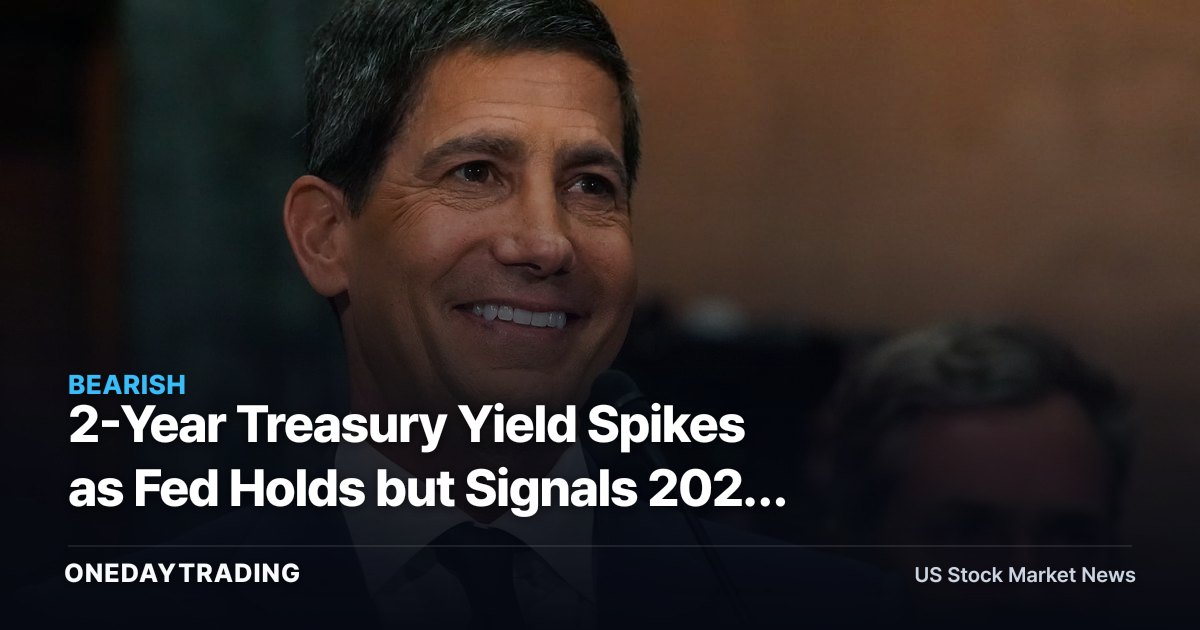
The Fed left its policy rate unchanged at Chairman Kevin Warsh's debut meeting, yet the 2-year Treasury yield surged because several officials signaled a rate increase could still arrive this year. The short end of the curve, which tracks Fed expectations most closely, is repricing toward a more hawkish path than markets had assumed, a shift that lands differently across banks, growth equities, and rate-sensitive sectors.
What Happened
At the conclusion of the meeting, policymakers kept the benchmark rate steady, a status-quo decision on its face. The market reaction came from the signaling, not the action: with multiple Fed officials indicating an openness to hiking before year-end, traders pushed the 2-year yield sharply higher.
The 2-year note is the most policy-sensitive part of the Treasury curve. When it moves up fast, it tells you the market is pricing in a higher-for-longer or even higher-from-here stance, rather than the rate cuts many investors had been positioning for. That repricing tightens financial conditions before the Fed lifts a finger.
Background and Context
This was Warsh's first policy meeting as chairman, and his record as a long-standing hawk shapes how investors interpret the committee's tone. A new chair perceived as less inclined to ease removes a cushion that equity markets had leaned on. The gap between a steady policy rate and a rising 2-year yield is the market doing the Fed's tightening for it.
Market and Stock Impact
- Banks (JPM, BAC, WFC, GS): Higher short-end yields can lift net interest income as loans reprice faster than deposit costs, a tailwind for lenders, though a flatter or inverted curve and weaker loan demand cap the benefit.
- Rate-sensitive growth and tech: Long-duration equities valued on distant cash flows are discounted more harshly when yields rise, pressuring high-multiple software and unprofitable growth names.
- Regional banks and REITs: Funding-cost sensitivity and property valuations make these among the most exposed if the hawkish path is confirmed.
- Homebuilders and autos: A higher rate path keeps borrowing costs elevated, weighing on mortgage-dependent and financing-dependent demand.
Investor Checkpoints
- Watch the 2-year yield level and the 2s/10s spread for confirmation that the hawkish repricing is sticking.
- Track fed funds futures for the implied probability of a hike before year-end.
- Listen for follow-through in speeches from Fed officials and Warsh's framing of the inflation-versus-growth tradeoff.
- In bank earnings, focus on net interest margin guidance and deposit-cost trends rather than headline EPS.
Outlook
If officials follow signaling with an actual hike, banks with disciplined deposit franchises stand to gain while richly valued growth names face further multiple compression. The counter-scenario is real: hawkish talk often functions as jawboning, and softer incoming inflation or labor data could let the Fed stay on hold, unwinding the yield spike as fast as it formed. The key variable is whether the data validate the committee's hawkish lean or contradict it.
📊 Analysis
Signal Bearish
Why A hawkish Fed signal driving the 2-year yield higher tightens financial conditions and pressures rate-sensitive equities, even if it modestly benefits some lenders.
This article was independently written by OneDayTrading from public reporting. Read the original (CNBC)